
Kestra's Cardiac Recovery System: A Disruptive Force in Sudden Cardiac Arrest Management?
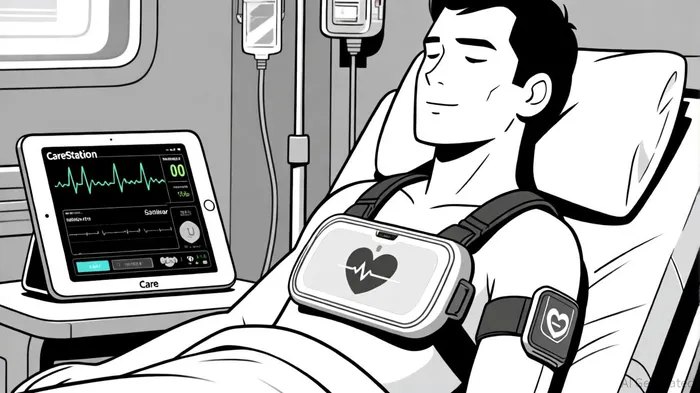
The medtech landscape is witnessing a quiet revolution in sudden cardiac arrest (SCA) risk management, driven by innovations like Kestra MedicalKMTS-- Technologies' Cardiac Recovery System (CRS). As the global burden of heart failure continues to rise—projected to affect over 200 million people by 2030—non-invasive solutions that bridge gaps in patient care are gaining traction. Kestra's ASSURE® Wearable Cardioverter Defibrillator (WCD), paired with its CareStation™ remote monitoring platform, represents a compelling case study in post-market adoption dynamics and the potential to redefine SCA prevention.
A Technological Leap in Non-Invasive SCA Prevention
Kestra's CRS is engineered for patients at high risk of SCA who are either ineligible for or refuse implantable cardioverter-defibrillators (ICDs). The system's core, the ASSURE WCD, is a lightweight, wearable device that delivers automated defibrillation when life-threatening arrhythmias are detected. Unlike traditional ICDs, the WCD avoids surgical risks and allows patients to maintain mobility during recovery. The CareStation platform further enhances its value by enabling clinicians to monitor patients remotely, analyze trends, and intervene proactively[4].
The system's integration of real-time data analytics and telehealth capabilities aligns with broader industry shifts toward value-based care. According to a report by the Heart Failure Society of America (HFSA), such technologies are critical for improving outcomes in heart failure patients, who face a 25% risk of SCA within the first year post-diagnosis[3].
Clinical Validation and Real-World Performance
Recent real-world data presented at the 2025 Heart Rhythm Society (HRS) Annual Meeting underscores the system's efficacy. A study of 130 patients at risk for SCA revealed a median daily wear time of 23.3 hours, with 40% of participants using the device beyond 90 days—a significant indicator of patient compliance[1]. Notably, arrhythmias were detected in 4% of patients, highlighting the system's role in early intervention.
Longer-term outcomes from the ACE-PAS study, which tracks real-world performance via the ASSURE Patient Registry, are also promising. The study's primary metrics—shock conversion rates and inappropriate shocks—suggest the WCD's reliability in diverse clinical settings[4]. These findings, coupled with the device's 2021 FDA Premarket Approval (PMA), position it as a clinically validated alternative to ICDs[4].
Market Adoption and Strategic Expansion
Kestra's commercial launch in August 2022 marked a pivotal phase in its growth trajectory. By January 2025, the system was prescribed by over 550 U.S. hospitals—approximately 20% of WCD prescribing institutions—reaching 17,000 patients[4]. This rapid adoption is driven by the system's ease of use, cost-effectiveness compared to ICDs, and alignment with hospital reimbursement models.
The company has also prioritized visibility at key medical conferences. At the 2025 HFSA Annual Scientific Meeting, KestraKMTS-- showcased the CRS at booth #920, emphasizing its role in strengthening patient-provider relationships and supporting guideline-directed medical therapy[3]. Similarly, its April 2025 presentation at the Heart Rhythm Society meeting highlighted the WCD's integration into clinical workflows[5]. These efforts signal a strategic push to solidify its position in the SCA management ecosystem.
Investment Timing in the Post-Market Phase
For investors, Kestra's current phase—post-FDA approval and in active commercial expansion—presents a nuanced opportunity. The system's 2022 launch has already demonstrated scalability, with 17,000 patients enrolled in just three years. However, challenges remain, including competition from established ICD manufacturers and the need for broader payer coverage.
Data from the 2025 HRS meeting indicates that the WCD's high compliance rates and clinical outcomes could drive further adoption, particularly in post-acute care settings[1]. Additionally, Kestra's recent FDA supplements for manufacturing process updates suggest ongoing commitment to regulatory compliance and product refinement[4].
Conclusion: A Medtech Disruptor in the Making
Kestra's Cardiac Recovery System exemplifies the intersection of innovation and practicality in SCA risk management. By addressing unmet needs in non-invasive care, leveraging real-world data, and expanding its market footprint, the company is well-positioned to capture a growing share of the $1.2 billion WCD market. For investors, the post-market phase offers a window to capitalize on a technology that is not only clinically validated but also strategically aligned with the future of remote patient monitoring.
As the medtech sector continues to prioritize patient-centric solutions, Kestra's ability to integrate hardware, software, and clinical workflows may well define the next era of SCA prevention.





Comentarios
Aún no hay comentarios