
Kering's Strategic Overhaul and Gucci's Turnaround Potential: Can De Meo and Demna Revive a Struggling Luxury Giant?
In the volatile world of luxury fashion, Kering's recent upheaval has drawn both skepticism and cautious optimism. After a 14% year-over-year revenue decline in Q1 2025 and a 25% drop in Gucci's sales, the appointment of Luca de Meo as CEO and Demna Gvasalia as Gucci's creative director has become the focal point of a high-stakes bet: can industrial precision and avant-garde creativity coexist to rekindle a brand's lost luster?
The De Meo Imperative: Industrial Rigor for a Creative Industry
Luca de Meo, former CEO of Renault, brings a playbook honed in automotive turnarounds. His “Renaulution” strategy—cost-cutting, platform consolidation, and data-driven decision-making—revived a floundering automaker. At Kering, he faces a similar challenge: stabilizing a €10.5 billion debt load while reviving a brand (Gucci) that once accounted for 60% of Kering's profits.
De Meo's first move? A 9% stock surge following his appointment in September 2024. Investors cheered his focus on operational efficiency, including potential store closures, real estate divestitures, and a streamlined cost structure. The question is whether he can replicate Renault's success in an industry where creativity often trumps spreadsheets.
The data query above reveals a stark narrative: Kering's share price has plummeted 70% since 2022. De Meo's ability to stabilize this trajectory will depend on his capacity to balance austerity with innovation. For instance, his proposed “see-now, buy-now” strategy for Gucci's fall 2025 collection aims to bridge the gap between runway and retail, reducing inventory risk and capitalizing on immediate demand.
Demna's Creative Gambit: Art or Accountability?
Demna Gvasalia's appointment as Gucci's creative director has been a double-edged sword. While his Balenciaga tenure transformed a niche brand into a $10 billion juggernaut, his Gucci debut has faced mixed reactions. The brand's Q1 2025 wholesale revenue fell 33%, underscoring the challenge of aligning avant-garde aesthetics with commercial viability.
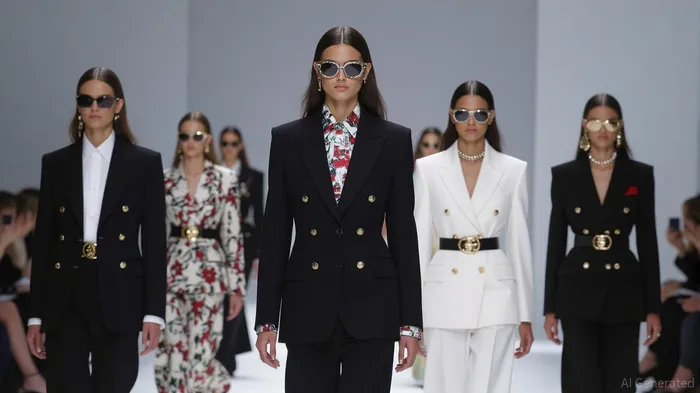
Demna's strategy hinges on redefining Gucci's DNA. His early collections hint at a return to sharp tailoring and utilitarian minimalism, diverging from Alessandro Michele's maximalist baroque style. Yet, the brand's heritage—a blend of Italian craftsmanship and bold self-expression—must not be diluted. The key will be to create a “new classic” that resonates with Gen Z while retaining older, affluent customers.
Financial Realities and Strategic Priorities
Kering's broader portfolio offers a lifeline. Brands like Bottega Veneta and Saint Laurent have shown resilience, while Kering Eyewear and Kering Beauté grew 2% and 6% respectively in Q1 2025. These segments provide breathing room as Gucci undergoes its transformation.
However, the pressure is on. A €4 billion acquisition of the remaining 70% of Valentino looms, a move that could either diversify Kering's portfolio or deepen its debt. De Meo's automotive background may prove invaluable here—Renault's asset-light strategies could inform how Kering manages its luxury real estate and manufacturing footprint.
Investment Implications: A High-Risk, High-Reward Proposition
For investors, the calculus is complex. Kering's stock remains undervalued relative to its pre-2022 peak, but the path to recovery is fraught. De Meo's operational rigor and Demna's creative vision are promising, but they must overcome entrenched challenges:
- Consumer Sentiment: Luxury demand is softening as global macroeconomic pressures persist. Kering's reliance on Asian markets (which saw a 25% sales drop in Q1 2025) adds vulnerability.
- Brand Identity: Gucci's pivot from “vintage-meets-avant-garde” to a more streamlined aesthetic risks alienating its core customer base.
- Execution Risk: De Meo's automotive expertise may clash with the artisanal ethos of luxury fashion.
That said, the potential upside is significant. A successful Gucci turnaround could restore Kering's EBIT margin to 15-20%, pushing its stock price closer to its 2022 highs. For risk-tolerant investors, this is a compelling long-term opportunity.
Conclusion: The Crossroads of Creativity and Capital
Kering stands at a crossroads. Luca de Meo's industrial rigor and Demna's creative daring represent a bold experiment in merging two worlds. While the risks are tangible, the rewards could redefine the luxury landscape. Investors should monitor Q4 2025 results closely, particularly Gucci's post-De Meo/Demna performance.
For now, the needle remains neutral. But if Kering can strike the right balance between art and accountability, it may yet reclaim its place as a titan of the 21st-century luxury industry.







Comentarios
Aún no hay comentarios