
Kering's Parvus Stake: A Turning Point for Luxury's Undervalued Giant?
The luxury sector has long been a playground for activist investors, and Kering SA (KER:PA) has become the latest arena for strategic maneuvering. With activist hedge fund Parvus Asset Management disclosing a 5% stake in the French luxury conglomerate—a move likely aimed at influencing strategy—the question on investors' minds is clear: Can Kering harness this external pressure to reignite growth, or will it succumb to the same challenges plaguing its peers?
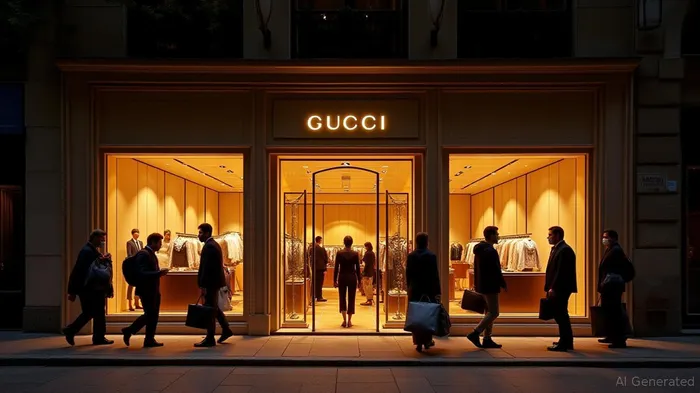
Catalysts: A New Era of Leadership and Strategic Restructuring
Parvus's stake arrives amid a pivotal moment for Kering. The appointment of Luca de Meo, ex-CEO of Renault, as Kering's new CEO in early 2025 has already sparked optimism. De Meo's track record in automotive turnarounds—such as revitalizing Renault's operations and improving margins—suggests a data-driven, cost-conscious approach could be coming to Kering's struggling brands. This shift is critical given Kering's first-quarter 2025 results, which revealed a 14% revenue decline to €3.88 billion, driven largely by a 24% drop at Gucci, its cash cow.
The strategic moves underpinning Kering's response to weakening demand are equally telling. The company has aggressively closed underperforming stores—25 net closures in Q1—and offloaded non-core assets, such as prime Parisian real estate and The Mall Luxury Outlets, netting €1.18 billion. These actions, combined with Bottega Veneta's 4% revenue growth and the appointment of new creative directors like Demna at Gucci, point to a deliberate restructuring.
Risks: A Fragile Luxury Landscape
Yet the path forward is fraught with risks. Kering's reliance on Gucci—a brand that still accounts for 40% of group revenue—remains its Achilles' heel. Gucci's Q1 revenue plummeted to €1.57 billion, with store traffic in key markets like Asia and Europe plummeting. The brand's efforts to revitalize itself, such as the Softbit handbag launch and Demna's design vision, are unproven at scale.
Macroeconomic headwinds further complicate matters. Luxury demand in Western Europe and North America is softening, while Asia's recovery remains uneven. Kering's net debt, at €5.1 billion as of December 2024, is manageable but leaves little room for error. A prolonged downturn could strain its ability to fund brand reinvestment or acquisitions.
Valuation: A Discounted Giant or a Hidden Gem?
Kering's valuation metrics offer a compelling case for optimism. Its EV/EBITDA multiple of 9.76 sits below the luxury industry median of 10.14, suggesting the market is undervaluing its long-term potential. Historically, Kering's multiples have swung widely—peaking at 29.86 in 2017—but current levels reflect skepticism over Gucci's turnaround.
Analysts project Kering's EV/EBITDA could dip to 7.81 by 2026, assuming EBITDA growth outpaces a declining enterprise value. Meanwhile, its P/E ratio of 21.87, while higher than peers like LVMH (LVMH.PA), reflects Kering's growth challenges but also its undervalued status.
The Parvus Factor: Catalyst or Casualty?
Parvus's stake adds a layer of intrigue. The fund, which recently agitated for leadership changes at Novo NordiskNVO--, may push Kering to accelerate restructuring. Potential asks could include faster cost cuts, divesting underperforming brands, or demanding greater transparency around Gucci's creative strategy.
However, Parvus's influence is not guaranteed. Kering's board, led by CEO de Meo and long-time stakeholder François-Henri Pinault, may resist activist pressure, particularly if it conflicts with long-term brand-building. The absence of public statements from either side underscores the uncertainty.
Investment Thesis: A Long-Term Play with Near-Term Risks
For investors, Kering presents a high-reward, high-risk opportunity. The stock's 6.9% downside to a fair price of €162.41 (vs. its current €174.48) suggests limited upside in the near term unless Gucci's turnaround gains traction. However, Kering's undervalued multiples and strategic moves—particularly in Bottega Veneta and its real estate sales—hint at a brighter medium-term outlook.
Recommendation: Investors with a 3-5 year horizon may consider a gradual accumulation of shares, particularly if the stock dips further on macroeconomic fears. Short-term traders should proceed cautiously, as Kering remains tied to Gucci's volatile performance.
In the luxury game, patience is a virtue. Kering's fate may hinge on whether Parvus's stake becomes a catalyst for change—or a footnote in its turbulent history.







Comentarios
Aún no hay comentarios