
KDP’s Q1 Earnings: Coffee and Refreshments Must Prove the Dividend Can Survive
Keurig Dr Pepper is standing at a familiar crossroads. The company is scheduled to report its fiscal first-quarter results before the market opens on Thursday, April 23. The setup is straightforward: Wall Street expects a profit of $0.37 per share, which would mark an 11.9% decline from the $0.42 earned in the same period last year. This year-over-year comparison is the core test.
For context, the company has built a recent track record of meeting or topping expectations, having done so for each of the last four quarters. That streak includes a strong Q4 where it beat estimates by a penny. Yet, the stock has been under pressure, declining 21.6% over the past 52 weeks, significantly trailing both the broader market and its consumer staples peers. This underperformance raises a clear investment question: can the recent momentum and the company's commitment to its dividend survive this challenging comparison?
Valuation adds another layer. KDPKDP-- trades at a forward P/E of 19.16, which is reasonable compared to the sector average. But that multiple demands proof of sustained growth. The forward view shows earnings expected to climb, but the path isn't smooth. The company's PEG Ratio of 2.20-a measure of growth relative to valuation-suggests the stock may be fairly priced for its growth rate, not cheap. The upcoming report will be the first major data point to see if that growth story is still intact.
Reason 1 to Watch: The Volume Engine in Refreshments
The engine for Keurig Dr Pepper's financial health is clearly the U.S. Refreshment segment. This is the part of the business that puts cash in the register, and its performance last quarter was a major reason the company met its full-year targets. In the fourth quarter, this segment drove a volume/mix growth of 9.0%, which was the key part of the company's overall 8.6% adjusted sales growth. More broadly, for the full year, U.S. Refreshment sales jumped 11.9% to $10.4 billion, powered by those same market share gains in carbonated drinks, energy, and sports hydration.
This strength isn't just about moving more cans; it's about winning in the marketplace. The segment's growth was fueled by new product innovation, like the return of Dr Pepper Creamy Coconut, which helped it capture customer attention and loyalty. For an investor, this is the core story. This segment is the primary source of cash flow, and that cash is essential for two things: funding the company's dividend and supporting its ambitious goal of double-digit adjusted EPS growth in 2026.
The bottom line is that sustained strength here is non-negotiable. It's the fuel that powers the entire company's strategy, including the upcoming integration of JDE Peet's. If this volume engine sputters, the company's ability to meet its financial commitments and growth targets comes into serious doubt. So, for the upcoming Q1 report, the focus will be on whether this powerful momentum from the refreshment segment can carry over into the new fiscal year.
Reason 2 to Watch: The Recurring Revenue from Coffee
While the refreshment segment powers the top line, the U.S. Coffee business is the company's vital profit center. This part of the operation is built on a high-margin, subscription-like model. It includes the #1 single serve coffee brewing system in the U.S. and Canada, which creates a steady stream of recurring revenue from K-Cup pod sales. For an investor, this is a cash-generating machine. The brewer is often sold at a modest markup, but the real profit comes from the repeat purchases of pods-a reliable cash flow that helps smooth out the volatility of the broader refreshment market.
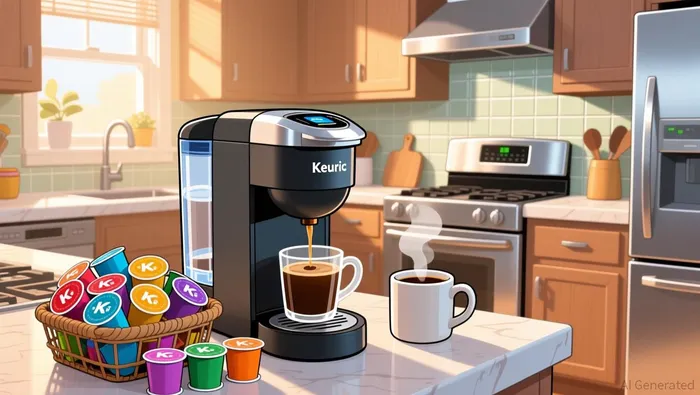
This business is more than just a sideline; it's a key contributor to the company's financial health. The recurring nature of pod revenue provides a predictable income stream, which is essential for funding the company's dividend and supporting its ambitious growth targets. Management's 2026 outlook explicitly includes anticipated contributions from the integration of the JDE Peet's coffee business. This isn't just about adding another brand; it's about layering a proven, high-margin coffee platform onto an already strong foundation. The goal is to drive double-digit adjusted EPS growth for the year, and this coffee engine is a critical piece of that equation.
The bottom line is that the U.S. Coffee segment offers a different kind of strength. It's not about explosive volume growth, but about consistent profitability and cash flow. In a quarter where the refreshment segment faces a tough comparison, the stability and margins from coffee become even more valuable. It's the financial ballast that helps the company navigate uncertainty and fund its strategic bets.
The Risk to Manage: The Dividend's Cash Flow Test
The company's commitment to shareholders is clear. Keurig Dr PepperKDP-- pays a quarterly dividend of $0.23 per share, which yields 3.21% based on recent prices. This isn't a new promise; the company has a history of steadily increasing that payout, with an average dividend growth rate of 9.6% over the past three years. For income-focused investors, this track record is a key part of the investment case.
Yet, a dividend is only as secure as the cash flow that funds it. The primary risk for the upcoming quarter is a miss on the earnings estimate. Wall Street expects a profit of $0.37 per share for Q1 2026, which would be an 11.9% decline from the same period last year. If the company falls short of that mark, it could trigger a negative re-rating of the stock. More importantly, a weaker profit figure directly pressures the company's ability to fund its dividend and other financial commitments.
This is where the performance of the core businesses becomes critical. The cash needed to cover the dividend and support the company's ambitious growth targets flows from its two main engines: the U.S. Refreshment segment and the U.S. Coffee business. As established, these are the segments driving volume and high-margin recurring revenue. A stumble in either would tighten the cash register, making it harder to maintain the dividend's growth trajectory. The dividend policy, therefore, is not a standalone decision. It is a direct function of the financial health of these cash-generating operations. For now, the company's dividend remains sustainable, but the upcoming earnings report will be the first major test of that sustainability in a challenging year-over-year comparison.
Catalysts and What to Watch
The upcoming earnings report on April 23 is a critical checkpoint. It will confirm whether the company's momentum is real or fading, and whether its ambitious 2026 targets are still on track. Here are the three key signals to watch.
First, management must deliver on its promise of double-digit adjusted EPS growth in 2026. The company has set this as a clear target, and the first quarter's results will be the initial data point. The consensus expects full-year 2026 EPS of $2.27, which implies growth. But the real test is guidance. If the company reaffirms or raises its full-year outlook, it signals confidence in its plan. A cut or a vague statement, however, would challenge the investment thesis and likely pressure the stock.
Second, investors need to hear about the integration of JDE Peet's. This is not just a footnote; it's a core part of the 2026 growth story. The company has said the integration is well underway. Look for specific commentary on progress, any early wins, or challenges. More importantly, listen for updates on the coffee segment's contribution to profit. The goal is to layer a high-margin, recurring revenue stream onto the existing business. Any sign that this integration is driving the anticipated profit lift would be a major positive catalyst.
Third, the stock's 21.6% decline over the past 52 weeks is a stark reality. This underperformance has made the current dividend yield more attractive, but it also raises questions about underlying business health. The earnings report will be the first major test of that health in a tough year-over-year comparison. A miss on the Q1 profit estimate could reignite those concerns, while a beat would help rebuild confidence. The path to closing the gap with the broader market starts with proving that the core refreshment and coffee engines are still firing.
The bottom line is that this report is about validation. It needs to show that the volume engine in refreshments is holding steady, that the coffee profit center is delivering, and that the company's ambitious 2026 targets are still within reach. Watch for those specific metrics and the tone around them.







Comentarios
Aún no hay comentarios