
KBR's Securities Fraud Lawsuit and Shareholder Implications: Assessing Governance Risk and Investment Opportunity in Post-Lawsuit Scenarios
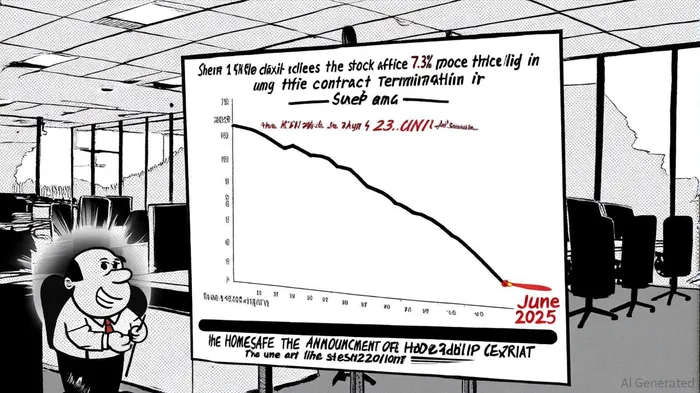
In the wake of KBRKBR--, Inc.'s (NYSE: KBR) securities fraud lawsuit and the termination of its multibillion-dollar Global Household Goods Contract with the U.S. Department of Defense, investors face a complex interplay of governance risk and strategic opportunity. The lawsuit, initiated by the Rosen Law Firm on behalf of shareholders who purchased KBR stock between May 6, 2025, and June 19, 2025, alleges material misrepresentations regarding the stability of KBR's joint venture, HomeSafe Alliance[1]. This case, now in its early stages, has sparked broader scrutiny of KBR's corporate governance and operational transparency, while also highlighting the company's resilience in navigating high-stakes legal and financial challenges.
The Legal and Governance Fallout
The lawsuit centers on KBR's alleged failure to disclose concerns from the U.S. Transportation Command (TRANSCOM) about HomeSafe Alliance's ability to fulfill its contractual obligations under the Global Household Goods Contract[2]. When TRANSCOM terminated the partnership on June 18, 2025, KBR's stock plummeted 7.3% the following day[3]. This event triggered multiple investigations, including a class-action lawsuit under Rule 10b-5 of the Securities Exchange Act of 1934, which requires plaintiffs to prove material misrepresentation, scienter, and loss causation[4].
KBR's corporate governance structure, however, has undergone significant reforms in recent months. The appointment of Stuart J. B. Bradie as Chair of the Board in May 2025, alongside the retirement of long-tenured directors like General Lester L. Lyles, signals a strategic pivot toward modernizing oversight[5]. Additionally, the Board elevated Lt. General Wendy M. Masiello to Lead Independent Director, a role tasked with presiding over non-management director meetings and overseeing succession planning[6]. These changes aim to bolster transparency, yet the ongoing litigation suggests lingering gaps in risk disclosure and executive accountability.
Financial Resilience Amid Legal Uncertainty
Despite the turmoil, KBR's financial performance in Q2 2025 demonstrated resilience. The company reported $2 billion in revenue—a 6% year-over-year increase—and adjusted EBITDA of $242 million, up 12%[7]. However, the HomeSafe contract termination forced KBR to revise its 2025 revenue guidance downward, citing operational disruptions and delayed government contracts[8]. Analysts remain cautiously optimistic, with an average 12-month price target of $78.25, reflecting confidence in KBR's long-term strategic direction[9].
KBR's segment realignment—renaming its Government Solutions division to Mission Technology Solutions (MTS) and retaining Sustainable Technology Solutions (STS)—is designed to streamline operations and capitalize on high-margin sectors like defense engineering and energy transition[10]. The company reiterated its 2027 financial targets, including $11.5 billion in revenue and $1.15 billion in adjusted EBITDA, underscoring its ambition to leverage cross-sector innovation[11].
Investment Implications: Balancing Risk and Opportunity
For investors, the lawsuit and governance reforms present a dual-edged scenario. On one hand, the litigation could result in substantial settlements or reputational damage, as seen in historical cases where securities fraud lawsuits led to multi-digit declines in market value[12]. On the other, KBR's proactive governance changes and strategic realignment position it to capitalize on long-term trends in defense and sustainable technology.
The role of lead plaintiff in the lawsuit—open until November 18, 2025—offers shareholders a unique opportunity to influence litigation strategy without upfront costs[13]. Lead plaintiffs can select legal counsel, negotiate settlements, and shape the narrative around KBR's corporate accountability. This dynamic could either mitigate or exacerbate governance risks, depending on the outcome of the case.
Conclusion: A Calculated Path Forward
KBR's securities fraud lawsuit is a critical inflection point for the company and its stakeholders. While the legal and governance challenges are significant, they also highlight KBR's capacity to adapt in a high-stakes environment. Investors must weigh the immediate risks of litigation and regulatory scrutiny against the company's long-term strategic vision and financial resilience. For those with a medium-term horizon, KBR's post-lawsuit trajectory could offer compelling opportunities, provided the company successfully navigates its current governance and operational crossroads.





Comentarios
Aún no hay comentarios