
KB Home's Russell Demotion: A Contrarian Opportunity in a Struggling Housing Market?
The exclusion of KB HomeKBH-- (KBH) from the Russell 2500 Growth Index on June 27, 2025, marks a pivotal moment for the homebuilder, which has long been a bellwether for entry-level housing demand. While the reclassification—triggered by the annual Russell Index rebalancing—reflects broader sector challenges, it also raises critical questions: Is KBH's stumble a symptom of a deeper housing slowdown? And could its current valuation and strategic shifts position it as a contrarian play in an underperforming sector?
The Context of the Demotion
The Russell 2500 Growth Index excludes companies that no longer meet its growth criteria or market-capitalization thresholds. KBH's removal likely stems from a combination of declining growth prospects and a shrinking market cap. 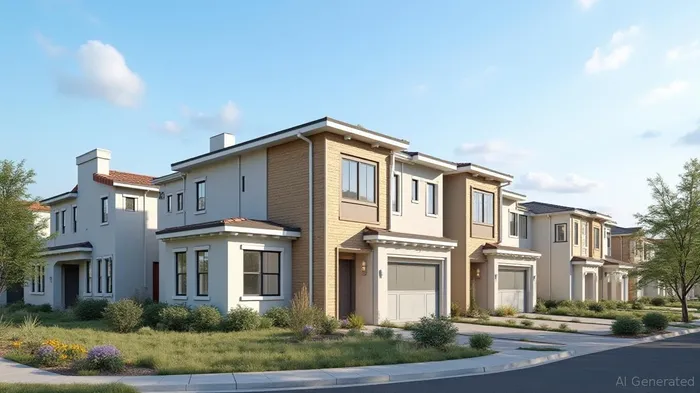 . These homes, once emblematic of rising homeownership, now face headwinds as demand weakens and interest rates linger near 18-year highs.
Housing Demand: A Perfect Storm of Stagflationary Pressures
The U.S. housing market has been in a multi-year slowdown, exacerbated by historically high mortgage rates and economic uncertainty. New home sales fell to a 14-year low in 2024, with affordability constraints pushing many first-time buyers out of the market. KBH's focus on the price-sensitive segment—homes averaging $400,000—has made it particularly vulnerable. . The data shows a steady decline in sales volume since 2022, even as prices have held relatively steady.
Interest Rates: A Double-Edged Sword
Federal Reserve policy remains a key wildcard. While the Fed has paused rate hikes since May 2023, its stance on keeping rates elevated for longer to combat inflation keeps mortgage rates near 7%. This hurts demand directly (via higher borrowing costs) and indirectly (via reduced consumer confidence). For KBHKBH--, rising rates also increase its financing costs, squeezing margins unless passed through to buyers—a move that could further dampen demand.
Strategic Shifts: Adapting to the New Reality
KBH has responded aggressively to the downturn. In 2024, it cut its active land holdings by 20%, reduced production targets, and introduced smaller, more affordable floorplans. Management also emphasized cost discipline, with SG&A expenses falling 12% year-over-year in Q1 2025. These moves suggest a pivot from growth-at-all-costs to profitability—a theme echoed in its June 23 earnings call, where it reaffirmed a focus on cash preservation over volume.
Valuation: A Discounted Play on Housing's Comeback?
KBH's stock has underperformed the broader market, down 35% over the past year versus the S&P 500's 10% gain. At a trailing P/E of 6.5x—well below its five-year average of 12x—the shares now trade at a discount to peers like D.R. Horton (DHI) and LennarLEN-- (LEN). . The valuation implies little optimism about a housing recovery, even as some economists see 2026 as a potential inflection pointIPCX--.
Meanwhile, KBH's buyback program—$200 million authorized in early 2025—signals confidence in its stock's undervaluation. If management's capital allocation proves prudent, this could set the stage for a rebound once demand stabilizes.
The Contrarian Case—and the Risks
For investors willing to bet on a cyclical recovery, KBH's valuation and strategic adjustments make it a compelling contrarian pick. The company's balance sheet is healthier than peers', with net debt to EBITDA of 1.2x, and its smaller land inventory reduces overhang risks. If mortgage rates begin to trend downward (as some predict in late 2025), KBH's affordability-focused model could see a surge in demand.
However, risks abound. The Fed's “higher for longer” stance could prolong the housing slump, while overbuilding in certain markets remains a threat. A recession in 2026 would further strain affordability, potentially pushing KBH's shares lower.
Investment Takeaway
KB Home's exclusion from the Russell 2500 Growth Index is less a reflection of its operational failures than a symptom of sector-wide malaise. For investors with a long-term horizon and a belief in a housing market recovery, KBH's discounted valuation and strategic cost discipline position it as a potential contrarian play. However, this is a high-risk bet: success hinges on interest rates peaking soon and demand rebounding faster than the market expects. As always, size positions accordingly and monitor macro signals closely.





Comentarios
Aún no hay comentarios