
Kazakhstan's OPEC+ Crossroads: The Fiscal Peril of Price Volatility and Currency Collapse
The July 5 OPEC+ meeting, which greenlit a 411,000-barrel-per-day increase in oil production for August, has amplified risks for Kazakhstan. Already non-compliant with its quotas, the nation's overproduction threatens to spark a price war, destabilizing its budget assumptions tied to $75/bbl oil. With Brent crude prices now hovering near $65/bbl—far below fiscal breakeven levels—investors face a clear path: short the Kazakh tenge (KZT) and hedge against further crude declines. The calculus is stark: fiscal austerity and currency devaluation are all but inevitable.
The Non-Compliance Crisis
Kazakhstan's defiance of OPEC+ quotas is structural, not accidental. Despite a mandated August 2025 output ceiling of 1.532 million barrels per day (mbpd), the country produced 1.85 mbpd in March 2025, exceeding its quota by 25%. This overproduction stems from two intractable issues:
1. IOC Influence: Over 70% of Kazakhstan's oil is controlled by international operators like ChevronCVX-- (at Tengizchevroil) and Eni (at Kashagan), which prioritize contractual obligations and shareholder returns over OPEC+ targets.
2. Technical Limits: State-run fields like Karachaganak risk reservoir damage if production is abruptly reduced, potentially stranding 5–10% of recoverable reserves.
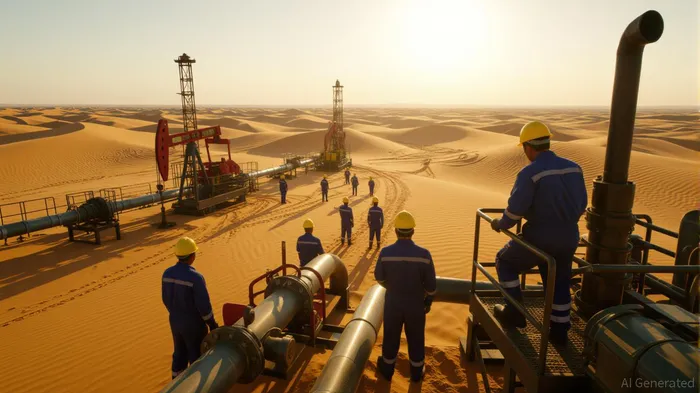
Market Impact: The Precarious Price Drop
Kazakhstan's non-compliance has contributed to a projected 1.2 mbpd surplus by year-end 2025, per the International Energy Agency. This oversupply has driven Brent crude prices down to $61–$66/bbl from $85/bbl in early 2025—a collapse of over 20%.
The price decline directly undermines Kazakhstan's fiscal health. The government's 2025 budget assumes $75/bbl oil, but current prices are $10/bbl below that threshold. A $1/bbl shortfall reduces annual fiscal revenue by ~$400 million, pushing the deficit toward 5% of GDP—a level likely to trigger austerity measures.
Currency Vulnerabilities: The Tenge's Tightrope
Kazakhstan's currency, the tenge (KZT), has already weakened 15% against the dollar since early 2025. With oil revenue accounting for 40% of government revenue, fiscal shortfalls will force the National Bank of Kazakhstan (NBK) to defend the currency through interventions or devaluation.
The risks are compounded by foreign debt obligations. Over $20 billion in external liabilities—much of it denominated in USD—are payable within the next three years. A weaker tenge would make these debts costlier, further straining public finances.
Investment Strategy: Short Tenge, Hedge Crude
The path forward is clear for investors:
- Short the Kazakh Tenge:
- Trade: Sell KZT/USD forwards or options to profit from depreciation.
Catalyst: The August 3 OPEC+ meeting could escalate tensions if production hikes continue. A further price drop below $60/bbl would accelerate fiscal and currency stress.
Hedge Against Brent Declines:
- Trade: Use crude oil futures or inverse ETFs (e.g., DBO) to capitalize on oversupply-driven price erosion.
Risk: Monitor geopolitical factors (e.g., Russian compliance) and OPEC+ policy shifts, but the structural overproduction dynamic remains dominant.
Avoid Kazakh Sovereign Debt:
- Bonds priced at spreads of 350–400 basis points over U.S. Treasuries already price in default risk. A currency devaluation or credit rating downgrade could trigger a sell-off.
Conclusion: A High-Stakes Gamble
Kazakhstan's OPEC+ defiance is a self-inflicted wound. With IOCs prioritizing profits and technical constraints limiting flexibility, compliance is a distant ideal. The fiscal and currency risks are now too acute to ignore. Investors who bet against the tenge and crude oil will position themselves to profit from a crisis that shows no sign of abating.
The next critical juncture is the August 3 meeting. If OPEC+ accelerates output further—or if non-compliance persists—the price war escalates. For now, the writing is on the wall: short the tenge, hedge crude, and prepare for fiscal austerity to dominate the headlines.





Comentarios
Aún no hay comentarios