
Kazakhstan's Oil Output Surges to Record High Amid Geopolitical Tensions
Generado por agente de IACyrus Cole
lunes, 3 de marzo de 2025, 9:18 am ET1 min de lectura
CVX--
Kazakhstan's oil output has surged to a record high of 2.12 million barrels per day (bpd) in February, according to a source familiar with the matter. This significant increase comes amidst geopolitical tensions and potential disruptions to Russian oil flows, which could have implications for global energy markets.
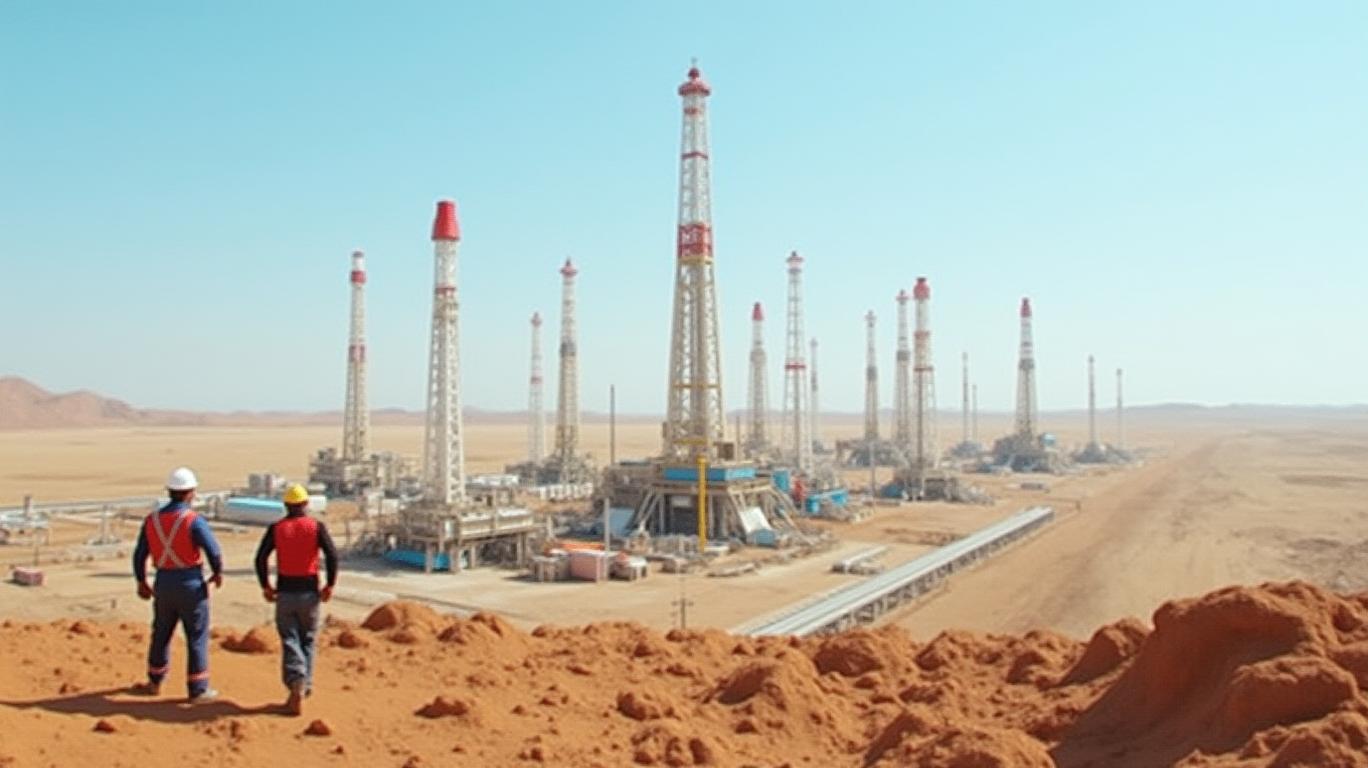
The surge in output follows a rise in production at the giant Tengiz oilfield, operated by Tengizchevroil, led by ChevronCVX-- Corp. (NYSE:CVX). The company has embarked on a $48 billion expansion of Tengiz, which is expected to ramp up output to 1 million barrels of oil equivalent per day (boepd). This expansion project, known as the Future Growth Project (FGP), is the third processing plant in operation at the Tengiz oilfield and is expected to significantly boost crude oil output.
Kazakhstan's increased oil production and exports pose several geopolitical risks and challenges, particularly in relation to Russia and Ukraine. The country relies on Russia for over 80% of its oil exports, primarily through the Caspian Pipeline Consortium (CPC). This dependence exposes Kazakhstan to potential disruptions or political pressure from Russia. In February 2025, a Ukrainian drone attack on the Kropotkinskaya pumping station in southern Krasnodar region damaged the CPC pipeline, leading to a 30-40% capacity cut. Although Kazakhstan's energy minister, Almasadam Satkaliyev, assured that there were no restrictions on oil intake and that storage was large enough for stable operations, future attacks or political tensions could lead to more significant disruptions.
Moreover, the increasing intensity of Ukrainian drone attacks on Russian energy infrastructure, including major sea ports and refineries, poses a risk to Kazakhstan's oil exports. Although Kazakhstan is not directly involved in the conflict, its reliance on Russian infrastructure makes it vulnerable to indirect impacts. For example, in February 2025, a Ukrainian drone attack targeted Rosneft PJSC’s Tuapse oil refinery and a major sea port in southern Russia, potentially affecting fuel exports.
To manage its constrained export capacity and mitigate geopolitical risks, Kazakhstan is considering alternative export routes. According to Kazakhstan Energy Minister Almasadam Satkaliyev, exports via the Baku-Tbilisi-Ceyhan (BTC) pipeline could increase to 20 million metric tons a year from the current 1.5 million as the country increases oil production. This move aims to reduce the more than 80% share of flows it currently sends via Russia through the CPC.
In conclusion, Kazakhstan's record-high oil output is driven by the expansion and increased production at the Tengiz oilfield. However, the country faces geopolitical challenges and risks, particularly in relation to Russia and Ukraine. To manage these risks and ensure the sustainability of its oil production and exports, Kazakhstan may need to diversify its export routes, strengthen its diplomatic relations with other countries, and address environmental concerns related to its oil industry.
Kazakhstan's oil output has surged to a record high of 2.12 million barrels per day (bpd) in February, according to a source familiar with the matter. This significant increase comes amidst geopolitical tensions and potential disruptions to Russian oil flows, which could have implications for global energy markets.
The surge in output follows a rise in production at the giant Tengiz oilfield, operated by Tengizchevroil, led by ChevronCVX-- Corp. (NYSE:CVX). The company has embarked on a $48 billion expansion of Tengiz, which is expected to ramp up output to 1 million barrels of oil equivalent per day (boepd). This expansion project, known as the Future Growth Project (FGP), is the third processing plant in operation at the Tengiz oilfield and is expected to significantly boost crude oil output.
Kazakhstan's increased oil production and exports pose several geopolitical risks and challenges, particularly in relation to Russia and Ukraine. The country relies on Russia for over 80% of its oil exports, primarily through the Caspian Pipeline Consortium (CPC). This dependence exposes Kazakhstan to potential disruptions or political pressure from Russia. In February 2025, a Ukrainian drone attack on the Kropotkinskaya pumping station in southern Krasnodar region damaged the CPC pipeline, leading to a 30-40% capacity cut. Although Kazakhstan's energy minister, Almasadam Satkaliyev, assured that there were no restrictions on oil intake and that storage was large enough for stable operations, future attacks or political tensions could lead to more significant disruptions.
Moreover, the increasing intensity of Ukrainian drone attacks on Russian energy infrastructure, including major sea ports and refineries, poses a risk to Kazakhstan's oil exports. Although Kazakhstan is not directly involved in the conflict, its reliance on Russian infrastructure makes it vulnerable to indirect impacts. For example, in February 2025, a Ukrainian drone attack targeted Rosneft PJSC’s Tuapse oil refinery and a major sea port in southern Russia, potentially affecting fuel exports.
To manage its constrained export capacity and mitigate geopolitical risks, Kazakhstan is considering alternative export routes. According to Kazakhstan Energy Minister Almasadam Satkaliyev, exports via the Baku-Tbilisi-Ceyhan (BTC) pipeline could increase to 20 million metric tons a year from the current 1.5 million as the country increases oil production. This move aims to reduce the more than 80% share of flows it currently sends via Russia through the CPC.
In conclusion, Kazakhstan's record-high oil output is driven by the expansion and increased production at the Tengiz oilfield. However, the country faces geopolitical challenges and risks, particularly in relation to Russia and Ukraine. To manage these risks and ensure the sustainability of its oil production and exports, Kazakhstan may need to diversify its export routes, strengthen its diplomatic relations with other countries, and address environmental concerns related to its oil industry.

Divulgación editorial y transparencia de la IA: Ainvest News utiliza tecnología avanzada de Modelos de Lenguaje Largo (LLM) para sintetizar y analizar datos de mercado en tiempo real. Para garantizar los más altos estándares de integridad, cada artículo se somete a un riguroso proceso de verificación con participación humana.
Mientras la IA asiste en el procesamiento de datos y la redacción inicial, un miembro editorial profesional de Ainvest revisa, verifica y aprueba de forma independiente todo el contenido para garantizar su precisión y cumplimiento con los estándares editoriales de Ainvest Fintech Inc. Esta supervisión humana está diseñada para mitigar las alucinaciones de la IA y garantizar el contexto financiero.
Advertencia sobre inversiones: Este contenido se proporciona únicamente con fines informativos y no constituye asesoramiento profesional de inversión, legal o financiero. Los mercados conllevan riesgos inherentes. Se recomienda a los usuarios que realicen una investigación independiente o consulten a un asesor financiero certificado antes de tomar cualquier decisión. Ainvest Fintech Inc. se exime de toda responsabilidad por las acciones tomadas con base en esta información. ¿Encontró un error? Reportar un problema


SOBRE NOSOTROS
Nuestra historiaAutores de noticiasBase de conocimientosPolítica de privacidadTérmino de usoDescargo de responsabilidad de corretaje de tercerosTérminos de uso de AIMEDivulgaciones de riesgos de AInvest AICarrerasCONTÁCTENOS
Email: support@ainvest.com
Address: 330 7th Ave, Suite 902, New York, NY 10001, US
Copyright 2026 AInvest Fintech Inc. All rights reserved.


Comentarios
Aún no hay comentarios