
Kazakhstan's Logistics Sector: A Strategic Bet on Infrastructure and Air Freight Expansion
In the heart of Eurasia, where the ancient Silk Road once thrived, Kazakhstan is redefining its role as a modern logistics powerhouse. With a strategic location bridging East and West, the country has embarked on an ambitious infrastructure overhaul, positioning itself as a critical node in global trade networks. Recent investments in road, rail, air, and maritime logistics—anchored by the Nurly Zhol initiative—are not just reshaping trade flows but also catalyzing long-term asset appreciation in key urban and industrial corridors. For investors seeking high-impact opportunities in Central Asia, Kazakhstan's logistics sector offers a compelling case.
A Logistics Revolution: Building the Backbone of Eurasian Trade
Kazakhstan's government has allocated $9 billion in 2025 for infrastructure upgrades, modernizing 13,000 kilometers of highways and 6,100 kilometers of railways. This effort is part of a broader plan to expand 11,000 kilometers of railway lines by 2029, with a focus on enhancing connectivity between China and Europe. The partnership between Kazakhstan Temir Zholy (KTZ) and China Railway under the Belt and Road Initiative (BRI) is particularly transformative, aiming to triple rail freight traffic between China and Europe by 2029.
The Tobyl logistics hub in Kostanai, a $121.4 million project, exemplifies this vision. Covering 133.6 hectares, the hub will handle 400,000 TEUs annually and integrate real-time digital tracking systems. Its completion by 2027 will create 500 jobs and serve as a linchpin for Central Asian trade routes. Meanwhile, the Sary Arka Airport in Karaganda is being upgraded into a multimodal cargo hub, with freight capacity projected to surge from 15,000 to 200,000 tons by 2030.
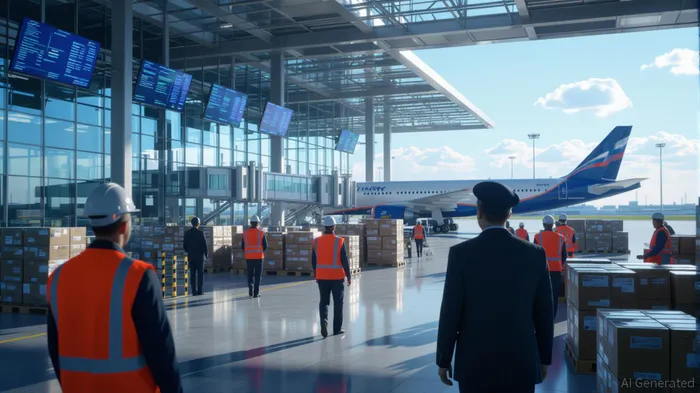
Air Freight's Digital Leap: E-Freight and the Rise of a National Cargo Airline
Kazakhstan's air freight sector is undergoing a digital revolution. The E-Freight system, which digitizes cargo documentation, has reduced handling times from one day to one hour. Eight airports now meet ICAO's 4E standards, capable of handling large aircraft and high-volume traffic.
The government's plan to launch a national cargo airline in early 2026 adds another layer of strategic advantage. With a global air cargo market handling 57.7 million tons annually, this airline will tap into growing demand for efficient East-West freight routes. The first flight is expected to connect Kazakhstan to major Asian and European hubs, further solidifying its role in the Middle Corridor.
Maritime and Port Expansion: The Caspian Sea's New Era
Kazakhstan's Caspian ports are also seeing transformative investments. The Port of Aktau now handles 240,000 TEUs annually, while the Kuryk Seaport is receiving a $775 million boost from AD Ports Group. The Sarzha Multipurpose Terminal at Kuryk, developed with Jan De Nul, will handle 11 million tons of cargo yearly, positioning the port as a key player in the Trans-Caspian International Transport Route (TITR).
Strategic Advantages Over Central Asia
While other Central Asian countries are investing in logistics, Kazakhstan's scale and pace of development set it apart. Uzbekistan, for instance, is expanding its rail links but lacks the comprehensive infrastructure vision of Nurly Zhol. Turkmenistan and Tajikistan face bottlenecks in maritime access and regional coordination, whereas Kazakhstan's partnerships with China, Türkiye, and European firms ensure seamless corridor integration.
Kyrgyzstan's reliance on Chinese transit routes through Kashgar highlights its vulnerability, while Kazakhstan's diversified approach—leveraging both the BRI and the Middle Corridor—reduces geopolitical risk.
Asset Appreciation: Almaty, Astana, and Special Economic Zones (SEZs)
The logistics boom is directly driving real estate and asset appreciation in key regions:
- Almaty, the commercial capital, saw average secondary housing prices hit $1,250 per square meter in 2024, with forecasts predicting a 6.2% annual increase through 2026.
- Astana (Nur-Sultan), the political capital, is witnessing a 12.9% year-on-year price surge, driven by infrastructure projects like the "Center-West" highway.
- Special Economic Zones (SEZs) such as Khorgos and Akmola are attracting $2.4 billion in industrial investments, with tax incentives and logistics hubs boosting land values.
Halyk Research projects a 6.8% annual rise in primary housing prices in Almaty and Astana by 2026, fueled by improved connectivity and rising employment in logistics.
Investment Outlook: A Logistics-Driven Bull Market
Kazakhstan's logistics sector is a high-conviction play for long-term investors. The logistics market, valued at $11.36 billion in 2025, is projected to grow at a 5.44% CAGR to $17 billion by 2033. This expansion is underpinned by:
1. Government incentives through SEZs, including tax exemptions and infrastructure support.
2. Private sector participation, with Turkish firm S Sistem Lojistik investing $100 million in warehouse terminals.
3. Global trade trends, including e-commerce growth and the Middle Corridor's rise as an alternative to the Suez Canal.
Risks and Mitigations
While geopolitical tensions and inflationary pressures exist, Kazakhstan's strategic partnerships and diversified trade corridors mitigate these risks. The government's focus on digital logistics (e.g., E-Freight) and climate-resilient infrastructure also addresses long-term vulnerabilities.
Conclusion: A Logistics Hub for the 21st Century
Kazakhstan's logistics infrastructure investments are not just about moving goods—they're about moving the needle on asset appreciation and economic resilience. For investors, the country's combination of scale, strategic vision, and global connectivity makes it a standout opportunity in Central Asia. As the Tobyl hub, Sary Arka Airport, and national cargo airline come online, the rewards for early movers in this sector are likely to be substantial.
Investment Advice: Allocate a portion of your emerging markets portfolio to Kazakhstan's logistics sector via SEZs, infrastructure ETFs, or regional logistics firms with Kazakh operations. Monitor the KASE Composite Index for market sentiment and consider long-term land or warehouse assets in Almaty, Astana, and Khorgos. The Eurasian giant is waking up—and its logistics revolution is just getting started.







Comentarios
Aún no hay comentarios