
Kazakhstan's Entry into the Stablecoin Market with Evo on Solana: A Geopolitical and Blockchain-Driven Investment Opportunity
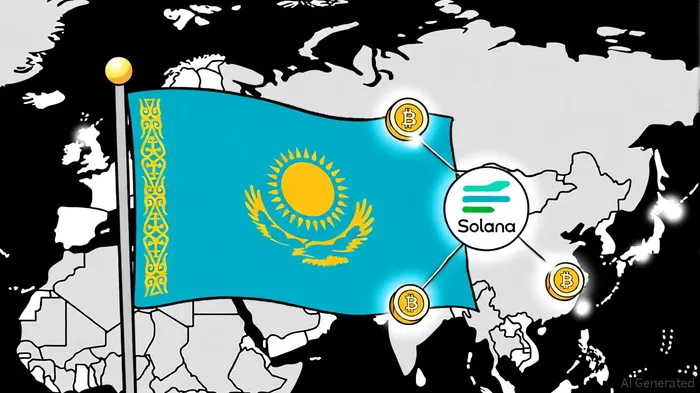
Kazakhstan's launch of the Evo stablecoin (KZTE), pegged 1:1 to the Kazakhstani tenge, marks a pivotal moment in its digital finance strategy. Built on the Solana blockchain and integrated with Mastercard's global payment networks, this initiative reflects a calculated effort to bridge traditional finance and the crypto ecosystem while positioning the country as a regional leader in blockchain innovation [1]. For investors, the project underscores a broader trend: emerging markets are increasingly leveraging blockchain to reshape financial infrastructure, attract capital, and assert geopolitical influence.
Strategic Geopolitical Positioning
Kazakhstan's stablecoin initiative is not an isolated move but part of a multifaceted digital strategy. The National Bank of Kazakhstan (NBK) has overseen the rollout under its Digital Assets Regulatory Sandbox, ensuring compliance while fostering innovation [2]. By partnering with Solana—a blockchain known for its high throughput and low transaction costs—and MastercardMA--, the country is addressing scalability and global interoperability, two critical barriers to mass adoption [3]. This collaboration aligns with Kazakhstan's ambition to become Central Asia's blockchain hub, a goal reinforced by its CryptoCity pilot zone in Alatau, where cryptocurrencies can be used for everyday transactions, and its 70/30 energy model, allocating 30% of new thermal power plant capacity to crypto mining [4].
Regionally, Kazakhstan faces competition from Uzbekistan and Kyrgyzstan, both of which have advanced their own blockchain strategies. Uzbekistan, for instance, has issued 14 digital asset licenses and launched the UZnEX exchange, while Kyrgyzstan has enacted comprehensive digital asset legislation [5]. However, Kazakhstan's state-driven approach—combining centralized oversight with strategic partnerships—positions it to dominate the region's digital finance landscape.
Blockchain-Driven Investment Opportunities
The global blockchain market is projected to grow from $31.28 billion in 2024 to $1.43 trillion by 2030, driven by tokenization, DeFi, and AI integration [6]. Kazakhstan's stablecoin initiative taps into this growth by addressing two key pain points: financial inclusion and cross-border transaction efficiency. By enabling crypto-fiat gateways and crypto-linked card payments, KZTE could reduce reliance on traditional banking systems, particularly in rural areas, while Mastercard's involvement opens pathways for international adoption [7].
For investors, the project's appeal lies in its regulated environment and strategic infrastructure. Unlike many emerging markets, Kazakhstan offers a clear legal framework through its AIFC (Astana International Financial Center), which now hosts 11 licensed exchanges and has seen trading volumes surge to $1.4 billion in 2024 [8]. Additionally, the country's state-run crypto reserve, funded by confiscated digital assets and state-led mining operations, adds a layer of stability and long-term value [9].
Risks and Regional Dynamics
While the outlook is optimistic, challenges persist. Kazakhstan's energy infrastructure, though bolstered by the 70/30 model, remains strained by aging systems and seasonal shortages [10]. Additionally, geopolitical tensions in Central Asia—such as Uzbekistan's aggressive crypto adoption and Kyrgyzstan's regulatory experimentation—could fragment the market. However, Kazakhstan's proactive approach, including its digital tenge (CBDC) launched in 2023 and its openness to USD-pegged stablecoins for regulatory fees, demonstrates a commitment to adaptability [11].
Conclusion
Kazakhstan's Evo stablecoin represents more than a technological innovation—it is a strategic lever to enhance economic sovereignty, attract blockchain-driven investment, and assert regional influence. For investors, the project offers exposure to a regulated, high-growth market with a clear roadmap. As the NBK continues to refine its digital asset policies and expand partnerships like the one with SolanaSOL-- and Mastercard, Kazakhstan's stablecoin could become a cornerstone of Central Asia's financial future.







Comentarios
Aún no hay comentarios