
Kamoa-Kakula's Seismic Divide: How Reporting Discrepancies Could Shake Investor Confidence
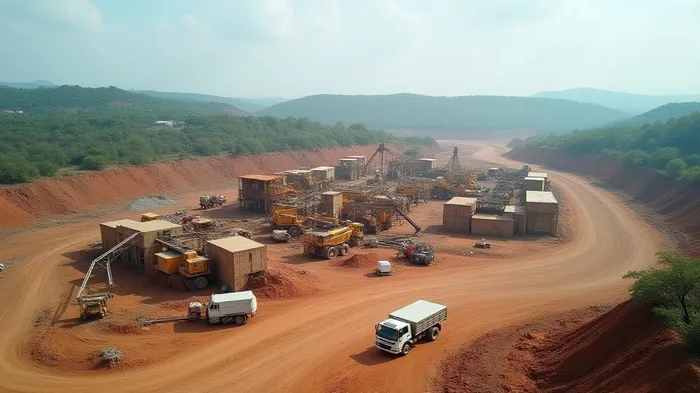
The Kamoa-Kakula Copper Complex, one of the world’s largest undeveloped copper projects, has become the epicenter of a high-stakes dispute between its joint venture partners: Ivanhoe MinesIE-- and Zijin Mining. At issue are conflicting interpretations of seismic activity risks, production guidance reliability, and the mine’s operational future. For investors, the resolution of this clash could mean the difference between riding a copper boom or navigating a costly misstep. Here’s why this disagreement matters—and what it means for your portfolio.
The Core of the Conflict: Scaling vs. Structural Collapse
Zijin Mining’s May 23 press release painted a dire picture of the eastern section of the Kakula mine, citing “multiple roof-falling and rib-spalling incidents.” These terms imply structural instability, suggesting pillars or roof supports are failing—a red flag for safety and production continuity. Ivanhoe, however, swiftly countered, asserting that inspections by its geotechnical teams found no evidence of collapsing stopes or pillars. Instead, it attributed recent rock falls to scaling—a term describing non-structural rock shedding from sidewalls due to seismic activity.
The distinction is critical. Scaling typically involves manageable, localized rock movement, while roof collapses signal systemic structural failure. Ivanhoe’s framing seeks to downplay risks, emphasizing that repairs to damaged cables and pipework (not structural pillars) are underway. Zijin’s language, by contrast, hints at deeper, unresolved issues. For investors, the question is: Which narrative aligns with reality?
BMO’s Bridge: Limited Immediate Impact, But Uncertainty Ahead
BMO Capital Markets’ assessment offers a lifeline of reassurance: milling operations continue at reduced capacity using stockpiled ore, and “no material impact” to 2025 production is anticipated. This suggests that even if Zijin’s fears are valid, the joint venture has buffers to absorb short-term disruptions.
Yet the long-term implications remain murky. Ivanhoe’s production guidance—520,000 to 580,000 tonnes of copper concentrate for 2025—rests on the assumption that the western mine section can ramp up quickly post-repairs. If Zijin’s concerns about structural risks prove accurate, or if seismic activity persists, those targets could slip. A reveals investor anxiety: shares fell 1.2% on May 23, with a market cap now at CAD$17.4 billion—a stark reminder of Wall Street’s impatience with operational uncertainty.
Guidance Reliability: Trust, But Verify
The joint venture’s ownership structure—39.6% each for Ivanhoe and Zijin, with the DRC government holding 20%—adds layers of complexity. Disparate interpretations of geological data could reflect more than technical disagreements; they might signal broader strategic or financial tensions.
Investors must scrutinize two key factors:
1. The May 27 Update: Ivanhoe’s promised detailed report on production impacts will be a credibility test. If it confirms minimal damage, shares could rebound. A worse-than-expected assessment, however, could trigger a sell-off.
2. Third-Party Validation: Independent geotechnical reviews or regulator findings could mediate the dispute. Without transparency, investor confidence in guidance will erode.
Why This Matters for Copper Bulls
Kakula is no ordinary mine. With April’s record production of 50,176 tonnes, it’s a linchpin for global copper supply at a time when demand for EVs and renewables is surging. A production setback here could tighten markets and boost prices—but only if the mine’s output is truly at risk.
The dispute’s resolution will determine whether Kamoa-Kakula remains a pillar of copper growth or a cautionary tale of operational overreach. For now, BMO’s “no material impact” stance suggests a wait-and-see approach. But with shares already under pressure, the May 27 update is a make-or-break moment.
Final Call: Monitor, but Stay Cautiously Bullish—For Now
Investors should treat Ivanhoe’s stock as a “high-risk, high-reward” play. The mine’s scale and copper’s structural demand justify optimism, but the partnership’s credibility hinges on clarity.
- Buy Signal: If the May 27 update confirms production targets are intact, Ivanhoe could rebound sharply.
- Sell Signal: Persistent structural issues or a revised guidance would likely spark a prolonged decline.
In the meantime, the Kamoa-Kakula divide underscores a broader truth: In mining, geology and governance are equally critical. For now, the rock is talking—but investors are waiting for the companies to listen.





Comentarios
Aún no hay comentarios