
Kalshi's Strategic Expansion into Layer 2 Networks and Its Impact on Prediction Market Growth
Layer 2 Integration: A Catalyst for Scalability and Accessibility
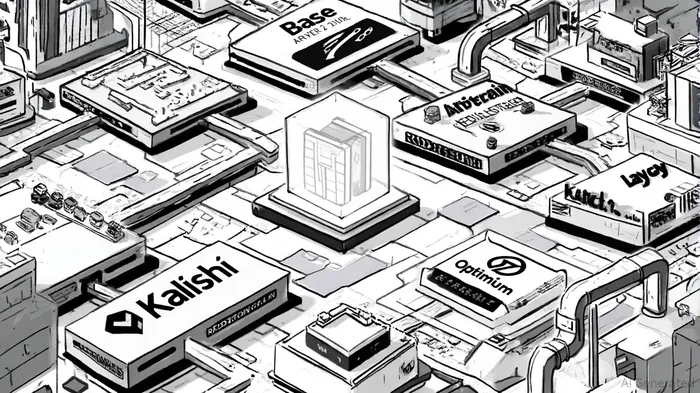
Kalshi's recent addition of native USDC deposits on Base, an EthereumETH-- Layer 2 network, marks a critical step in its infrastructure strategy, according to CryptoBriefing. By expanding beyond Ethereum and SuiSUI--, Kalshi is addressing a key pain point for users: high transaction costs and slow settlement times. Base's low-fee environment, combined with USDC's stability, makes it easier for retail and institutional participants to engage with prediction markets without sacrificing capital efficiency.
This move is part of a broader trend in the crypto ecosystem, where Layer 2 solutions are becoming the default for applications requiring high throughput and cost-effectiveness. For Kalshi, the integration not only enhances user experience but also aligns with Ethereum's long-term vision of modular blockchain architecture. As Bloomberg reports, Ethereum Layer 2 networks processed over $12 billion in transaction volume in Q3 2025, a 40% quarter-over-quarter increase. Kalshi's adoption of Base positions it to capture a growing share of this liquidity.
Oracle Infrastructure: Redstone's Role in Real-Time Data Feeds
Kalshi's partnership with RedstoneRED-- is arguably its most transformative strategic move. Redstone's modular oracle infrastructure provides verifiable real-world data across 110+ blockchain networks, enabling Kalshi to execute on-chain settlements with unprecedented speed and accuracy. This is particularly critical for prediction markets, where outcomes often hinge on time-sensitive events like interest rate decisions, election results, or economic policy changes.
Unlike traditional oracles that rely on centralized data sources, Redstone's hybrid model combines pull-based and push-based data feeds, ensuring both security and flexibility. For example, during the 2025 U.S. Federal Reserve's rate-cut cycle, Kalshi's Redstone-powered smart contracts settled trades in under 10 seconds, a stark contrast to the hours or days required by competing platforms, as detailed on the Redstone blog. This capability not only enhances user trust but also opens new avenues for DeFi developers to build applications that leverage real-world outcomes.
Competitive Edge: Kalshi vs. Polymarket and Gnosis
While Kalshi's technical advancements are impressive, its true competitive edge lies in its regulatory-first approach. Unlike Polymarket, which operates on a blockchain-first model and faces scrutiny over its Universal Market Access oracles, as reported by The Defiant, Kalshi's CFTC approval provides a level of legitimacy that is hard to replicate. This has allowed Kalshi to attract a diverse user base, including traditional financial institutions and retail investors wary of crypto's regulatory uncertainties.
Polymarket, despite its $9 billion valuation, remains heavily dependent on speculative token-driven growth. Its recent all-time high in trading volume is largely attributed to anticipation of a 2026 token launch, which has yet to materialize. In contrast, Kalshi's valuation of $5 billion is underpinned by tangible infrastructure upgrades and a growing user base in the U.S. market.
Gnosis, the pioneer of conditional tokens, has shifted focus to core blockchain tools like Safe and CoW Exchange, leaving its prediction market legacy (via Omen) to trail behind newer entrants. While Gnosis's technical primitives remain foundational, its lack of a dedicated prediction market platform in 2025 has allowed Kalshi and Polymarket to dominate the space. The Defiant's account of the sector's history underscores this shift.
The Road Ahead: Market Growth and Institutional Adoption
Kalshi's Layer 2 and oracle strategies are not just about technical superiority-they're about democratizing access to prediction markets. By reducing friction for users and ensuring regulatory compliance, Kalshi is creating a flywheel effect: more participants, more liquidity, and more data. This, in turn, attracts developers and institutions looking to build on top of its infrastructure.
For investors, the implications are clear. Kalshi's ability to scale while maintaining regulatory alignment gives it a unique position in the crypto-finance ecosystem. As Fortune notes, Kalshi's user growth in the U.S. has outpaced Polymarket's global metrics, a testament to its appeal in a market where trust and compliance are paramount.
Conclusion
Kalshi's strategic expansion into Layer 2 networks and its integration of Redstone's oracle technology are redefining the prediction market landscape. By prioritizing scalability, real-time data, and regulatory clarity, Kalshi is not only outpacing competitors but also laying the groundwork for mass adoption. For investors, this represents a compelling opportunity to bet on a platform that is bridging the gap between traditional finance and decentralized innovation.







Comentarios
Aún no hay comentarios