
Kalshi's $4 Billion Volume and the Future of Event-Based Trading: Prediction Markets as the Next Frontier in Financial Innovation and Risk Management
Kalshi's Growth: A Convergence of Innovation and Accessibility
Kalshi's meteoric rise is fueled by a combination of strategic partnerships, regulatory clarity, and global expansion. The platform's collaboration with RobinhoodHOOD-- accounts for 25–35% of its daily trading volume, democratizing access to prediction markets for retail investors, according to a Coinfomania report. Simultaneously, Kalshi's expansion into 140 countries has broadened its user base, while its valuation has doubled to $5 billion in just three months, reflecting institutional confidence in its model.
This growth is not accidental. Kalshi operates as a Designated Contract Market (DCM) under CFTC regulation, distinguishing it from unregulated offshore platforms like Polymarket. By aligning with U.S. regulatory standards, Kalshi has attracted both retail and institutional participants, with Q3 2025 notional volumes exceeding $3 billion, a Coinotag article notes. The platform's focus on sports betting and political event trading has further amplified its appeal, blending entertainment with financial utility.
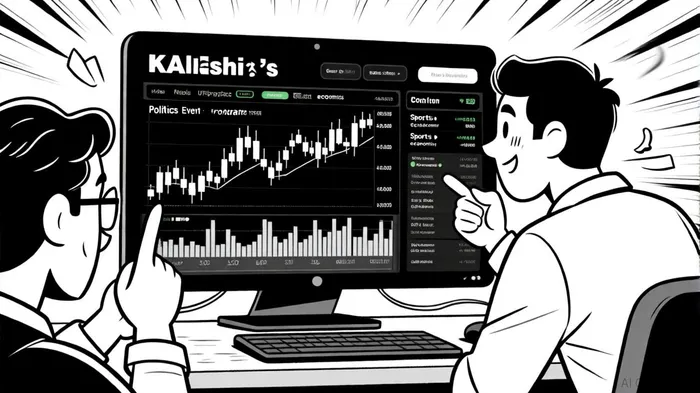
Prediction Markets as Forecasting Engines and Risk Management Tools
Beyond speculation, prediction markets like Kalshi serve as powerful forecasting tools. By allowing traders to buy "Yes" or "No" contracts on events such as Federal Reserve interest rate decisions, Kalshi's market prices often outperform traditional polling data, as argued in an SCCG Management article. For instance, contracts tied to inflation reports or job market outcomes act as real-time barometers of collective expectations, offering insights that traditional financial instruments cannot.
Moreover, Kalshi's event contracts provide risk management solutions for industries facing operational uncertainty. Airlines can hedge against flight cancellations due to weather or geopolitical events, while retailers might use contracts to anticipate consumer demand shifts tied to economic cycles, as noted in the SCCG Management piece. These applications extend beyond speculative trading, positioning prediction markets as a complementary tool to traditional derivatives.
Regulatory Framework and Ethical Considerations
Kalshi's CFTC oversight introduces a layer of consumer protection absent in many offshore platforms. Features like KYC/AML compliance, circuit breakers, and responsible trading tools-such as personalized funding caps and voluntary opt-outs-underscore its commitment to user safety, according to the Kalshi Help Center. However, the platform's expansion into politically sensitive markets, such as U.S. election outcomes, has sparked debates about the ethical boundaries of financial speculation, a point highlighted by SCCG Management.
Regulatory challenges remain. While Kalshi's federal licensing enables broader U.S. access, it also subjects the platform to scrutiny over whether prediction markets blur the line between financial instruments and gambling. This tension highlights the need for a nuanced regulatory framework that balances innovation with consumer protection.
The Road Ahead: Challenges and Opportunities
Despite its success, Kalshi faces headwinds. Competition from platforms like Polymarket, which are expanding U.S. access despite lacking CFTC approval, could fragment the market, a Coinotag article warned. Additionally, the platform must navigate macroeconomic volatility and geopolitical risks that could dampen trading activity.
Yet, the potential is undeniable. As institutions increasingly recognize the value of event-based contracts for hedging and forecasting, Kalshi's role in the financial ecosystem is likely to grow. Its ability to innovate-whether through new market categories or enhanced accessibility-will determine its long-term success.
Conclusion
Kalshi's $4 billion trading volume is more than a milestone; it is a harbinger of a new era in finance. By merging real-world event forecasting with risk management, prediction markets are evolving from niche curiosities to essential tools for investors and institutions alike. As regulatory frameworks adapt and technological barriers fall, platforms like Kalshi will likely redefine how markets process information, manage risk, and allocate capital. The future of event-based trading is here-and it is reshaping the financial world.





Comentarios
Aún no hay comentarios