
Kalshi's $300M Raise: A Tipping Point in the Prediction Market Sector
Kalshi's recent $300 million Series D funding round, led by Sequoia Capital and Andreessen Horowitz, has positioned the prediction market platform as a transformative force in financial innovation. Valued at $5 billion-a leap from $2 billion in June 2025-the raise underscores investor confidence in regulated prediction markets and signals a potential inflection point for the sector, according to Cointelegraph. With this capital, Kalshi has expanded its footprint to 140 countries, solidifying its claim as the "world's only unified global prediction market," per Coin360. This expansion, coupled with a 200-fold surge in annualized trading volume to $50 billion, has enabled Kalshi to capture over 60% of the global prediction market share, overtaking decentralized rival Polymarket, Coin360 reports.
Strategic Expansion and Market Leadership
Kalshi's growth is driven by a dual strategy: regulatory compliance and user accessibility. By securing CFTC approval and settling contracts in U.S. dollars, the platform has bridged the gap between blockchain innovation and traditional finance, attracting institutional and retail investors alike, Coin360 reports. In September 2025 alone, Kalshi recorded $1.3 billion in monthly trading volume-nearly double Polymarket's $773 million-largely fueled by sports betting contracts tied to the NFL season, DL News reports. Sports-related predictions now account for over 75% of Kalshi's activity, a testament to its ability to tap into high-engagement verticals, according to Coingape.
The platform's integration with major brokerages like Robinhood and Webull further democratizes access, enabling users to trade event-based contracts as seamlessly as stocks, Coin360 notes. This partnership strategy mirrors the broader fintech trend of embedding speculative tools into everyday financial workflows, a move that could accelerate mass adoption.
Regulatory Edge and Competitive Dynamics
Kalshi's regulated framework is its most significant differentiator. Unlike on-chain competitors, which face scalability and compliance challenges, Kalshi's adherence to U.S. and international regulations has allowed it to operate in jurisdictions where others cannot, FinancialContent reports. For instance, while Polymarket relies on decentralized infrastructure, Kalshi's CFTC oversight grants it legal access for U.S. citizens-a critical demographic for sports betting and political forecasting, Coin360 reports.
However, this regulatory edge is not without friction. Kalshi now faces lawsuits from U.S. states like Massachusetts, which allege the platform circumvents existing sports betting laws, Cointelegraph reports. These legal battles highlight the sector's broader tension between innovation and compliance, a challenge that could shape its long-term trajectory.
Global Adoption Potential and Risks
Despite its rapid expansion, Kalshi's reach remains constrained in 38 jurisdictions, including Canada, the UK, and Singapore, Cointelegraph reports. These restrictions underscore the fragmented nature of global financial regulation and the hurdles for cross-border marketplaces. Yet, the platform's ability to scale to 140 countries-while maintaining compliance-demonstrates a scalable model that could eventually pressure regulators to harmonize rules.
From an investment perspective, Kalshi's valuation surge reflects optimism about its unit economics. With $50 billion in annualized volume and a 60% market share, the platform's network effects are evident. However, sustaining this growth will require navigating regulatory headwinds and differentiating itself from emerging competitors.
Conclusion: A Tipping Point for Prediction Markets
Kalshi's $300 million raise is more than a funding milestone-it represents a validation of prediction markets as a legitimate asset class. By combining regulatory rigor with blockchain's transparency, the platform has created a hybrid model that appeals to both traditional and crypto-native investors. While challenges remain, Kalshi's leadership in trading volume, global expansion, and strategic partnerships positions it as a bellwether for the sector's future. For investors, the question is no longer whether prediction markets will grow, but how quickly they will become mainstream.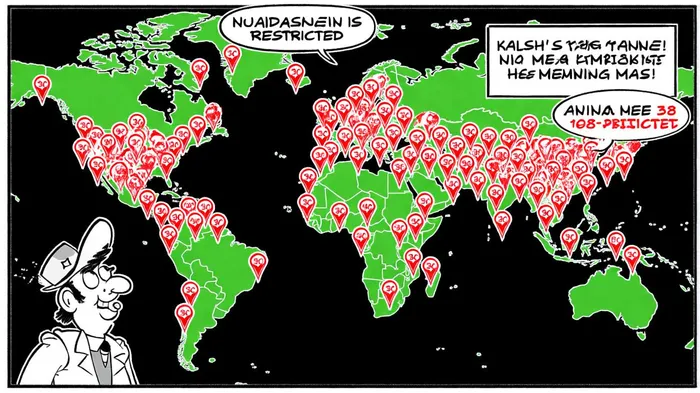







Comentarios
Aún no hay comentarios