
Kadena's Operational Shutdown and Its Implications for Crypto Network Resilience
Kadena's Collapse: A Case Study in Market Vulnerability
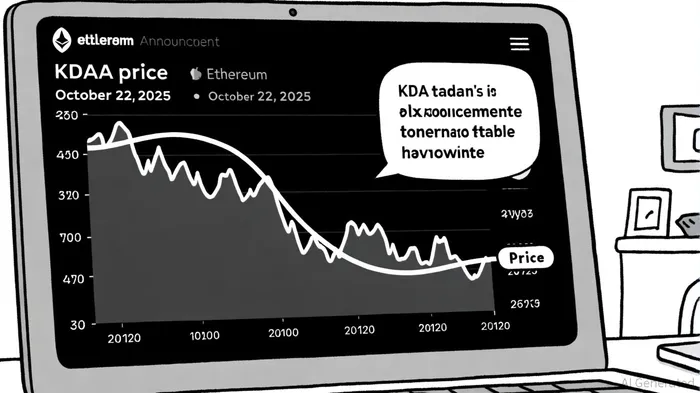
Kadena's shutdown was precipitated by "unfavorable market conditions," a vague but telling euphemism for the crypto winter that began in 2022 and intensified in 2025. The company cited an inability to sustain development and promotion of its decentralized platform, a claim that highlights the precarious financial models of many blockchain ventures. While the Kadena blockchain remains technically operational-powered by miners and independent developers-the absence of corporate stewardship raises questions about its future trajectory. A retained team is managing the transition, but the lack of active innovation or community-driven governance mechanisms leaves the network exposed to stagnation, as detailed in a MarketingScoop case study.
This scenario mirrors the fate of TradeLens, a blockchain-based supply chain platform launched by IBM and Maersk. Despite its ambitious vision, TradeLens faltered due to governance disputes, interoperability challenges, and a lack of stakeholder alignment. Similarly, Kadena's reliance on a centralized entity for critical updates and strategic direction has proven to be a liability when market conditions deteriorated.
Leadership and Governance: The Linchpins of Resilience
The University of Surrey's 2025 study on blockchain startups revealed a sobering statistic: up to 90% of blockchain initiatives fail, with weak leadership and poor governance cited as primary culprits. This aligns with Kadena's experience, where the absence of a robust, decentralized governance model left the project vulnerable to external shocks. In contrast, Ethereum's recent leadership overhaul-marked by the appointment of co-executive directors Hsiao-Wei Wang and Tomasz Stańczak-demonstrates how proactive governance reforms can bolster resilience. By prioritizing technical collaboration and decentralization, EthereumETH-- has navigated scalability challenges and maintained its dominance in the smart contract space, according to a Blockchain Review analysis.
Leadership in blockchain projects is not merely about technical expertise; it requires navigating complex stakeholder ecosystems. For instance, De Beers' Tracr platform succeeded in tracking diamonds from mine to retail by fostering cross-industry collaboration and standardization. Conversely, Kadena's failure to cultivate a self-sustaining community or incentivize developer participation left it ill-prepared for prolonged market downturns.
The Broader Implications for Crypto Investors
Kadena's shutdown serves as a cautionary tale for investors evaluating blockchain projects. Key considerations include:
1. Decentralization vs. Centralized Control: Projects with decentralized governance structures, such as BitcoinBTC-- and Ethereum, are better positioned to withstand corporate or leadership failures. Kadena's reliance on a centralized entity for critical functions exposed it to existential risks.
2. Market Adaptability: The ability to pivot in response to market conditions is crucial. Ethereum's focus on layer 2 solutions and the Dencun upgrade reduced transaction fees and enhanced scalability, illustrating how innovation can mitigate market pressures.
3. Leadership Quality: Founders with cross-industry vision and strong governance frameworks are more likely to steer projects through crises. The Surrey study emphasized that successful blockchain leaders often draw inspiration beyond the crypto space.
Conclusion: Building Resilience in a Volatile Ecosystem
Kadena's operational shutdown is emblematic of the broader challenges facing blockchain projects in an unpredictable market. While the technology itself remains resilient-evidenced by the continued operation of the Kadena blockchain-its long-term success hinges on governance models that prioritize decentralization, community engagement, and adaptive leadership. For investors, the lesson is clear: projects with centralized dependencies and weak governance frameworks are inherently riskier, even if their underlying technology is sound.
As the crypto landscape evolves, the focus must shift from speculative hype to sustainable, stakeholder-driven models. The Ethereum Foundation's recent reforms and the success of supply chain platforms like Tracr demonstrate that resilience is achievable-but only through deliberate, inclusive leadership and a commitment to decentralization.






Comentarios
Aún no hay comentarios