
The U.S. Justice Department's Escalating Judicial Conflict: Implications for Legal and Political Risk in the U.S. Market
Regulatory Uncertainty and the Chevron Doctrine's Collapse
The overturning of the Chevron deference doctrine in June 2024 marked a turning point in regulatory governance. By requiring courts to independently interpret ambiguous statutes rather than deferring to agency expertise, the decision has created a fragmented legal landscape. According to a 2025 Norton Rose Fulbright Litigation Trends Survey, . For instance, the Sixth Circuit's rejection of the FCC's Telecommunications Act interpretation in In re MCP No. 185 underscores the unpredictability of agency authority. While some courts argue this shift could reduce uncertainty by curbing administrative overreach, the reality is a surge in litigation. This volatility forces businesses to adopt defensive strategies, delaying investments until legal clarity emerges.
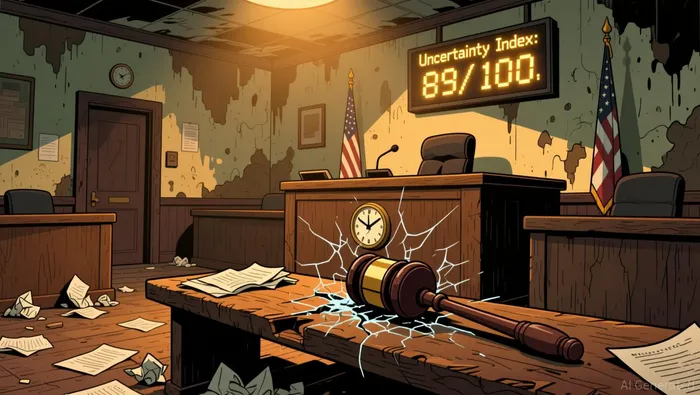
Investor Confidence and Capital Allocation Dilemmas
The ripple effects of regulatory uncertainty are evident in corporate capital allocation strategies. , management faces a "capital allocation pickle", torn between maintaining liquidity and pursuing growth in a Bitcoin-based model amid regulatory ambiguity. Conversely, firms with clearer strategic visions, such as Tidewater Inc., have . The Federal Reserve's 2025 report further highlights . Sectors reliant on global supply chains, like manufacturing and energy, are particularly vulnerable, adopting a "wait-and-see" approach to mitigate risks from potential regulatory shifts.
Litigation Funding Booms Amid Legal Infrastructure Strains
As uncertainty persists, the litigation funding market is booming. , this sector thrives on the surge in business-related disputes and third-party investments. However, systemic risks loom. Demotech's 2025 study reveals how ""-using SEO and pay-per-click ads to convert insurance claims into lawsuits-is destabilizing the insurance industry. This model has triggered insurer insolvencies, prolonged settlements, and a surge in claims closed without payment, attracting billions in litigation funding while eroding trust in legal processes. The Federal Reserve warns that such practices could amplify , particularly if legal infrastructure fails to adapt to AI-driven case evaluation tools.
Conclusion: Navigating a Fractured Legal Landscape
For investors, the U.S. market's current environment demands a recalibration of risk assessments. Political-judicial tensions are not merely abstract conflicts; they directly influence regulatory pathways, capital efficiency, and systemic stability. While litigation funding offers new opportunities, it also reflects deeper vulnerabilities in the legal system. . Yet, the broader lesson is clear: in an era of escalating legal confrontation, resilience lies in agility, not just compliance.






Comentarios
Aún no hay comentarios