
Jupiter's JupUSD: A Strategic Catalyst for Solana's DeFi Ecosystem
Jupiter's JupUSD: A Strategic Catalyst for Solana's DeFi Ecosystem
The Rise of JupUSD: A New Era for Solana's DeFi Infrastructure
Jupiter, Solana's leading decentralized exchange (DEX) aggregator, is poised to redefine the SolanaSOL-- DeFi landscape with the launch of JupUSD, a native stablecoin designed to anchor liquidity, yield generation, and governance within its expanding ecosystem. As the Solana network races to solidify its position as Ethereum's primary L1 competitor, Jupiter's strategic moves-ranging from aggressive acquisitions to innovative stablecoin design-signal a bold vision for capital efficiency and composability.
Strategic Collateralization: Stability Meets Yield
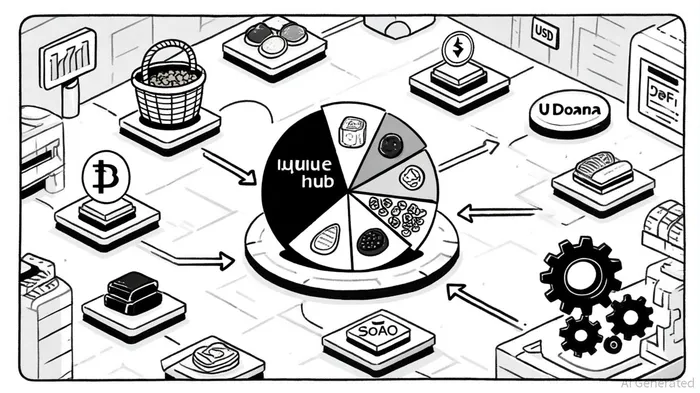
JupUSD's collateral model is a hybrid of risk mitigation and yield optimization. Initially, the stablecoin will be fully backed by Ethana Labs' USDtb, a synthetic stablecoin collateralized by BlackRock's BUIDL fund, according to a CoinCentral report. This partnership ensures regulatory compliance and institutional-grade liquidity, addressing a critical gap in Solana's DeFi infrastructure. However, the long-term plan includes diversifying into a multi-asset basket: 25% JupSOL (a liquid staking derivative of SOL), 10% JLP tokens (yield-bearing liquidity pool positions), over 55% USDC/USD1 via a Peg-Stability Module (PSM), and smaller allocations to high-liquidity Solana memecoins and flexible assets as outlined in the JUST proposal.
This diversified approach mirrors the success of algorithmic stablecoins like FRAX while avoiding their volatility pitfalls. By integrating yield-bearing assets (e.g., JLP tokens) and liquid staking derivatives (JupSOL), JupiterJUP-- transforms JupUSD from a passive stablecoin into an active capital generator for the DAO treasury. According to a BlockNews report, this model could generate recurring fees from staking rewards and liquidity provision, directly funding Jupiter's ecosystem growth.
Ecosystem Dominance Through Vertical Integration
Jupiter's acquisition spree-most notably of Moonshot (a memecoinMEME-- trading platform) and SonarWatch (an on-chain portfolio tracker)-demonstrates its intent to dominate Solana's DeFi stack. JupUSD will serve as the universal denominator across these platforms, creating network effects that lock users into Jupiter's ecosystem. For instance, traders on Moonshot can use JupUSD as collateral for leveraged positions, while SonarWatch users can track JupUSD's yield-generating performance in real time.
The 50% protocol fee buyback program further amplifies this strategy. By locking tokens in a long-term reserve, Jupiter incentivizes liquidity providers and traders to adopt JupUSD as their primary stablecoin. As stated in a Coindesk article, this buyback has already driven investor confidence, with Jupiter's TVL surging by 40% in Q3 2025.
Capital Efficiency: The JupUSD Advantage
Traditional stablecoins like USDCUSDC-- often suffer from capital inefficiency, as their reserves are typically held in low-yield cash or government bonds. JupUSD's collateralization model, however, leverages Solana's high-performance infrastructure to generate yield without compromising stability. For example:- JupSOL allows the DAO to earn staking rewards on SOLSOL-- while maintaining liquidity.
- JLP tokens tap into concentrated liquidity pools, maximizing fee revenue from Jupiter's DEX volume.
- Memecoins and flexible assets provide exposure to Solana's rapidly growing speculative market, aligning JupUSD with the network's cultural momentum.
This approach mirrors Ethena's USDe model, which has generated annualized yields of 5–8% for holders by combining synthetic stablecoins with yield strategies, as reported by CoinCentral. By adopting a similar framework, Jupiter positions JupUSD as a scalable, self-sustaining asset that reduces reliance on external stablecoin providers.
Risks and Considerations
While JupUSD's design is innovative, risks remain. The reliance on synthetic stablecoins like USDtb introduces counterparty risk, as their value depends on the solvency of Ethana Labs and BlackRock. Additionally, the inclusion of memecoins in the collateral basket could expose JupUSD to volatility if market sentiment shifts.
However, Jupiter's governance model-led by the Jupiter DAO-provides a mechanism for dynamic adjustments. If the PSM detects deviations from the $1 peg, the DAO can rebalance the collateral basket or adjust redemption rates. This flexibility is critical in a fast-moving market like Solana, where liquidity conditions can change rapidly.
Conclusion: A Strategic Play for Solana's Future
JupUSD represents more than just a stablecoin-it's a strategic lever for Jupiter to cement its dominance in Solana's DeFi ecosystem. By combining institutional-grade collateral with yield-generating assets, Jupiter is creating a stablecoin that serves as both a store of value and a capital-efficient tool for growth. For investors, this positions JupUSD as a key asset to watch in Q4 2025, particularly as Jupiter's TVL and user base continue to expand.
As Solana's DeFi sector matures, projects that prioritize interoperability, yield, and governance-like Jupiter-will likely outperform. JupUSD's launch is not just a product update; it's a signal of Solana's accelerating shift toward a self-sustaining, capital-efficient financial ecosystem.






Comentarios
Aún no hay comentarios