
US Junk Bond Spreads Surge to 17-Month High on Trade War Fears
Generado por agente de IATheodore Quinn
viernes, 4 de abril de 2025, 7:06 am ET2 min de lectura
The U.S. junk bond market is sending a clear signal of investor anxiety as spreads over risk-free Treasuries have surged to their widest level in 17 months. This dramatic widening reflects growing concerns about the economic fallout from the escalating trade war, which has investors rushing to the safety of government debt. The ICE/BofA U.S. high yield index option adjusted spread jumped 37 basis points to 372 bpBP-- as of late Friday, marking the biggest daily surge since March 2023. This shift underscores the market's heightened risk aversion and the potential for further volatility ahead.
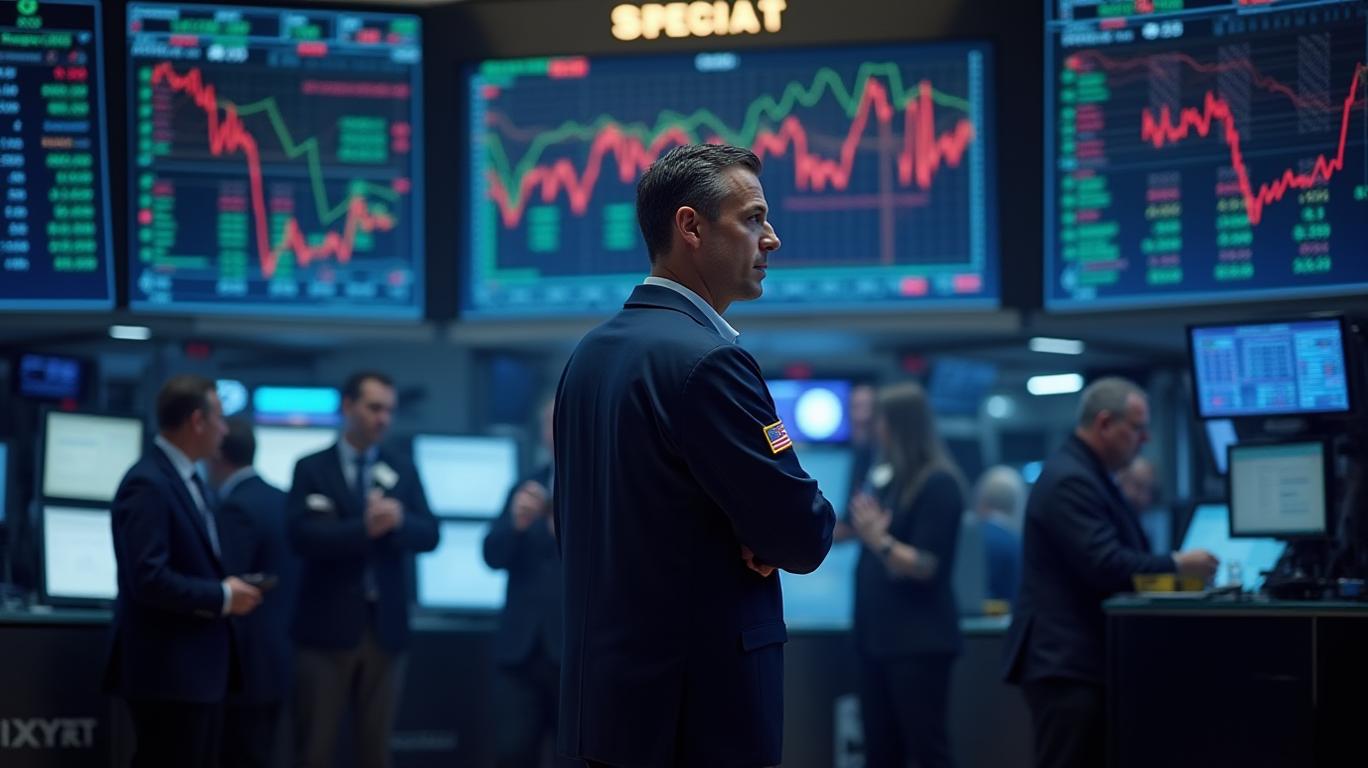
The widening of junk bond spreads is a classic indicator of market stress, as investors demand higher yields to compensate for the increased risk of default. This trend is particularly pronounced in the high-yield segment, where companies with lower credit ratings are more vulnerable to economic downturns. The recent surge in spreads follows a period of unprecedented tightening, with junk spreads contracting to around 250 bps late last year, their lowest since 2007. However, the current widening suggests that investors are bracing for a potential recession and the economic uncertainties that come with it.
The trade war, driven by President Donald Trump's import tariffs, has added a layer of complexity to the economic landscape. The tariffs have led to a surprising drop in consumer confidence and a spike in long-run inflation expectations, further fueling investor anxiety. Hans Mikkelsen, managing director of credit strategy at TDTD-- Securities, noted that the spread widening "follows a tremendous increase in economic policy uncertainty predominantly on tariffs." He forecast junk bond spreads to trade anywhere between 300 bps and 400 bps in the near-term, highlighting the potential for further market turbulence.
The implications of this market behavior are far-reaching. If the trade war escalates, the U.S. corporate bond market could face significant challenges. Analysts and investors alike forecast that spreads could widen further in the coming weeks and months, as the economic and political impacts of the tariffs become clearer. This could lead to a drop in U.S. corporate bond supply and demand, with high-yield issuance markets already shrinking. Guy LeBas, chief fixed income strategist at Janney Capital Management, stated that "High-yield issuance markets are shrinking already, and most of the net new funding is coming from private credit." He added, "If we see spreads north of 400 bps in high-yield, issuance slows to a crawl."
The current market dynamics raise important questions for investors. Is this widening of junk bond spreads a temporary correction or an early sign of a recession? Analysts at BMOBMO-- and others view the spread widening as a correction rather than an early sign of a recession, but the market's reaction to the trade war suggests otherwise. The recent data on the U.S. services sector rebounding from a four-year low in July and the employment rate in that sector increasing for the first time in six months offer some hope, but the nagging stock market sell-off continues to weigh on investor sentiment.
In conclusion, the surge in U.S. junk bond spreads to a 17-month high is a clear indication of investor anxiety about the economic impact of the trade war. While the market's reaction is understandable, it remains to be seen whether this is a temporary correction or the beginning of a more prolonged period of market stress. Investors should remain vigilant and consider the potential implications for their portfolios, as the trade war and its economic fallout continue to unfold.



Divulgación editorial y transparencia de la IA: Ainvest News utiliza tecnología avanzada de Modelos de Lenguaje Largo (LLM) para sintetizar y analizar datos de mercado en tiempo real. Para garantizar los más altos estándares de integridad, cada artículo se somete a un riguroso proceso de verificación con participación humana.
Mientras la IA asiste en el procesamiento de datos y la redacción inicial, un miembro editorial profesional de Ainvest revisa, verifica y aprueba de forma independiente todo el contenido para garantizar su precisión y cumplimiento con los estándares editoriales de Ainvest Fintech Inc. Esta supervisión humana está diseñada para mitigar las alucinaciones de la IA y garantizar el contexto financiero.
Advertencia sobre inversiones: Este contenido se proporciona únicamente con fines informativos y no constituye asesoramiento profesional de inversión, legal o financiero. Los mercados conllevan riesgos inherentes. Se recomienda a los usuarios que realicen una investigación independiente o consulten a un asesor financiero certificado antes de tomar cualquier decisión. Ainvest Fintech Inc. se exime de toda responsabilidad por las acciones tomadas con base en esta información. ¿Encontró un error? Reportar un problema


SOBRE NOSOTROS
Nuestra historiaAutores de noticiasBase de conocimientosPolítica de privacidadTérmino de usoDescargo de responsabilidad de corretaje de tercerosTérminos de uso de AIMEDivulgaciones de riesgos de AInvest AICarrerasCONTÁCTENOS
Email: support@ainvest.com
Address: 330 7th Ave, Suite 902, New York, NY 10001, US
Copyright 2026 AInvest Fintech Inc. All rights reserved.


Comentarios
Aún no hay comentarios