
JSW Energy's Green Hydrogen Breakthrough: A Strategic Catalyst for India's Energy Transition
Operational Milestones: A Foundation for Leadership
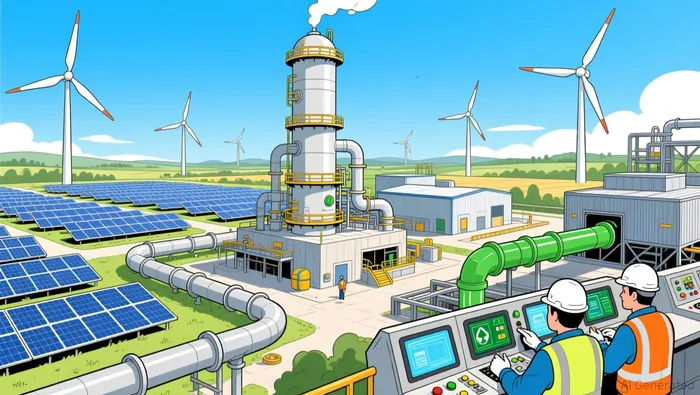
JSW Energy's green hydrogen plant, operational since late 2025, produces 3,800 tons per annum (TPA) of green hydrogen and 30,000 TPA of green oxygen, directly supplying JSW Steel's low-carbon steel production needs, according to a Business Standard report. This achievement marks a critical step in India's journey toward becoming a global green hydrogen hub. The plant's proximity to JSW Steel's facilities ensures cost efficiency and reduces logistical complexities, while its scalability-targeting 85,000–90,000 TPA of hydrogen by 2030-positions JSW Energy to meet India's national target of 5 million tonnes per annum (MTPA) by the same year, as noted in the same report.
Strategic Of Take Agreements: Securing Demand and Financial Stability
The seven-year offtake agreement with JSW Steel, India's second-largest steelmaker, ensures a stable revenue stream for JSW Energy's green hydrogen output, as reported by Scanx. This partnership is not merely transactional but symbiotic: JSW Steel's reliance on green hydrogen to offset metallurgical coke shortages-exacerbated by India's import curbs-highlights the project's role in addressing supply chain vulnerabilities, according to a Financial Express report. While explicit financial terms of the agreement remain undisclosed, the long-term nature of the contract and JSW Steel's commitment to scaling up to 720,000 TPA of green oxygen by 2030, as noted in the Business Standard report, suggest a robust demand anchor.
Policy Tailwinds and National Alignment
JSW Energy's project is explicitly tied to India's policy frameworks, including the Production Linked Incentive (PLI) Scheme and the Strategic Interventions for Green Hydrogen Transition (SIGHT) program, as detailed in the Business Standard report. These initiatives, backed by the Solar Energy Corporation of India (SECI), provide financial incentives and infrastructure support, reducing capital intensity for developers. The government's broader allocation of 6,800 TPA under these programs further signals a favorable regulatory environment, as reported by the same source. While 2025 saw limited new policy updates, the execution of existing frameworks-evidenced by JSW's plant commissioning-demonstrates the sector's momentum.
Investment Potential: Industrial Integration and Long-Term Returns
The integration of green hydrogen into JSW Steel's operations exemplifies the sector's potential to transform heavy industries. By locking in a major industrial customer, JSW Energy mitigates the risk of demand uncertainty that plagues nascent green hydrogen markets. Moreover, the project's alignment with India's net-zero goals and global decarbonization trends-such as the EU's Carbon Border Adjustment Mechanism-creates additional revenue avenues through carbon credits and export opportunities.
Challenges remain, however. JSW Steel's struggles with metallurgical coke import restrictions, as reported by Financial Express, highlight the fragility of India's energy transition without diversified supply chains. Yet, the green hydrogen project offers a resilient alternative, reducing reliance on volatile global coal markets. For investors, this represents a dual benefit: supporting national energy security while capitalizing on a sector poised for exponential growth.
Conclusion
JSW Energy's green hydrogen initiative is more than a technological breakthrough-it is a strategic catalyst for India's energy transition. By securing long-term offtake agreements, leveraging policy incentives, and addressing industrial decarbonization, the company has established a blueprint for scalable, profitable green hydrogen production. As India races to meet its 2030 targets, JSW Energy's leadership in this space offers investors a compelling opportunity to align with both environmental imperatives and robust financial returns.







Comentarios
Aún no hay comentarios