
JQC's Financial Sustainability: A Risk Analysis of Leverage and High Payout Ratios
In the realm of income investing, Nuveen Credit Strategies Income Fund (JQC) has long been marketed as a high-yield option for risk-tolerant investors. However, a closer examination of its financial metrics reveals a precarious balance between aggressive leverage and unsustainable payout ratios. This analysis delves into the structural risks inherent in JQC's business model, using data from recent filings and market reports to assess its long-term viability.
Leverage: A Double-Edged Sword
JQC employs leverage extensively, with a leverage ratio of 4.1 as of the most recent quarter, according to industry financial ratios, and a debt-to-equity ratio of 1.11. While leverage can amplify returns in bullish markets, it introduces significant volatility, particularly in a rising interest rate environment. For context, the fund's interest coverage ratio-earnings relative to interest expenses-stands at 7.88, which appears robust on the surface. However, this metric does not account for potential rate hikes or liquidity constraints. A report by Nuveen notes that JQC's strategy includes collateralized loan obligations (CLOs) and high-yield debt, which are inherently sensitive to credit cycles. Should defaults rise or refinancing costs spike, the fund's ability to service debt could be severely tested.
Payout Ratios: A House of Cards?
The fund's payout ratio is a contentious issue. Some sources indicate a 0% payout ratio, per StockInvest, while others cite figures exceeding 100%-160.92% according to PortfoliosLab and 109.83% per DividendHistory-depending on the calculation method. This discrepancy likely stems from differing definitions of "earnings" (e.g., net investment income vs. total return). Regardless, a payout ratio above 100% signals that JQCJQC-- is distributing more in dividends than it generates in net income. This is not uncommon for leveraged income funds, which often rely on borrowing or asset sales to sustain distributions. However, the fund's historical Dividends Per Share Growth Rate of -7.79% over five years (reported by StockInvest) and a three-year growth rate of -25.09% (reported by MarketBeat) suggest a declining ability to maintain its $0.0540 monthly payout (as described on Nuveen's site).
Risk Factors in a Shifting Landscape
JQC's financial sustainability is further complicated by its high expense ratio of 4.34% (reported by PortfoliosLab), which erodes net returns and limits flexibility during downturns. Analysts at Seeking Alpha have warned that the fund's reliance on below-investment-grade debt and its limited capacity to grow net asset value (NAV) make it vulnerable to market stress, and Nuveen's disclosures underscore similar exposures. For instance, a 1% increase in interest rates could disproportionately impact its leveraged portfolio, given that CLOs and high-yield bonds often carry floating-rate components. Additionally, the fund's 7.16% dividend yield (per PortfoliosLab) - or the 12.39% figure shown by DividendHistory - appears enticing but masks the fragility of its payout structure.
Conclusion: A Cautionary Tale for Income Investors
While JQC's high yield may attract income-focused investors, its leveraged business model and unsustainable payout ratios present significant red flags. The fund's ability to navigate a potential credit downturn or interest rate shock remains unproven. Investors should scrutinize not only the headline yield but also the fund's liquidity reserves, NAV trends, and management's contingency plans. In a market where "income" often comes at the cost of principal safety, JQC exemplifies the trade-offs inherent in high-risk, high-reward strategies.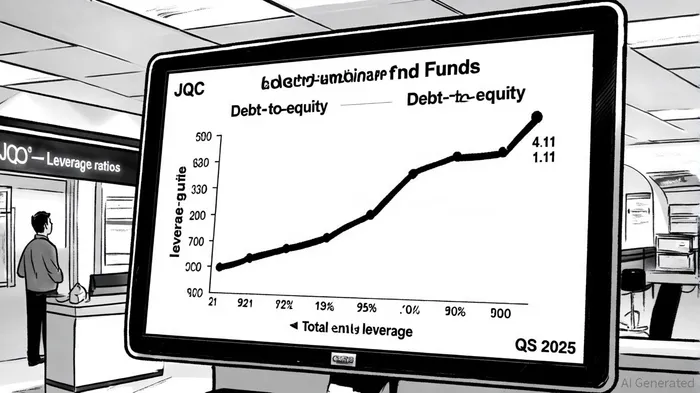





Comentarios
Aún no hay comentarios