
JPMorganChase's $1.5 Trillion Security and Resiliency Initiative: Unlocking Strategic Investment Opportunities in Critical Infrastructure and Cybersecurity
JPMorganChase's newly announced Security and Resiliency Initiative-a $1.5 trillion, 10-year plan-represents a seismic shift in how financial institutions are aligning capital with national security imperatives. By targeting industries critical to U.S. economic and geopolitical stability, the initiative underscores a strategic pivot toward long-term resilience over short-term profit. For investors, this move opens a treasure trove of opportunities in sectors like critical infrastructure and cybersecurity, where demand is surging due to global supply chain vulnerabilities, technological innovation, and regulatory tailwinds.
Strategic Focus Areas: A Blueprint for Resilience
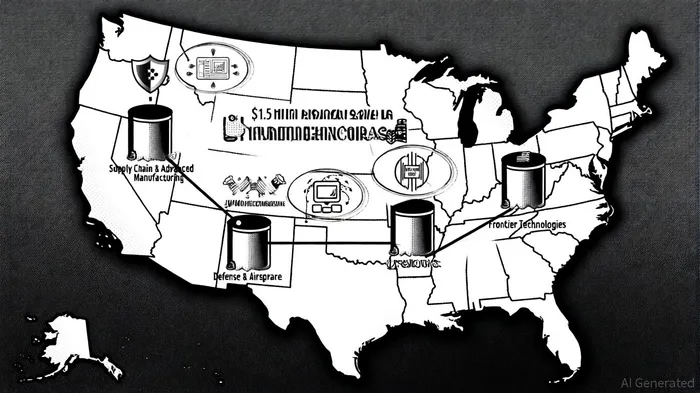
The initiative is structured around four core pillars: Supply Chain and Advanced Manufacturing, Defense and Aerospace, Energy Independence and Resilience, and Frontier and Strategic Technologies, according to a JPMorganChase press release. These categories are further subdivided into 27 niche areas, including critical minerals, nanomaterials, cybersecurity, and quantum computing, according to a Reuters report. JPMorganChase's decision to allocate up to $10 billion in direct equity and venture capital investments to U.S.-based companies reflects a calculated bet on domestic innovation and manufacturing, as the press release notes. This approach not only addresses immediate supply chain bottlenecks but also positions the firm to capitalize on the next wave of industrial and technological disruption.
Cybersecurity: A Cornerstone of National Resilience
Cybersecurity sits at the intersection of JPMorganChase's strategic priorities and global market dynamics. According to MarketBusinessInsights, the global cybersecurity market is projected to grow from $215 billion in 2025 to $697 billion by 2035, at a compound annual growth rate (CAGR) of 11.3%. This explosive growth is driven by the escalating sophistication of cyber threats, with organizations facing an average of 1,276 attacks per week in 2024, according to a GlobeNewswire release. JPMorganChase's $10 billion investment in frontier technologies explicitly includes cybersecurity, alongside AI and quantum computing, to fortify digital defenses and accelerate innovation in secure communications, as the press release describes.
The bank's cybersecurity strategy is further bolstered by a The Wealth Advisor report noting a $15 billion technology budget dedicated to threat detection and response systems, leveraging AI and machine learning to monitor real-time risks. This aligns with broader industry trends, where global venture capital funding in cybersecurity averaged $15 billion annually in recent years, according to a CyberBuilders analysis. For investors, JPMorganChase's focus on cybersecurity signals a sector ripe for disruption, with opportunities in secure cloud infrastructure, zero-trust architectures, and AI-driven threat intelligence platforms.
Critical Infrastructure: Building the Backbone of Economic Security
Critical infrastructure-encompassing energy grids, transportation networks, and digital systems-is another focal point of the initiative. A MarketsandMarkets report projects the Critical Infrastructure Protection (CIP) market to grow from $153.93 billion in 2025 to $197.13 billion by 2030, at a CAGR of 5.1%. JPMorganChase's investments in energy independence and advanced manufacturing are directly tied to this sector, with a particular emphasis on nuclear energy, renewable power storage, and smart grid technologies, as the press release outlines.
The firm's recent acquisition of Aumni, a fintech company specializing in data analytics for venture capital, further underscores its commitment to infrastructure innovation. By enabling VCs to manage complex data and legal contracts, Aumni's tools facilitate more efficient capital allocation in infrastructure-heavy sectors, according to CNBC. This strategic move positions JPMorganChase to act as both a financier and a catalyst for infrastructure modernization, a critical need as the U.S. seeks to reduce reliance on foreign supply chains for essential resources.
Market Growth and Strategic Implications for Investors
The confluence of JPMorganChase's initiative and market trends paints a compelling case for investors. For instance, the CBRE report highlights a 48% surge in deal activity in renewable energy and digital infrastructure, with transaction values rising sharply amid policy-driven demand. Similarly, the cybersecurity market's projected $697 billion valuation by 2035 offers a clear roadmap for high-growth opportunities.
Investors should prioritize sectors where JPMorganChase's capital is concentrated:
1. Cybersecurity startups leveraging AI for threat detection.
2. Advanced manufacturing firms producing critical minerals and nanomaterials.
3. Energy storage and grid modernization companies aligned with decarbonization goals.
Conclusion: A Win-Win for Resilience and Returns
JPMorganChase's $1.5 trillion initiative is more than a financial commitment-it's a strategic reimagining of how capital can serve both economic and national security goals. By channeling resources into critical infrastructure and cybersecurity, the firm is not only addressing systemic vulnerabilities but also creating a fertile ground for innovation-driven returns. For investors, the key takeaway is clear: aligning with JPMorganChase's priorities offers a unique opportunity to participate in sectors that are both strategically vital and financially rewarding.







Comentarios
Aún no hay comentarios