
JPMorgan Warns of U.S. Recession Due to Tariffs, Predicts -0.3% GDP Growth
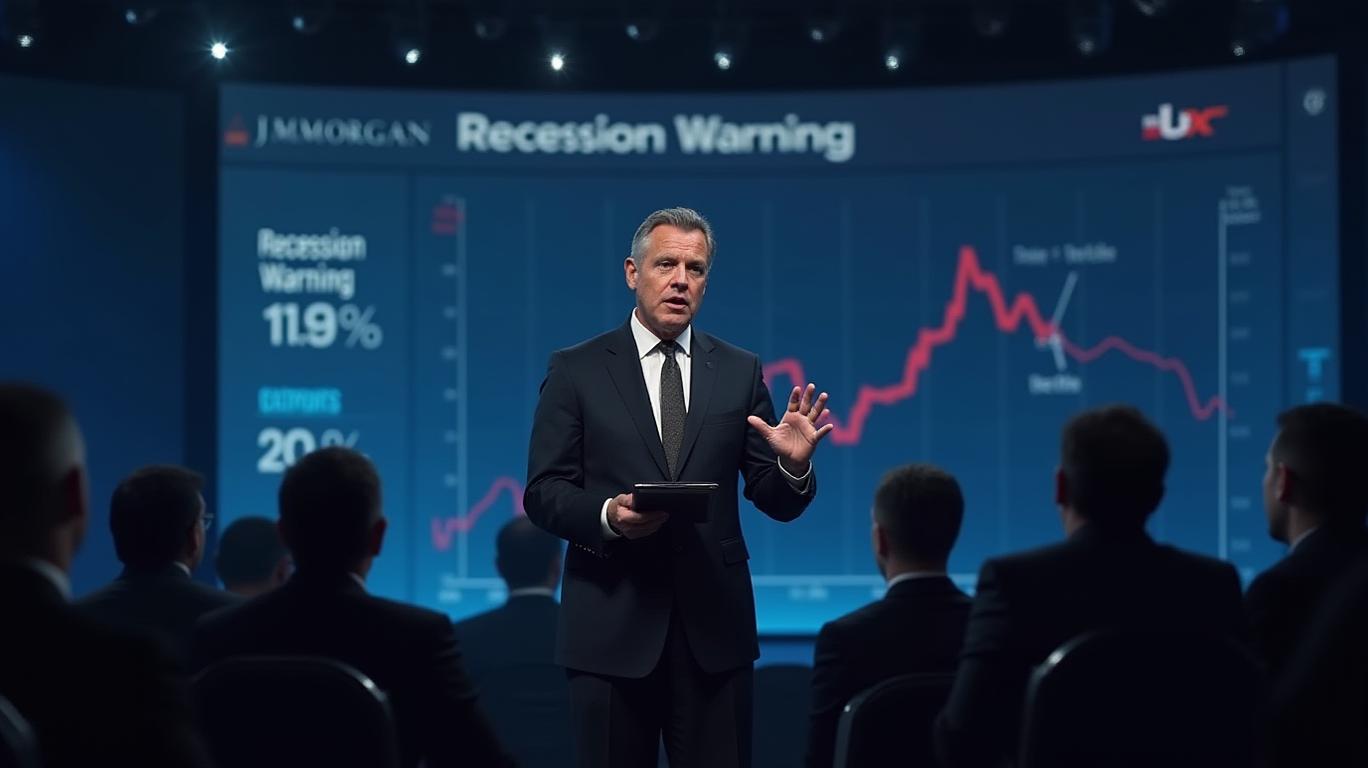
JPMorgan has issued a stark warning about the U.S. economy, predicting that the country will enter a recession this year due to the heavy burden of tariffs imposed by the Trump administration. The bank has significantly lowered its economic growth forecast for the U.S., citing the potential for a "stagflation" scenario where economic stagnation and inflation coexist.
The bank's chief U.S. economist, Michael Feroli, stated that the actual GDP is expected to contract under the pressure of tariffs, with the full-year actual GDP growth projected to be -0.3%, down from the previous forecast of 1.3%. This contraction is anticipated to suppress hiring and gradually increase the unemployment rate to 5.3%.
This dire assessment comes in response to President Trump's announcement of a massive tariff plan on global trading partners, which has already caused a significant drop in U.S. stock markets. The S&P 500 index fell to its lowest point in 11 months, erasing $5.4 trillion in market value over just two trading days.
JPMorgan is not the only institution to adjust its forecasts. Since the tariff announcement, several banks have lowered their growth projections for the U.S. economy this year. BarclaysBCS--, for instance, expects the GDP to contract in 2025, aligning with a recession scenario. CitigroupC-- economists have reduced their growth forecast to just 0.1%, while UBSUBS-- economists have lowered their expectations to 0.4%.
UBS's chief U.S. economist, Jonathan Pingle, warned that the U.S. is expected to see a significant reduction in imports from other regions, with a drop of over 20% in the forecast period. This drastic trade policy action suggests that the U.S., a $30 trillion economy, will undergo substantial macroeconomic adjustments.
The potential for stagflation poses a significant challenge for investors. Feroli predicts that the Federal Reserve will begin cutting interest rates starting in June and continue to do so at each subsequent meeting until January of the following year, reducing the benchmark interest rate from the current range of 4.25%-4.5% to 2.75%-3%. However, these rate cuts will occur against a backdrop of core inflation rising from the current 2.8% to 4.4% by the end of the year.
This scenario presents a dilemma for the Federal Reserve, as the central bank will have to balance the need to support economic growth with the risk of rising inflation. Fed Chairman Jerome Powell has indicated that there is no immediate need to adjust interest rates, despite growing concerns about economic risks. This stance contrasts with market expectations, where futures investors are betting on a one-percentage-point rate cut by the end of the year, reflecting heightened fears of an economic downturn.
For investors, this complex environment requires preparation for both a slowing economy and persistent inflationary pressures. The tariff policies implemented by the Trump administration are reshaping the U.S. economic outlook and could lead to the most significant market adjustment since the 2020 pandemic.





Comentarios
Aún no hay comentarios