
JPMorgan's Potential Entry into Institutional Crypto Trading: A Strategic Inflection Point for Institutional Adoption
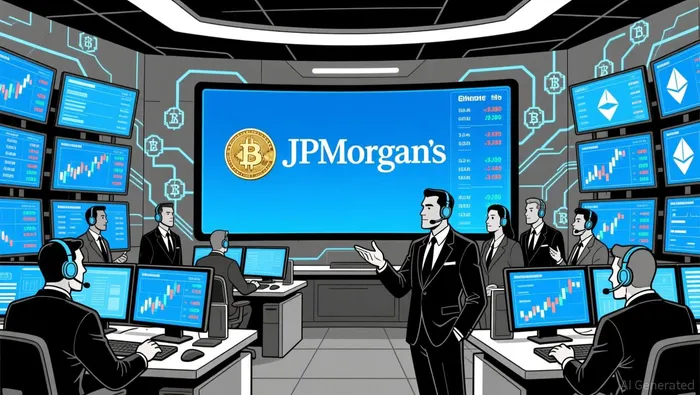
The financial industry is on the cusp of a seismic shift as JPMorgan ChaseJPM--, the largest U.S. bank by assets, explores offering cryptocurrency trading services to institutional clients. This move, if realized, would mark a pivotal moment in the institutional adoption of digital assets, signaling a broader acceptance of crypto as a legitimate asset class. With a legacy of cautious innovation, JPMorgan's potential foray into crypto trading reflects both the evolving regulatory landscape and the growing demand from institutional investors seeking exposure to digital assets.
A Pragmatic Shift in Leadership
JPMorgan's leadership, particularly CEO Jamie Dimon, has historically been skeptical of cryptocurrencies. Dimon once famously dismissed BitcoinBTC-- as a "pet rock," a stance that contrasted sharply with the enthusiasm of other Wall Street firms. However, recent comments from Dimon suggest a pragmatic recalibration. While he has not endorsed Bitcoin personally, he has emphasized that clients should have the right to invest in it, acknowledging the market's gravitational pull. This shift aligns with JPMorgan's broader strategy to adapt to client demand while mitigating risk-a hallmark of the bank's approach to disruptive technologies.
The bank's markets division is currently evaluating potential offerings, including spot trading and derivatives, though no final decisions have been made. This exploration is not without precedent: JPMorganJPM-- has already taken incremental steps into the crypto space, such as arranging a short-term bond for Galaxy Digital on the SolanaSOL-- blockchain and allowing institutional clients to use Bitcoin and EtherETH-- as collateral for loans. These actions underscore a cautious but deliberate strategy to integrate digital assets into its institutional services.
The U.S. regulatory environment has become increasingly favorable for crypto adoption. Recent developments, including the appointment of crypto-friendly regulators and new legislation supporting stablecoin usage, have reduced uncertainties for banks operating in this space. Notably, the Office of the Comptroller of the Currency's guidance has clarified that banks can offer crypto-related services without violating existing regulations. This regulatory clarity has emboldened institutions to explore crypto offerings, with JPMorgan now joining peers like Goldman Sachs and Morgan Stanley, which have already expanded their crypto services.
JPMorgan's recent regulatory filing for Auto Callable Accelerated Barrier Notes linked to the iShares® Bitcoin Trust ETF (IBIT) further illustrates its strategic pivot. These structured products, which offer leveraged exposure to Bitcoin, cater to investors seeking crypto exposure without directly holding volatile assets as outlined in the filing. By leveraging structured products, JPMorgan is effectively bridging the gap between traditional finance and digital assets, a move that could attract risk-averse institutional clients.
JPMorgan's potential entry into institutional crypto trading could accelerate broader adoption in several ways. First, its size and reputation lend credibility to crypto as an asset class, potentially attracting more conservative investors who have previously shunned the space due to volatility and regulatory ambiguity. Second, the bank's infrastructure-ranging from custody solutions to trading platforms-could streamline access to crypto markets, reducing operational barriers.
Moreover, JPMorgan's approach reflects a broader industry trend: the recognition that digital assets are no longer a niche market. As of 2025, institutional demand for crypto has surged, driven by macroeconomic factors such as inflation hedging and the search for yield in a low-interest-rate environment. JPMorgan's exploration of derivatives and spot trading aligns with this demand, offering clients tools to hedge or speculate on crypto price movements.
Conclusion: A Defining Moment for Digital Assets
JPMorgan's potential entry into institutional crypto trading represents more than a product launch-it is a strategic inflection point for the entire industry. By leveraging its institutional expertise and regulatory influence, the bank could catalyze mainstream adoption, transforming crypto from a speculative asset into a core component of diversified portfolios. While challenges remain, including regulatory scrutiny and market volatility, the momentum is undeniable. For investors, this development underscores the importance of positioning for a future where digital assets are integral to institutional finance.





Comentarios
Aún no hay comentarios