
Johnson & Johnson's All-Time High: A Blueprint for Sustainable Healthcare Leadership
Johnson & Johnson's stock price reached an all-time high of $178.76 on September 4, 2025, marking a pivotal moment for one of healthcare's most enduring conglomerates, according to a Forbes analysis. This milestone is not a flash in the pan but a reflection of the company's disciplined approach to long-term value creation, underpinned by diversified revenue streams, aggressive R&D investment, and a sustainability strategy that aligns with global ESG trends. For investors, the question is no longer if J&JJNJ-- can sustain its momentum, but how its strategic pillars position it to dominate a healthcare sector increasingly defined by innovation and environmental accountability.
Diversified Revenue Streams: The Engine of Resilience
J&J's ability to navigate macroeconomic volatility stems from its tripartite business model-pharmaceuticals, medical devices (MedTech), and consumer health. In H1 2025, the company's oncology portfolio, led by blockbuster drug Darzalex, delivered a 22% year-over-year revenue surge to $6.8 billion, as reported in the Forbes analysis. Meanwhile, its cardiovascular division, bolstered by acquisitions like Abiomed and Shockwave, saw a 20% growth to $4.4 billion in the same period, according to the same Forbes piece. This diversification mitigates sector-specific risks; for instance, while consumer health faces margin pressures, pharmaceuticals and MedTech offset with high-margin, high-growth trajectories.
The company's fortress balance sheet further amplifies this resilience. With a net income margin of 25.0%-more than double the S&P 500's 12.6%-J&J generates robust cash flows to fund both innovation and shareholder returns. Its debt-to-equity ratio of 11.8%, though seemingly elevated, reflects a strategic shift toward capital-intensive projects, including $55 billion in U.S. manufacturing and R&D investments over four years, according to a J&J press release. This commitment to domestic infrastructure not only aligns with regulatory tailwinds but also secures supply chain stability, a critical factor in post-pandemic healthcare.
Strategic Innovation: From R&D to Market Leadership
J&J's 2025 R&D strategy is a masterclass in sector-specific dominance. The $55 billion investment-25% higher than its previous four-year plan-targets therapeutic areas with unmet medical needs: oncology, neuroscience, immunology, and robotic surgery. This focus is paying dividends: the Innovative Medicine segment surpassed $15 billion in quarterly revenue for the first time in Q2 2025, according to a Financial Content report, signaling a shift from a diversified conglomerate to a precision-driven innovator.
The company's pipeline also reflects a long-term vision. For example, its cell therapy initiatives in oncology and neuroscience are positioned to capture markets projected to grow at double-digit CAGRs through 2030, according to an enterprise business review. Meanwhile, MedTech's expansion into robotics-via acquisitions like Auris Health-positions J&J to capitalize on the $10 billion global surgical robotics market, as noted in a LinkedIn post. These bets are not speculative; they are underpinned by a 40% upside projected by analysts, who price J&J's stock at $255 by year-end 2025 in the Forbes analysis.
Sustainability as a Competitive Advantage
In an era where ESG metrics drive capital allocation, J&J's sustainability strategy is both ambitious and actionable. The company has already sourced 65% of its global electricity from renewables, with a 2025 target of 100%, according to its sustainability page. This progress is not just symbolic: it reduces exposure to energy price volatility and aligns with regulatory frameworks like the EU's Corporate Sustainability Reporting Directive (CSRD).
Beyond operational decarbonization, J&J is redefining circularity in healthcare. Its Safe Returns program, which recycles or reuses medical devices, and supplier sustainability initiatives-requiring 80% of vendors to adopt science-based emissions targets by 2028-create a ripple effect across the value chain. These efforts are validated by third-party platforms like EcoVadis and CDP, ensuring transparency in a sector where greenwashing is rampant, as noted by Financial Content.
Sector Leadership: Recognition and Realities
J&J's leadership is not just financial-it is cultural. Named the top healthcare company on Fortune's 2025 America's Most Innovative Companies list, the firm's legacy of innovation spans decades, from the Janssen vaccine to robotic surgery systems. Its 5.52% market share in healthcare is a testament to its ability to balance scale with agility, a rare feat in an industry dominated by niche players.
Yet challenges persist. The pharmaceutical segment, now over 60% of total sales (per the Financial Content report), faces patent expirations and pricing pressures. However, J&J's diversified model and $55 billion R&D pipeline mitigate these risks. Its 5-7% CAGR target for Innovative Medicine and MedTech through 2030, outlined in the enterprise business review, suggests confidence in navigating these headwinds.
Conclusion: A Model for Sustainable Growth
Johnson & Johnson's recent all-time high is a culmination of strategic foresight, operational discipline, and ESG integration. For investors, the company represents a rare confluence of short-term momentum and long-term durability. While the $255 price target may seem lofty, it is justified by J&J's ability to convert R&D into revenue, sustainability into competitive advantage, and market share into sector leadership. In a healthcare landscape increasingly defined by complexity and regulation, J&J's blueprint offers a roadmap for sustainable value creation-one that transcends stock price movements to redefine what it means to lead in the 21st century. 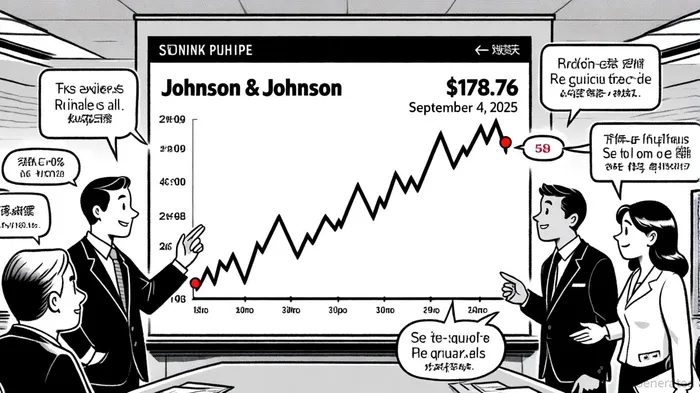





Comentarios
Aún no hay comentarios