
Johnson & Johnson's $3.05 Billion Acquisition of Halda Therapeutics and Its Strategic Implications for Biopharma Growth
Strategic Fit: Strengthening J&J's Oncology Engine
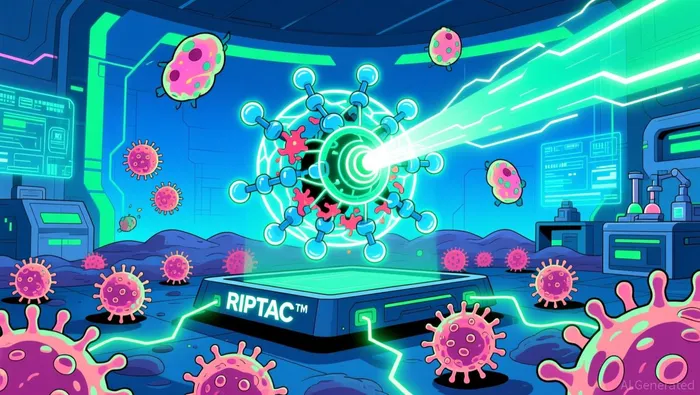
Johnson & Johnson has long been a powerhouse in healthcare, but its recent focus on oncology has intensified as patent cliffs loom for key immunology assets. The acquisition of Halda Therapeutics, with its proprietary RIPTAC™ (Regulated Induced Proximity Targeting Chimeras) platform, is a masterstroke. This technology enables the development of oral, targeted therapies that selectively kill cancer cells while sparing healthy tissue-a critical advantage in treating resistant solid tumors like prostate cancer.
Halda's lead candidate, HLD-0915, is already in Phase 1/2 trials for metastatic castration-resistant prostate cancer (mCRPC), with early data showing "impressive efficacy and a strong safety profile" according to the company. The therapy's ability to overcome resistance mechanisms-common in advanced prostate cancer-positions it as a potential blockbuster. , HLD-0915 could capture a significant share of a market .
Market Dynamics: A Growing Opportunity in Precision Oncology
The prostate cancer therapeutics market is undergoing a seismic shift. Traditional treatments like chemotherapy and hormone therapy are being supplanted by targeted therapies and biomarker-driven approaches. According to a report by GlobeNewswire, . This growth is fueled by advancements in liquid biopsies, next-generation sequencing, and AI-powered diagnostics-areas where J&J's expanded R&D capabilities now have a clear edge.
By integrating Halda's platform, J&J is not just entering this market-it's leapfrogging competitors. The RIPTAC™ technology's "hold-and-kill" mechanism offers a novel approach to overcoming resistance, a persistent challenge in oncology. This positions J&J to capture market share from entrenched players like Astellas and Bayer, which currently dominate the mCRPC space with drugs like Xtandi and Xofigo.
Competitive Positioning: J&J's Oncology Arsenal Gets Sharper
Johnson & Johnson's oncology portfolio is already robust, with blockbusters like Darzalex (multiple myeloma) and Erleada (prostate cancer) driving growth. The Halda acquisition adds a new dimension: oral, targeted therapies for solid tumors, a segment where J&J has historically lagged behind peers like Merck and Roche.
The strategic value here is twofold. First, , improving patient adherence and quality of life. Second, the RIPTAC™ platform is modular, meaning it can be adapted to target other cancers beyond prostate, such as lung or breast. This scalability could unlock multiple revenue streams, much like how J&J's Darzalex franchise has expanded across multiple myeloma subtypes.
Moreover, J&J's recent $2 billion investment in U.S. biologics manufacturing ensures that it can scale production of Halda's therapies efficiently. This infrastructure gives J&J a competitive edge in a sector where supply chain reliability is increasingly critical.
Short-Term Pain, Long-Term Gain
Critics may point to the 15-cent-per-share hit to J&J's 2026 adjusted earnings from financing costs and equity awards according to the WSJ. However, this is a classic case of short-term pain for long-term gain. J&J's management has a proven track record of turning R&D investments into blockbuster returns. For example, , while initially dilutive, is expected to bolster J&J's neuroscience portfolio and offset Stelara's patent erosion.
The Halda deal follows a similar logic. By acquiring a clinical-stage asset with high unmet medical need, J&J is hedging against the inevitable commoditization of its legacy products. If HLD-0915 gains regulatory approval, , . .
Why This Matters for Shareholders
For investors, the Halda acquisition is a signal that J&J is doubling down on innovation. The company's 2024 financials already reflect this shift, . With Halda's addition, J&J is now primed to capitalize on the while maintaining its leadership in immunology and neuroscience.
This is not just about J&J's internal growth-it's about reshaping the competitive landscape. As major pharma players like Pfizer and Merck also pursue high-stakes acquisitions in 2025, J&J's focus on precision oncology and scalable platforms like RIPTAC™ gives it a unique edge. The company is betting that its ability to integrate cutting-edge biotech assets will keep it ahead of the curve in an increasingly fragmented industry.
Conclusion: A High-Conviction Play in Biopharma
Johnson & Johnson's acquisition of Halda Therapeutics is a textbook example of strategic M&A in action. By acquiring a platform with transformative potential and a lead candidate in a high-growth therapeutic area, J&J is not just filling a gap in its pipeline-it's future-proofing its oncology business. While the short-term earnings hit is real, the long-term upside-both in terms of revenue and competitive positioning-is substantial.
For investors, this deal reinforces J&J's status as a high-conviction healthcare play. In a sector where innovation is the only sustainable moat, J&J's aggressive expansion into precision oncology and specialty therapeutics is a compelling reason to re-evaluate its stock. The Halda acquisition isn't just a win for J&J-it's a sign that the company is once again positioning itself as a leader in the next era of biopharma.





Comentarios
Aún no hay comentarios