
Jindal Steel's Strategic Expansion and Its Impact on India's Steel Ecosystem
India's steel sector is undergoing a transformative phase, driven by ambitious infrastructure projects, government-led import substitution policies, and a post-pandemic rebound in industrial demand. At the forefront of this evolution is Jindal Steel & Power Ltd (JSPL) and its downstream subsidiary, Jindal India, which have embarked on a dual-track expansion strategy to bolster production capacity, enhance cost competitiveness, and solidify their position in a rapidly evolving market. By commissioning cutting-edge facilities at Angul, Odisha, and modernizing downstream operations in West Bengal, Jindal is redefining the supply-side dynamics of India's steel ecosystem.
Supply-Side Transformation: Scaling Capacity and Vertical Integration
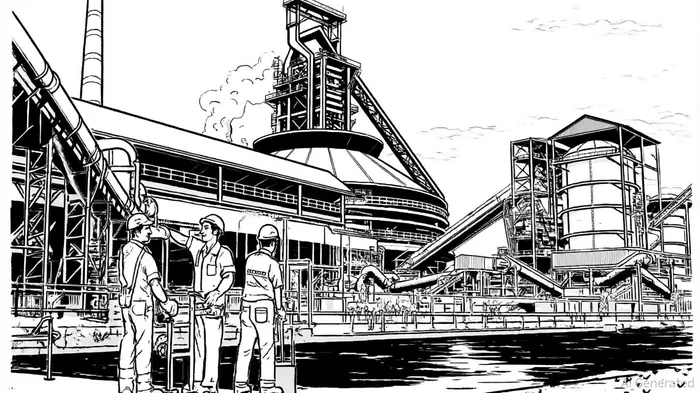
Jindal Steel's recent commissioning of the Bhagavati Subhadrika Blast Furnace – II at its Angul facility marks a pivotal milestone in its vertical integration strategy. This 5 MTPA blast furnace, one of the world's largest with a 5,499 m³ volume, has doubled the company's hot metal production capacity to 9 MTPA, with plans to scale further to 12 MTPA[1]. Complementing this are infrastructure projects such as a dedicated port at Paradeep, a slurry pipeline for iron ore transport, and the Shreebhoomi Power Plant, which collectively reduce logistics costs and enhance operational efficiency[1]. These investments align with India's National Steel Policy 2022, which emphasizes self-reliance and import substitution[3].
Meanwhile, Jindal India's ₹1,500 crore investment to expand downstream production by 60%—from 1 million MT to 1.6 million MT annually—targets high-growth segments like coated flat products, hollow section pipes, and crash barriers[2]. Modernized facilities at Ranihati, West Bengal, equipped with advanced machinery from global suppliers like John Cockerill and Esmech Equipment, are expected to improve product quality and reduce energy consumption[4]. This dual focus on upstream raw material security and downstream value addition positions Jindal to capitalize on India's projected steel market growth, which is forecasted to reach USD 166.96 billion by 2030[3].
Cost Competitiveness and Operational Efficiency
Post-pandemic, Jindal Steel has prioritized cost optimization through energy efficiency and logistics streamlining. The company's adjusted EBITDA per ton in FY25 stood at INR 12,008, reflecting disciplined cost management despite global price volatility[2]. The integration of the Shreebhoomi Power Plant, which generates 1,200 MW of captive power, reduces reliance on external energy sources and insulates the company from fuel price shocks[1]. Additionally, the slurry pipeline and coal conveyor system at Angul cut transportation costs by 15–20%, according to internal estimates[1].
However, Jindal faces headwinds from low-priced Chinese steel imports, which have pressured domestic producers. In FY25, the company reported a 6% quarter-on-quarter production increase to 2.11 million tons in Q4, but Jindal Stainless—a sister firm—revised its FY26 volume growth outlook downward due to global price declines[2]. To counter this, Jindal India is diversifying into niche markets such as solar mounting structures and home appliances, where margins are higher and import competition is limited[5].
Strategic Alignment with National Priorities
Jindal's expansion strategy is closely aligned with India's “Viksit Bharat” vision and the Atmanirbhar Bharat initiative. By boosting domestic production of high-value products like coated sheets and crash barriers, the company reduces reliance on imports from China and Korea, which accounted for 12% of India's steel imports in 2024[1]. This aligns with the government's goal of achieving a 300 MTPA domestic production capacity by 2030[3].
Moreover, Jindal's investments in renewable energy infrastructure—such as solar mounting structures—position it to benefit from India's 500 GW renewable energy target by 2030[5]. The company's ability to pivot toward green steel and low-carbon technologies could further enhance its long-term competitiveness as global markets prioritize sustainability.
Challenges and Mitigation Strategies
Despite its strategic advantages, Jindal must navigate several risks. The influx of discounted Chinese steel, coupled with weak global demand, has compressed margins for export-oriented producers. To mitigate this, Jindal is focusing on high-margin domestic segments and leveraging its captive logistics network to reduce costs[2]. Additionally, the company's debt-to-equity ratio of 1.2x (as of FY25) underscores the need for disciplined capital allocation to sustain growth without overleveraging[2].
Conclusion
Jindal Steel's strategic expansion represents a paradigm shift in India's steel ecosystem, blending supply-side innovation with cost discipline to navigate post-pandemic challenges. By scaling upstream capacity, modernizing downstream operations, and aligning with national priorities, the company is well-positioned to capitalize on India's steel demand surge. While external pressures like import competition persist, Jindal's focus on vertical integration, energy efficiency, and niche markets offers a robust framework for long-term resilience. As the sector evolves, Jindal's ability to balance growth with sustainability will be critical to maintaining its leadership in a competitive landscape.







Comentarios
Aún no hay comentarios