
Jim Beam Shuts Clermont Distillery to Curb Oversupply Amid Trade Uncertainty
The distillery, which is a key production site for Suntory Holdings Ltd., will remain closed to whiskey distillation while bottling, warehousing, and visitor center operations continue. Production will shift to the smaller Fred B. Noe craft distillery and the Booker Noe site in Boston, Kentucky. Jim Beam emphasized that the decision was made after careful evaluation of consumer demand and production levels.
The move reflects broader challenges in the bourbon industry, including record levels of inventory and ongoing trade disputes. According to the Kentucky Distillers' Association, as of January 2025, Kentucky distilleries held more than 16.1 million barrels of aging bourbon, most of which won't be ready for bottling before 2030.
Industry-Wide Pressure
The bourbon market has been hit by multiple headwinds in recent months. A combination of slumping consumer spending and rising concerns over Trump's proposed tariffs and taxes on aging bourbon barrels has left distillers in a difficult position. The Kentucky Distillers' Association said in October that distillers face a $75 million tax burden on barrel inventory this year, compounding pressure on an already oversupplied market.
Jim Beam's parent company, Suntory, has also faced its own internal turmoil. Takeshi Niinami, Suntory's former CEO, resigned in September after Japanese police raided his home in connection with an investigation into suspected illegal supplements. Despite this, the company maintains its long-term confidence in the bourbon market and remains committed to managing its Kentucky operations.
Labor and Production Adjustments
Jim Beam has not announced any layoffs but is working with its workforce and union representatives to manage the production pause. Bottling, warehousing, and tourism operations will continue at the Clermont site, preserving thousands of jobs in the region. The company employs over 6,000 people worldwide, with more than 1,000 in Kentucky.
Suntory's broader portfolio includes brands like Haku vodka, Sipsmith gin, and soft drinks such as Orangina and Lucozade. The bourbon shutdown adds to a challenging year for the company, which acquired Jim Beam for $16 billion in 2014.
Trade Uncertainty and Market Shifts
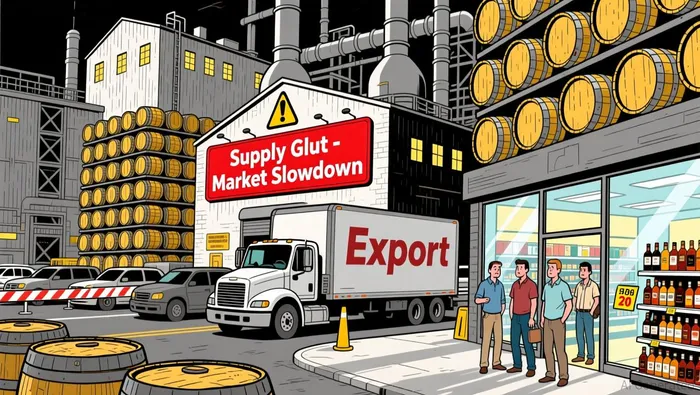
Trade tensions between the U.S. and Canada have also impacted bourbon sales. In 2025, several Canadian provinces briefly boycotted American spirits in response to U.S. tariffs. While some provinces have since resumed sales, the damage has been significant, especially given bourbon's reliance on export markets and global demand.
Analysts are watching how the industry will adapt to these challenges. With bourbon aging for years before bottling, distillers must make long-term projections, often with limited visibility into future market conditions. The current oversupply, combined with shifting consumer habits-particularly among younger drinkers, has forced many brands to rethink their strategies.
What This Means for the Market
Jim Beam's decision could signal a broader trend of production adjustments across the bourbon sector. Other distillers may follow suit if demand continues to weaken. The market is also closely watching any developments in trade policy, especially as Trump's administration pushes for a more protectionist approach.
For now, Jim Beam's shutdown is a strategic move to balance supply with demand while investing in long-term improvements. The company has not ruled out resuming full production in 2027, depending on market conditions. In the short term, the availability of Jim Beam bourbon should remain stable through its other distilleries and bottling operations.







Comentarios
Aún no hay comentarios