
Jiangsu Hengrui Medicine's Breakthrough in NSCLC: A Strategic Play for Long-Term Growth
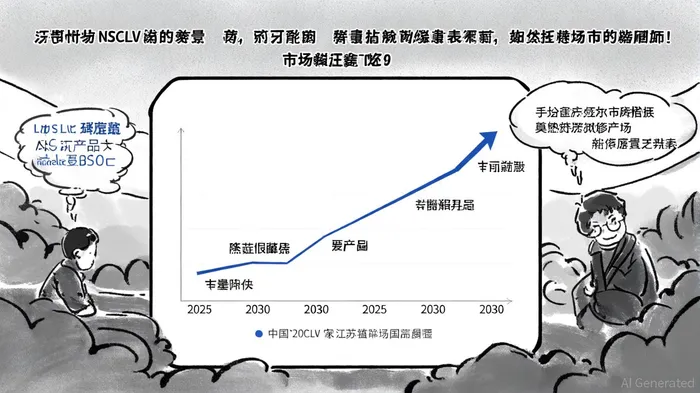
Jiangsu Hengrui Medicine has emerged as a formidable player in China's oncology landscape, with recent regulatory milestones underscoring its potential to reshape the non-small cell lung cancer (NSCLC) therapeutics market. The National Medical Products Administration (NMPA) has accepted the marketing authorization application for Adebrelimab, a PD-L1 inhibitor, for a new indication targeting resectable Stage II–IIIB NSCLC patients without EGFR/ALK mutations. This approval expands Hengrui's portfolio into a high-growth segment, where neoadjuvant and adjuvant immunotherapy regimens are increasingly becoming standard of care [1].
The company's second blockbuster, , a (ADC), . These results outperform existing therapies, such as ENHERTU (trastuzumab deruxtecan), . Hengrui's ADC platform, built on its proprietary , positions it to dominate the HER2-mutant NSCLC niche, .
Market Dynamics and Competitive Edge
China's NSCLC therapeutics market is projected to reach , driven by rising adoption of immunotherapies and targeted therapies. Hengrui's dual-pronged strategy—leveraging Adebrelimab's broad applicability in resectable NSCLC and Trastuzumab rezetecan's precision targeting of HER2 mutations—aligns with key trends in oncology. According to a report by Grand View Research, , with immunotherapies gaining traction in first-line settings [5].
Hengrui's competitive advantages are threefold:
1. Clinical Differentiation.
2. : While pricing data for rezetecan is not yet public, .
3. Pipeline Depth: Beyond NSCLC, Hengrui's ADCs and PD-L1 inhibitors are in trials for breast, gastric, and gynecological cancers, creating cross-therapeutic synergies [8].
However, challenges persist. International giants like AstraZeneca (Tagrisso for EGFR-mutant NSCLC) and domestic rivals such as BeiGeneONC-- (PD-1 inhibitors) are aggressively expanding their footprints. Reimbursement remains a wildcard: while Trastuzumab rezetecan and Adebrelimab have not yet been listed on China's (NRDL), their inclusion could accelerate adoption. The company's 2024 revenue of .
Long-Term Outlook
. The recent GSK licensing deal for 11 Hengrui-developed therapies further amplifies its global reach, mitigating reliance on China's domestic market. For investors, the key risks include regulatory delays in reimbursement and the entry of next-gen competitors like Boehringer Ingelheim's Zongertinib. Yet, Hengrui's first-mover advantage in HER2-mutant NSCLC and its robust clinical data provide a strong moat.
In conclusion, Jiangsu Hengrui's regulatory milestones and strategic agility position it as a top-tier player in China's NSCLC market. , Hengrui's focus on precision oncology and cost-effective therapies makes it a compelling long-term investment.





Comentarios
Aún no hay comentarios