
JFB Construction Holdings' Strategic Expansion into Correctional Facility Development: Assessing Long-Term Growth Potential and Sector-Specific Tailwinds
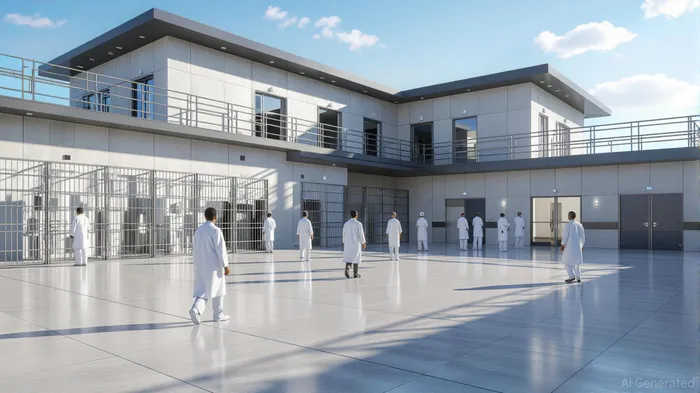
The correctional facility construction sector is at a crossroads, shaped by demographic shifts, policy reforms, and evolving infrastructure needs. JFB ConstructionJFB-- Holdings, a diversified real estate and construction firm, has positioned itself to capitalize on these dynamics through its recent foray into secure infrastructure development. This analysis evaluates the company's strategic expansion into correctional facility projects, including its Prison Island franchise initiative, and assesses the long-term growth potential amid sector-specific tailwinds and headwinds.
Industry Trends: Aging Populations and Retrofitting Needs
A critical driver of demand in the correctional sector is the aging U.S. prison population. Over the past three decades, the proportion of inmates aged 55 and older has surged, with 16% of the prison population in 2024 serving life sentences—many of whom require specialized healthcare and mobility accommodations [1]. This demographic shift necessitates retrofitting existing facilities or constructing new ones tailored to long-term care needs. For instance, JFB's Prison Island franchise in Indianapolis, slated for Q3 2025 construction, may align with this trend by incorporating modular design elements adaptable to aging inmate populations [2].
However, the sector faces countervailing pressures. The rise of alternatives to incarceration—such as crisis response systems and decriminalization of minor offenses—has reduced jail populations in some regions [3]. These reforms could temper demand for new correctional beds, creating a nuanced landscape where infrastructure providers must balance retrofitting existing facilities with cautious new construction.
JFB's Financial Position and Strategic Initiatives
JFB Construction Holdings reported $9.60 million in revenue for the six months ending June 30, 2025, though it also posted a net loss of $2.34 million during the same period [4]. While the company's 10-K filing does not explicitly detail correctional facility projects, its broader construction segments—commercial and residential—suggest a capacity to pivot into secure infrastructure. The Prison Island franchise contract, a notable entry point, underscores JFB's willingness to diversify into niche markets.
The company's financials also reveal a reliance on related-party transactions, including lease agreements and investments, which may indicate a strategy to leverage existing partnerships for capital efficiency [4]. This approach could be critical in navigating the capital-intensive nature of correctional construction, where projects often require upfront investment with delayed returns.
Sector-Specific Tailwinds and Risks
The correctional facility construction market is indirectly influenced by broader construction trends. Non-residential construction spending, including institutional sectors like healthcare and education, is projected to grow by over 4% in 2025, per the American Institute of Architects [5]. This growth could spill over into secure infrastructure if government funding prioritizes aging facility upgrades. Additionally, federal infrastructure initiatives—such as those targeting highways and utilities—may free up budgets for institutional projects, including prisons [6].
Conversely, JFBJFB-- faces risks from policy-driven reductions in incarceration rates. For example, cities adopting citation-based responses for low-level crimes have seen jail populations decline [3]. If these trends accelerate, demand for new correctional facilities could wane, forcing JFB to pivot toward retrofitting or alternative secure infrastructure, such as juvenile detention centers or rehabilitation hubs.
Strategic Alignment and Long-Term Outlook
JFB's Prison Island project exemplifies its alignment with sector-specific tailwinds. By targeting a market segment—aging inmates—that requires specialized infrastructure, the company is addressing a niche with limited competition. However, its success will depend on its ability to adapt to policy shifts and demonstrate cost efficiency in retrofitting versus new construction.
The company's broader construction expertise provides a foundation for scaling in secure infrastructure. If JFB can leverage its commercial and residential experience to streamline correctional facility design—incorporating modular, cost-effective solutions—it may gain a competitive edge. Yet, its recent net loss highlights the need for disciplined cost management and strategic partnerships to mitigate financial risks.
Conclusion
JFB Construction Holdings' entry into correctional facility development is a calculated move in a sector defined by duality: aging populations drive demand for specialized infrastructure, while decarceration trends pose headwinds. The Prison Island franchise and JFB's construction capabilities position it to benefit from retrofitting and niche market opportunities. However, long-term success will hinge on its ability to navigate policy shifts, optimize capital allocation, and demonstrate adaptability in a sector undergoing structural transformation. Investors should monitor JFB's financial discipline and project execution as key indicators of its potential to thrive in this complex landscape.





Comentarios
Aún no hay comentarios