
Jaypirca's Pivotal Role in Reshaping CLL Treatment and Its Implications for Eli Lilly's Market Position
The BTK inhibitor market, a cornerstone of modern hematologic oncology, is undergoing a seismic shift as Eli Lilly's Jaypirca (pirtobrutinib) emerges as a formidable contender. With Imbruvica (ibrutinib), the long-dominant BTK inhibitor, nearing the twilight of its patent life, Jaypirca's recent head-to-head trial success and favorable safety profile position Eli LillyLLY-- to capture a significant share of the $8.5 billion market according to market analysis. This analysis explores how Jaypirca's clinical advantages, strategic label expansion, and Eli Lilly's broader oncology pipeline could redefine competitive dynamics in chronic lymphocytic leukemia (CLL) and beyond.
Clinical Edge: PFS, Safety, and Head-to-Head Validation
Jaypirca's Phase 3 BRUIN CLL-314 trial established its non-inferiority to Imbruvica in overall response rate (ORR), with 87% for Jaypirca versus 78.5% for Imbruvica according to investor updates. More compellingly, progression-free survival (PFS) trends favored Jaypirca, particularly in treatment-naïve patients, where it reduced the risk of disease progression by 76%. These results, presented at the 2025 American Society of Hematology (ASH) meeting, underscore Jaypirca's potential to delay disease progression more effectively than its covalent BTK inhibitor peers as reported in ASH 2025.
Safety data further differentiates Jaypirca. Adverse events such as atrial fibrillation and hypertension-common with Imbruvica-were reported at lower rates in Jaypirca-treated patients according to Lilly's latest data. This non-covalent mechanism not only mitigates off-target effects but also addresses resistance mechanisms observed with covalent inhibitors, positioning Jaypirca as a durable option in earlier treatment lines.
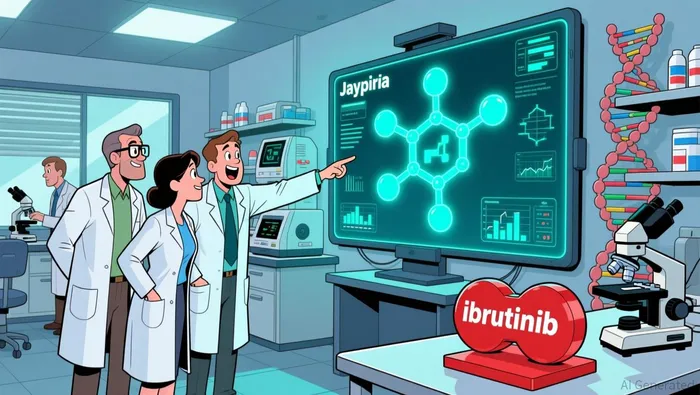
Market Dynamics: Disrupting a $8.5B Landscape
The BTK inhibitor market, valued at approximately $8.5 billion in 2025 according to market research, is fiercely contested. J&J and AbbVie's Imbruvica generated over $4 billion in combined revenue in the first nine months of 2025 according to financial reports, but its dominance faces challenges from newer entrants like AstraZeneca's Calquence and BeiGene's Brukinsa. Jaypirca's head-to-head superiority in PFS and safety, however, gives Eli LillyLLY-- a unique value proposition.
Lilly's strategic label expansion in late 2025-approving Jaypirca for earlier-line use after covalent BTK inhibitor failure-signals intent to capture market share ahead of Imbruvica's patent expiry according to investor statements. Analysts note that Jaypirca's non-inferiority in first-line settings, demonstrated in the BRUIN CLL-313 trial, could accelerate adoption in treatment-naïve patients, a high-growth segment.
Financial Projections and Pipeline Synergy
Jaypirca's commercial performance is already gaining traction. In Q3 2025, it generated $358 million in revenue, a stark contrast to Imbruvica's $4 billion but a promising start for a drug entering earlier-line therapy. Eli Lilly's broader oncology portfolio, including Verzenio and Retevmo, contributed $2.58 billion in Q3 2025 revenue, reflecting a 15% year-over-year growth. With Jaypirca's label expansion and anticipated uptake in first-line CLL, analysts project its revenue could surpass $2 billion annually by 2027, bolstering Lilly's oncology segment.
Beyond Jaypirca, Lilly's pipeline-featuring approvals like Inluriyo for metastatic breast cancer and Kisunla for Alzheimer's-positions it for sustained growth according to Q3 2025 financial results. Strategic M&A ambitions in oncology further diversify its revenue streams, reducing reliance on any single asset while amplifying its competitive edge.
Long-Term Implications: A New Era for BTK Inhibition
Jaypirca's success is not merely a product of clinical data but a reflection of Eli Lilly's calculated market strategy. By targeting earlier-line therapy, Lilly addresses unmet needs in CLL/SLL while preempting the erosion of Imbruvica's market share. The drug's non-covalent mechanism also opens avenues for combination therapies, potentially extending its lifecycle in hematologic malignancies.
For investors, Jaypirca represents a dual opportunity: a near-term revenue driver and a long-term catalyst for Lilly's oncology ambitions. As the BTK inhibitor market expands-projected to grow at a robust CAGR through 2030-Jaypirca's unique profile ensures Eli Lilly remains at the forefront of innovation in hematologic oncology.
Conclusion
Jaypirca's clinical validation, safety advantages, and strategic market positioning make it a linchpin in Eli Lilly's quest to dominate the BTK inhibitor space. With head-to-head data against Imbruvica and a clear path to earlier-line adoption, the drug is poised to disrupt a $8.5 billion market while fortifying Lilly's reputation as a leader in oncology innovation. For investors, this translates to a compelling case for long-term growth, underpinned by both scientific rigor and commercial acumen.





Comentarios
Aún no hay comentarios