
The Japanese Yen in Turbulent Times: Navigating Political Gridlock and Trade Risks for Strategic Gains
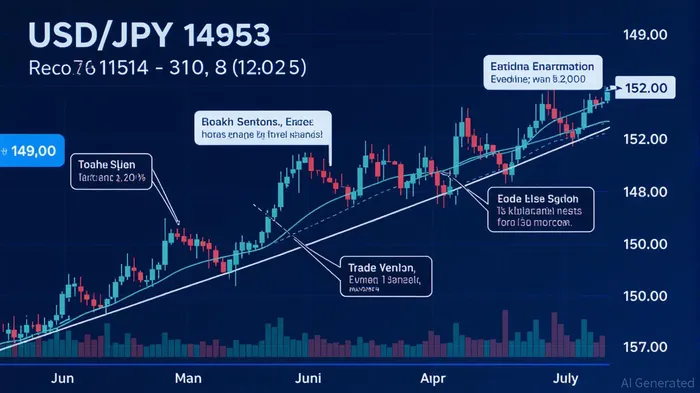
The Japanese Yen (JPY) has long been a barometer of global economic sentiment, but 2025 has tested its resilience in ways few anticipated. Amid political fragmentation in Japan, trade frictions with the U.S., and a fragile monetary policy framework, the yen is navigating a treacherous landscape. Yet, within this uncertainty lie tactical opportunities for investors willing to balance caution with conviction.
Yen's Resilience Amid Political and Trade Uncertainty
Japan's political system is at a crossroads. The July 2025 Upper House election has fractured the ruling Liberal Democratic Party's (LDP) dominance, raising concerns about policy continuity. With the LDP now a minority in the upper house, the government faces pressure to adopt populist measures—such as expansive fiscal stimulus and tax cuts—to retain power. These policies, however, risk exacerbating Japan's already dire public debt-to-GDP ratio of 260%, creating a “triple threat” scenario where bonds, equities, and the yen could face simultaneous sell-offs.
Meanwhile, the Bank of Japan (BoJ) has compounded volatility by exiting its yield curve control (YCC) policy. This move has pushed 30-year JGB yields up by 100 basis points since April 2025, raising fears of market instability. The BoJ's delicate balancing act—avoiding aggressive interventions while managing bond yields—has left the yen vulnerable to divergent monetary policies. The U.S. Federal Reserve's hawkish stance, with a potential rate cut priced in for year-end, has kept the USD strong against the JPY, pushing USD/JPY near critical technical levels.
Trade tensions with the U.S. further complicate the yen's trajectory. The 25% tariff on Japanese exports and stalled negotiations over rice market access have cast a shadow over Japan's trade-dependent economy. These tensions threaten to prolong uncertainty, undermining investor confidence in Japanese assets.
Tactical Opportunities in Currency and Bond Markets
Despite these headwinds, the JPY and JGB markets present strategic entry points for investors who can navigate the volatility.
Hedging Yen Weakness with Derivatives
The yen's susceptibility to fiscal and monetary policy shifts makes hedging essential. With USD/JPY nearing 149.00, a break above this level could signal further depreciation. Investors with yen exposure should consider currency forwards or yen-pegged ETFs to lock in rates. A 10–15% depreciation over the next six months is a plausible scenario if the LDP's minority government falters.Positioning in Short-Dated JGBs
While long-end JGBs remain speculative, short-dated bonds (2–5 years) offer a safer haven. The BoJ's reduced bond purchases have shifted liquidity to the private sector, making longer maturities riskier. Investors should focus on short-duration JGBs, which are less sensitive to yield spikes and provide insulation from inflation-linked risks.Monitoring Fiscal Policy Indicators
The August 2025 U.S.-Japan trade deal negotiations and the BoJ's July 2025 inflation forecasts will be pivotal. A delay in rate hikes or a fiscal stimulus package exceeding ¥5 trillion could trigger a “triple selling” scenario. Investors should closely track these indicators to adjust positions accordingly.Reassessing Carry Trade Exposure
The yen's role in carry trades is waning as JGB yields rise. Investors holding yen-based positions should reassess exposure to foreign assets, particularly in emerging markets. A reversal in carry trades could accelerate capital outflows, adding downward pressure on the yen.
Conclusion: Balancing Prudence and Precision
The Japanese Yen's 2025 performance reflects a complex interplay of political fragility, trade tensions, and monetary policy divergence. While the risks of a triple threat scenario remain, investors can capitalize on the yen's undervaluation and strategic bond market opportunities.
For those with a longer time horizon, the yen's fundamentals—Japan's current account surplus and low inflation—suggest a potential rebound by 2026. However, in the near term, hedging against depreciation and focusing on short-dated JGBs will be critical. As the political and trade landscape evolves, agility and a data-driven approach will separate prudent investors from the rest.
In this high-stakes environment, the most astute players will act with precision, leveraging volatility to position for stability. The yen's journey may be uncertain, but for the prepared, it offers a path to resilience.







Comentarios
Aún no hay comentarios