
Japanese Spaceport's First Foreign-Funded Launch Ends in Rocket Crash
PorAinvest
domingo, 13 de julio de 2025, 2:03 pm ET1 min de lectura
RKLB--
The launch attempt was part of Taiwanese private rocket company TiSpace's efforts to achieve a successful spaceflight. The company had previously failed to launch a rocket in Australia in 2022 and turned to Japan in search of a test site. The launch was conducted by TiSpace's Japanese unit, jtSPACE, from the Hokkaido Spaceport.
The failure of the VP01 rocket raises questions about the viability of private space ventures in Japan. While the country has seen several attempts at private spaceflight, no privately developed Japanese rocket has achieved orbital satellite launch. The competition in the commercial launch market is intense, with established players like SpaceX and Rocket Lab leading the way.
Local officials and businesses in Hokkaido welcomed the move as a milestone toward becoming an international space hub. However, there are concerns about the potential geopolitical implications, particularly regarding China's reaction to Taiwan's advances in missile-related technologies.
TiSpace, led by a former Taiwan Space Agency official, has not had a successful spaceflight. The company's latest attempt in Japan was its second attempt to launch a rocket after failing in Australia. The company is now investigating the cause of the failure and will likely reassess its strategy moving forward.
[1] https://www.yahoo.com/news/taiwanese-rocket-fails-achieve-japans-073314907.html
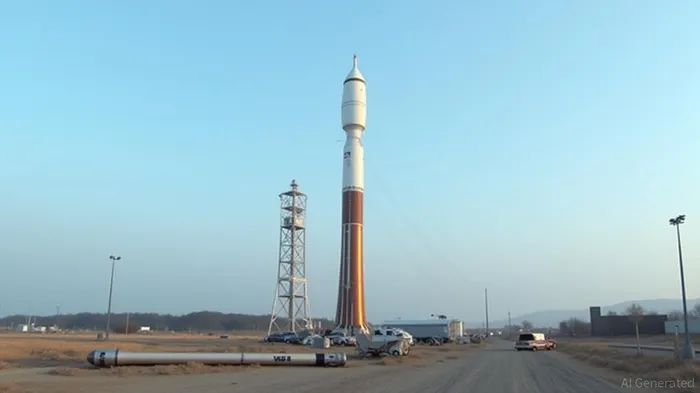
A Taiwanese rocket, VP01, crashed in Japan after launching from Hokkaido Spaceport on Saturday. The rocket's second stage lost stability immediately after separation and fell in a restricted-access field near the spaceport. No injuries were reported. The test aimed to send the rocket to an altitude of 100 km, but it only reached 4 km. The operator will investigate the cause of the failure. The VP01 was developed with foreign capital and was the first successful launch from Japanese soil of a rocket with foreign capital.
A Taiwanese rocket, VP01, crashed in Japan after launching from Hokkaido Spaceport on Saturday. The rocket's second stage lost stability immediately after separation and fell in a restricted-access field near the spaceport. No injuries were reported. The test aimed to send the rocket to an altitude of 100 km, but it only reached 4 km. The operator will investigate the cause of the failure. The VP01 was developed with foreign capital and was the first successful launch from Japanese soil of a rocket with foreign capital.The launch attempt was part of Taiwanese private rocket company TiSpace's efforts to achieve a successful spaceflight. The company had previously failed to launch a rocket in Australia in 2022 and turned to Japan in search of a test site. The launch was conducted by TiSpace's Japanese unit, jtSPACE, from the Hokkaido Spaceport.
The failure of the VP01 rocket raises questions about the viability of private space ventures in Japan. While the country has seen several attempts at private spaceflight, no privately developed Japanese rocket has achieved orbital satellite launch. The competition in the commercial launch market is intense, with established players like SpaceX and Rocket Lab leading the way.
Local officials and businesses in Hokkaido welcomed the move as a milestone toward becoming an international space hub. However, there are concerns about the potential geopolitical implications, particularly regarding China's reaction to Taiwan's advances in missile-related technologies.
TiSpace, led by a former Taiwan Space Agency official, has not had a successful spaceflight. The company's latest attempt in Japan was its second attempt to launch a rocket after failing in Australia. The company is now investigating the cause of the failure and will likely reassess its strategy moving forward.
[1] https://www.yahoo.com/news/taiwanese-rocket-fails-achieve-japans-073314907.html
Divulgación editorial y transparencia de la IA: Ainvest News utiliza tecnología avanzada de Modelos de Lenguaje Largo (LLM) para sintetizar y analizar datos de mercado en tiempo real. Para garantizar los más altos estándares de integridad, cada artículo se somete a un riguroso proceso de verificación con participación humana.
Mientras la IA asiste en el procesamiento de datos y la redacción inicial, un miembro editorial profesional de Ainvest revisa, verifica y aprueba de forma independiente todo el contenido para garantizar su precisión y cumplimiento con los estándares editoriales de Ainvest Fintech Inc. Esta supervisión humana está diseñada para mitigar las alucinaciones de la IA y garantizar el contexto financiero.
Advertencia sobre inversiones: Este contenido se proporciona únicamente con fines informativos y no constituye asesoramiento profesional de inversión, legal o financiero. Los mercados conllevan riesgos inherentes. Se recomienda a los usuarios que realicen una investigación independiente o consulten a un asesor financiero certificado antes de tomar cualquier decisión. Ainvest Fintech Inc. se exime de toda responsabilidad por las acciones tomadas con base en esta información. ¿Encontró un error? Reportar un problema




Comentarios
Aún no hay comentarios