
Japanese Equities and the Takaichi Era: Strategic Positioning for Long-Term Gains in a Reinvigorated Nikkei
The election of Sanae Takaichi as Japan's Liberal Democratic Party (LDP) leader and her anticipated ascension to prime minister has ignited a seismic shift in the nation's economic and equity market dynamics. Her pro-stimulus agenda, rooted in a revival of Abenomics, has already triggered a rally in the Nikkei 225, with the index surging to record highs in early 2025, according to Markets Financial Content. For investors seeking long-term capital gains, this political realignment presents both opportunities and risks, demanding a nuanced understanding of sectoral impacts, fiscal policy trajectories, and the interplay between monetary easing and currency volatility.
Policy Continuity and Market Optimism
Takaichi's leadership has been interpreted as a continuation of Shinzo Abe's economic playbook, emphasizing aggressive fiscal stimulus, deregulation, and a weaker yen to boost export competitiveness, the New York Times reported. According to a Bloomberg analysis, her victory has reinforced expectations of expanded government spending on infrastructure and tax incentives for strategic sectors like semiconductors, AI, and next-generation energy. This dovish stance has emboldened investors, with the Nikkei surging over 2% immediately following her election, The Asia Review reported.
The Nikkei's resilience is further underpinned by Japan's transition from a zero-interest-rate environment to a regime of accommodative rates, which has spurred corporate investment and improved return-on-equity metrics, Janus Henderson noted. Analysts at Reuters note that the index is projected to hit all-time highs by year-end 2025, driven by sustained foreign inflows and a re-rating of Japanese equities as global investors bet on earnings growth.
Sectoral Impacts: Winners and Losers
The sectoral implications of Takaichi's policies are stark. Export-oriented industries-particularly automotive, technology, and manufacturing-are poised to benefit from a weaker yen, which enhances their global competitiveness, the Japan Times reported. For instance, Toyota and Sony have seen renewed investor interest as currency tailwinds amplify profit margins, PuPrime reported. Conversely, import-dependent sectors such as energy and raw materials face headwinds, with rising costs threatening to erode margins, the Japan Times noted.
Financials, however, present a mixed picture. While the Nikkei's broader rally supports banking stocks, delayed interest rate hikes-consistent with Takaichi's fiscal priorities-could constrain net interest margins, Invezz warned. This divergence underscores the need for investors to differentiate between sub-sectors, favoring those aligned with structural growth themes like AI and green energy, a Note analysis suggested.
Fiscal and Monetary Balancing Act
Takaichi's agenda hinges on a delicate coordination between fiscal stimulus and monetary policy. The Bank of Japan (BOJ) faces mounting pressure to maintain ultra-loose monetary conditions, despite inflationary pressures from a weaker yen, Bharat18 reported. A report by the Japan Times highlights that 10-year Japanese Government Bond (JGB) yields have climbed to their highest levels since 2008, reflecting market concerns over fiscal slippage and growing public debt.
This tension between fiscal expansion and monetary independence could lead to a steepening yield curve and heightened bond market volatility, Reuters reported. Investors must monitor the BOJ's response to inflationary shocks, as any divergence from Takaichi's stimulus-driven agenda could trigger market corrections, Reuters analysts cautioned.
Long-Term Projections and Strategic Positioning
Looking ahead, the Nikkei's trajectory from 2025 to 2030 appears contingent on the execution of Takaichi's reforms. An EconoTimes piece suggests that the index could extend its record run, buoyed by sustained fiscal support and corporate governance reforms. However, long-term risks-such as debt sustainability and global economic headwinds-remain critical variables, Mochi-Extend argues.
For strategic positioning, investors should prioritize:
1. Export-Linked Sectors: Automotive, technology, and manufacturing firms with strong global demand.
2. Innovation-Driven Industries: Next-generation energy, AI, and advanced medical technology, which align with Takaichi's industrial policy.
3. Diversified Portfolios: Hedging against yen volatility and inflationary pressures through a mix of equities, bonds, and currency derivatives.
Conclusion
Sanae Takaichi's leadership marks a pivotal chapter for Japanese equities, blending the ghosts of Abenomics with a renewed focus on structural growth. While the Nikkei's short-term momentum is robust, long-term success will depend on the government's ability to balance stimulus with fiscal discipline. Investors who align their portfolios with the winners of this policy shift-exporters, innovators, and sectors benefiting from yen depreciation-stand to capitalize on a reinvigorated market. Yet, vigilance is required: the road to sustained growth is paved with both opportunity and uncertainty.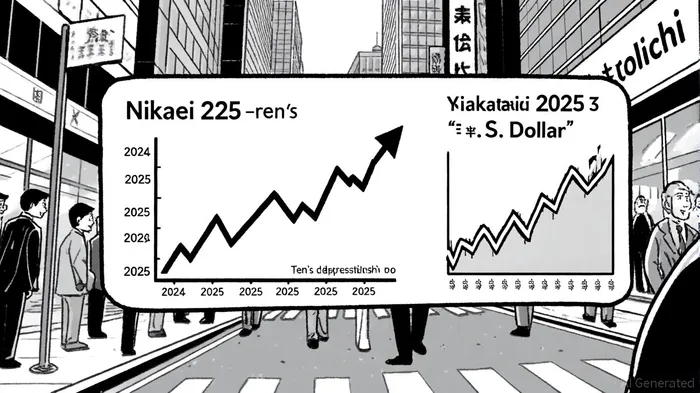







Comentarios
Aún no hay comentarios