
Japan-US Tariff Talks: Awaiting the Outcome
Generado por agente de IAWesley Park
jueves, 13 de febrero de 2025, 8:32 pm ET1 min de lectura
ALLY--
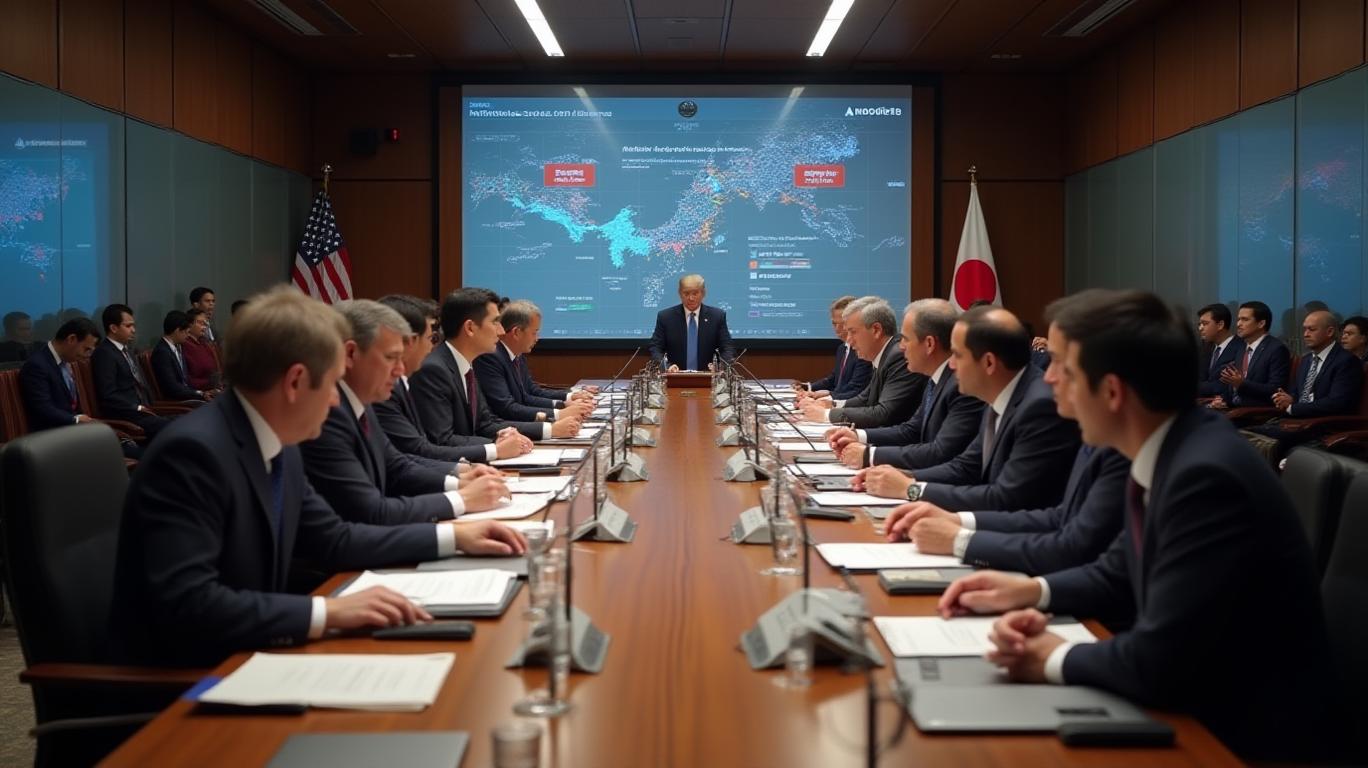
As the world watches the ongoing trade negotiations between the United States and China, another significant player in the global economy is engaging in discussions with the U.S. to address potential tariff adjustments. Japan, a key U.S. ally and trading partner, has initiated communication with the U.S. following President Trump's order to formulate plans for reciprocal tariffs. This article explores the implications of these talks and the potential impact on Japanese exports to the U.S.

The Reciprocal Tariff Plan
President Trump's proposed reciprocal tariff plan aims to address the perceived unfairness in global trade by matching the levies other countries have placed on American goods. This approach, if implemented, could significantly impact Japanese exports to the U.S., particularly in sectors like automotive and electronics. For instance, if the U.S. were to raise its import tax on cars to match the EU's 10% tariff, Japanese automakers like Toyota, Honda, and Nissan could face increased competition and potentially lower sales in the U.S. market.
Strategic Responses by Japanese Companies
To mitigate the potential negative effects of increased U.S. tariffs on their exports, Japanese companies may adopt several strategic responses. These could include:
1. Price Adjustments: Absorbing the increased tariffs to maintain market share and avoid losing customers to competitors.
2. Relocation of Production Facilities: Moving production to the U.S. to avoid tariffs altogether, as some Japanese automakers have done in the past.
3. Lobbying and Negotiations: Engaging in discussions with the U.S. government to seek exemptions or reductions in tariffs.
4. Diversification of Export Markets: Reducing dependence on the U.S. market by expanding into other regions.
5. Product Innovation and Differentiation: Focusing on unique features or higher-quality products to maintain competitiveness in the U.S. market.
The Role of Japanese Government Communication
The Japanese government's communication with the U.S. is likely to play a crucial role in shaping the final tariff rates and the timeline for their implementation. Through negotiations and dialogue, Japan may be able to reduce the initial proposed tariff rates or even avoid them altogether by addressing U.S. concerns. The timeline for tariff implementation could also be influenced by the pace and outcome of these negotiations.
Conclusion
The ongoing talks between Japan and the U.S. regarding reciprocal tariffs have the potential to significantly impact Japanese exports to the U.S., particularly in sectors like automotive and electronics. Japanese companies may adopt various strategic responses to mitigate the potential negative effects of increased U.S. tariffs on their exports. The Japanese government's communication with the U.S. is likely to play a crucial role in shaping the final tariff rates and the timeline for their implementation. As the world awaits the outcome of these negotiations, investors and businesses should stay informed about the latest developments and adjust their strategies accordingly.
Word count: 598
HMC--
TM--
As the world watches the ongoing trade negotiations between the United States and China, another significant player in the global economy is engaging in discussions with the U.S. to address potential tariff adjustments. Japan, a key U.S. ally and trading partner, has initiated communication with the U.S. following President Trump's order to formulate plans for reciprocal tariffs. This article explores the implications of these talks and the potential impact on Japanese exports to the U.S.
The Reciprocal Tariff Plan
President Trump's proposed reciprocal tariff plan aims to address the perceived unfairness in global trade by matching the levies other countries have placed on American goods. This approach, if implemented, could significantly impact Japanese exports to the U.S., particularly in sectors like automotive and electronics. For instance, if the U.S. were to raise its import tax on cars to match the EU's 10% tariff, Japanese automakers like Toyota, Honda, and Nissan could face increased competition and potentially lower sales in the U.S. market.
Strategic Responses by Japanese Companies
To mitigate the potential negative effects of increased U.S. tariffs on their exports, Japanese companies may adopt several strategic responses. These could include:
1. Price Adjustments: Absorbing the increased tariffs to maintain market share and avoid losing customers to competitors.
2. Relocation of Production Facilities: Moving production to the U.S. to avoid tariffs altogether, as some Japanese automakers have done in the past.
3. Lobbying and Negotiations: Engaging in discussions with the U.S. government to seek exemptions or reductions in tariffs.
4. Diversification of Export Markets: Reducing dependence on the U.S. market by expanding into other regions.
5. Product Innovation and Differentiation: Focusing on unique features or higher-quality products to maintain competitiveness in the U.S. market.
The Role of Japanese Government Communication
The Japanese government's communication with the U.S. is likely to play a crucial role in shaping the final tariff rates and the timeline for their implementation. Through negotiations and dialogue, Japan may be able to reduce the initial proposed tariff rates or even avoid them altogether by addressing U.S. concerns. The timeline for tariff implementation could also be influenced by the pace and outcome of these negotiations.
Conclusion
The ongoing talks between Japan and the U.S. regarding reciprocal tariffs have the potential to significantly impact Japanese exports to the U.S., particularly in sectors like automotive and electronics. Japanese companies may adopt various strategic responses to mitigate the potential negative effects of increased U.S. tariffs on their exports. The Japanese government's communication with the U.S. is likely to play a crucial role in shaping the final tariff rates and the timeline for their implementation. As the world awaits the outcome of these negotiations, investors and businesses should stay informed about the latest developments and adjust their strategies accordingly.
Word count: 598

Divulgación editorial y transparencia de la IA: Ainvest News utiliza tecnología avanzada de Modelos de Lenguaje Largo (LLM) para sintetizar y analizar datos de mercado en tiempo real. Para garantizar los más altos estándares de integridad, cada artículo se somete a un riguroso proceso de verificación con participación humana.
Mientras la IA asiste en el procesamiento de datos y la redacción inicial, un miembro editorial profesional de Ainvest revisa, verifica y aprueba de forma independiente todo el contenido para garantizar su precisión y cumplimiento con los estándares editoriales de Ainvest Fintech Inc. Esta supervisión humana está diseñada para mitigar las alucinaciones de la IA y garantizar el contexto financiero.
Advertencia sobre inversiones: Este contenido se proporciona únicamente con fines informativos y no constituye asesoramiento profesional de inversión, legal o financiero. Los mercados conllevan riesgos inherentes. Se recomienda a los usuarios que realicen una investigación independiente o consulten a un asesor financiero certificado antes de tomar cualquier decisión. Ainvest Fintech Inc. se exime de toda responsabilidad por las acciones tomadas con base en esta información. ¿Encontró un error? Reportar un problema




Comentarios
Aún no hay comentarios