
Japan, South Korea Markets Plunge 8.4%, 9% Amid U.S. Tariff Tensions
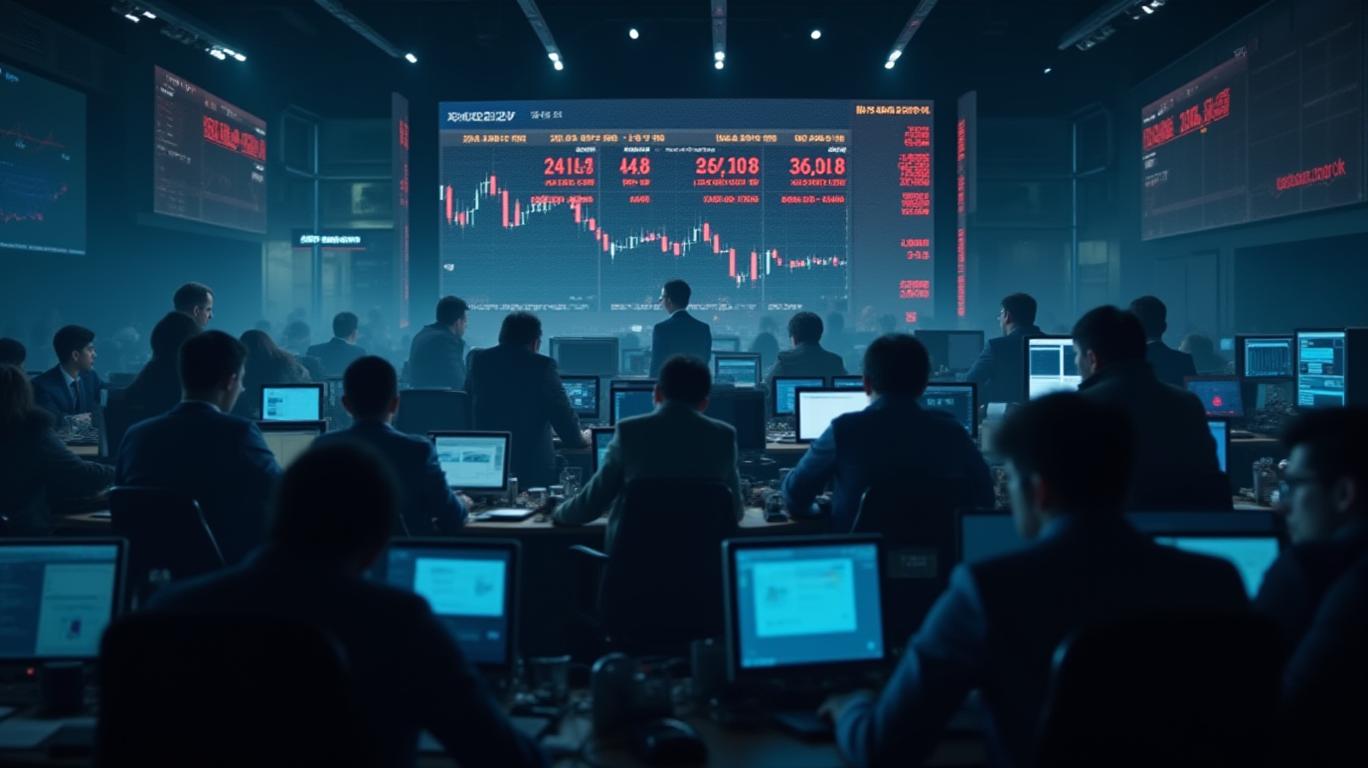
On Monday, stock markets in Japan and South Korea experienced significant declines, with the Nikkei 225 index falling by 8.4% and the Topix index dropping by 9%. The Topix Bank index saw an even steeper decline of 14.7%. This market turmoil was exacerbated by the escalating trade tensions between the United States and these countries, as President Trump reiterated his commitment to eliminating the trade deficit through increased tariffs. The U.S. stock market futures also plummeted, and the Japanese yen surged, indicating deepening market instability due to the tariff measures.
Trump emphasized that his goal is to completely eliminate the bilateral trade deficit, a stance that has further fueled market volatility and investor uncertainty. The situation highlights the broader economic implications of the ongoing trade disputes, as global markets grapple with the potential for prolonged economic uncertainty.
Japanese Prime Minister Fumio Kishida stated that he would not hesitate to meet with President Trump again if necessary. He emphasized that Japan would continue to demand a reduction in U.S. tariffs on Japanese goods, but acknowledged that short-term progress might be limited. Kishida also noted that the Japanese government must take measures to support domestic businesses and maintain employment.
One critical factor is the extent to which the Japanese government might support the stock market and economy. Historically, the Bank of Japan has intervened in crises by purchasing ETFs to prop up the stock market. However, with the Bank of Japan gradually reducing its monetary easing policies, such interventions are less likely. Therefore, any support for the Japanese stock market may be more symbolic than substantive.
Meanwhile, South Korea's finance minister announced preparations for measures to support industries in urgent need of assistance.
Trump, who had just finished a round of golfGOLF-- in Florida, reiterated his stance on tariffs while speaking to reporters on Air Force One. He stated that any agreement to reduce tariffs with affected countries must result in the elimination of the U.S. trade deficit. Trump's comments came as U.S. stock market futures plunged and the Japanese yen surged, underscoring the growing market turmoil caused by the tariff measures.
Trump clarified that he did not intend to exacerbate market sell-offs but indicated no willingness to back down from the tariff measures that have already wiped out trillions of dollars from U.S. stock markets. He compared the situation to taking medicine to solve a problem, suggesting that short-term pain might be necessary for long-term gain.
Trump also mentioned that he had spoken with several world leaders and reiterated that the goal of imposing tariffs is to completely eliminate the bilateral trade deficit. This is a significant demand for the world's largest economy, as consumer spending and affordable goods are key drivers of economic growth.
Trump stated that other countries are eager to reach an agreement, but he insisted that the U.S. would not accept a trade deficit. He emphasized that a trade deficit represents a loss, and the U.S. aims for a surplus or, at the very least, a balanced trade.
In response to concerns about the impact of tariffs on back-to-school shopping later this year, Trump downplayed the potential for inflation to be a major issue. He asserted that the U.S. would not lose billions of dollars by purchasing pencils from foreign countries.
Trump's initial 10% tariffs on a broad range of goods took effect on Saturday, with higher retaliatory tariffs set to be implemented this week. Additionally, Trump hinted at further tariffs targeting specific industries, although these would not be subject to the reciprocal tariffs announced earlier this month.
Trump also directed his criticism towards Europe, stating that he not only seeks trade equality but also compensation for past and present trade imbalances. He suggested that any negotiations with Europe would require substantial financial payments from them to the U.S.







Comentarios
Aún no hay comentarios