
Japan Rubber Futures Under Pressure: Navigating Supply-Side Stress and Bearish Momentum in Q3 2025
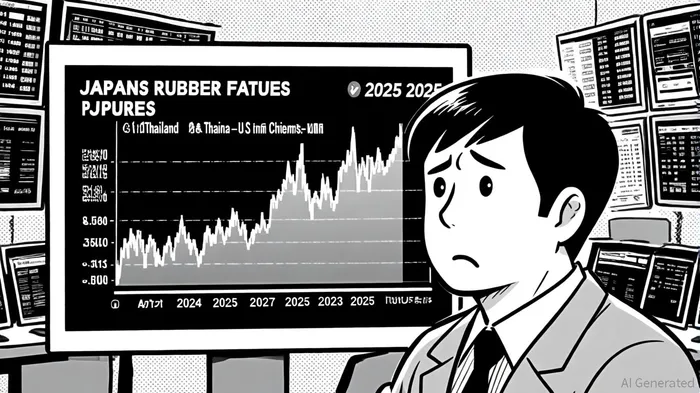
Japan's rubber futures market has entered a precarious phase in Q3 2025, caught between persistent supply-side stress and fragile demand-side optimism. While recent weather disruptions in key producing regions have briefly supported prices, bearish momentum remains entrenched due to oversupply risks, geopolitical uncertainties, and currency volatility. Investors navigating this complex landscape must weigh short-term tailwinds against structural headwinds shaping the global rubber ecosystem.
Supply-Side Challenges: Weather and Production Constraints
The primary driver of near-term volatility is the deteriorating supply outlook in Southeast Asia. Heavy monsoon rains in Thailand—Japan's largest rubber supplier—have disrupted tapping activities and raised fears of flash floods, which could damage plantations and reduce output quality [1]. Compounding this, leaf disease outbreaks in Vietnam and Indonesia have further strained production, with global natural rubber output projected to grow by a meager 0.3% in 2025, far below the 1.8% demand increase [2].
Agricultural shifts also weigh on supply. Farmers in Thailand and Vietnam are increasingly abandoning rubber cultivation in favor of higher-margin crops like palm oil, accelerating a long-term decline in planted areas [3]. According to a report by the European Rubber Journal, these structural changes could exacerbate supply gaps even as weather-related disruptions ease [4].
Demand Dynamics: Auto Exports and Tariff Uncertainties
On the demand side, China's auto export surge—up 16% in Q1 2025—has provided a temporary boost to rubber consumption, particularly for tire manufacturing [1]. However, this optimism is tempered by U.S.-China trade tensions. While tariffs on Chinese goods have eased slightly, the specter of renewed levies looms large. For instance, Japan's 25% tariff on Chinese tires continues to favor domestic producers but limits import flexibility, creating a fragmented demand environment [5].
Meanwhile, U.S. President Donald Trump's executive order to cut tariffs on Japanese automobiles from 27.5% to 15% has introduced a wildcard. While this could stimulate vehicle production and indirectly boost rubber demand, its long-term impact remains uncertain amid shifting political narratives [6].
Currency Volatility and Market Sentiment
The yen's performance has emerged as a critical variable. A weaker yen (currently near 145 yen/USD) has bolstered export competitiveness, offering modest support to rubber prices. Conversely, a stronger yen risks eroding margins for Japanese exporters, who account for a significant share of global rubber trade [7]. Analysts at Orient Futures note that a 1% yen appreciation could depress rubber prices by 3–4%, underscoring the currency's outsized influence [8].
Recent price action reflects this duality. In early September, the Osaka Exchange (OSE) February 2026 contract surged 2.1% amid supply concerns, only to retreat 2.4% in the following week as profit-taking and long liquidation took hold [9]. This seesaw pattern highlights the market's vulnerability to macroeconomic shifts.
Bearish Momentum and Strategic Risks
Despite short-term rallies, bearish fundamentals persist. Global inventories remain elevated, with Southeast Asia and China collectively holding excess stockpiles that could depress prices for months. A report by the Association of Natural Rubber Producing Countries (ANRPC) warns that processors are increasingly hesitant to purchase raw materials due to high prices and weak downstream demand [10].
Moreover, geopolitical risks remain unmitigated. A 1% increase in U.S. auto tariffs could trigger a 0.8% drop in rubber prices, according to Reuters analysis [11]. With the U.S.-China trade truce set to expire in August 2025, the market remains on edge.
Investment Implications and Outlook
For investors, Japan's rubber futures present a high-risk, high-reward scenario. Short-term traders may capitalize on weather-driven volatility in Thailand and Vietnam, but long-term positioning requires caution. Key watchpoints include:
1. Weather patterns in Q4 2025: A dry season in Southeast Asia could alleviate supply concerns.
2. Tariff developments: A U.S.-China trade deal or escalation will directly impact demand.
3. Yen movements: Central Bank of Japan (BOJ) policy adjustments could sway currency dynamics.
Conclusion
Japan's rubber futures market is a microcosm of global commodity volatility, where weather, geopolitics, and currency forces collide. While near-term supply disruptions offer fleeting support, the broader bearish trend—driven by oversupply, shifting agricultural priorities, and trade uncertainties—remains dominant. Investors must adopt a nimble, data-driven approach to navigate this turbulent environment.







Comentarios
Aún no hay comentarios