
Japan Protests China's Gas Drilling in East China Sea Over Territorial Disputes
- Japan has formally protested China's gas drilling activities in the East China Sea, citing longstanding territorial disputes and unresolved diplomatic tensions in the region.
- The East China Sea contains significant oil and gas resources and has been a focal point of bilateral tensions for more than a decade, with discussions over joint development stalling since 2008.
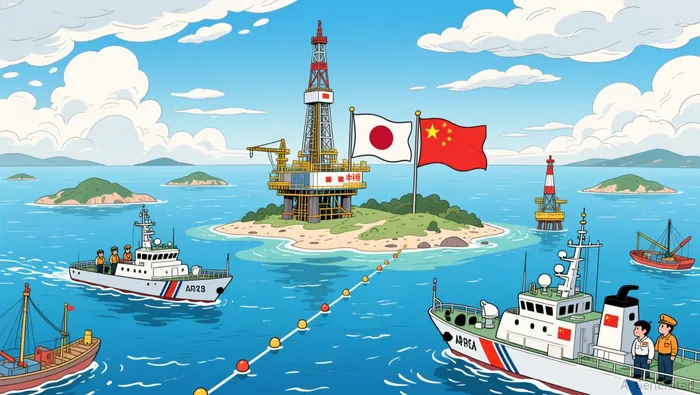
- China's deployment of mobile drilling rigs in the contested area has drawn strong condemnation from Japan, which lacks effective mechanisms to enforce sanctions or halt the drilling.
Japan has officially objected to the recent deployment of Chinese drilling rigs in the East China Sea, a region rich in natural gas reserves. The area is strategically important for both countries, and tensions have persisted due to unresolved claims over maritime boundaries. In 2008, Japan and China had negotiated a joint development plan, but no significant progress has been made since.
The current diplomatic friction reflects the broader geopolitical challenges in the region, with resource rights and territorial claims at the center of the dispute. Despite Japan's repeated protests, it has limited tools to enforce a response, highlighting the asymmetry in diplomatic leverage between the two nations.
What Triggers the Recent Escalation?
China's recent deployment of a mobile drilling vessel has triggered renewed diplomatic protests from Japan. The East China Sea, particularly near the median line, is a focal point of longstanding territorial disputes. Japan has called the drilling activities 'absolutely unacceptable and deeply regrettable,' underscoring its firm stance on protecting its interests.
The area in question is rich in natural gas, and both countries have overlapping claims to the resources. While Japan and China had previously agreed to jointly develop the gas fields, the current deployment signals a shift in China's approach, with no progress in implementing the 2008 agreement.
What Are the Implications for Regional Stability?
The ongoing tensions over the East China Sea have significant implications for regional stability and international relations in East Asia. Both Japan and China are major economic players, and unresolved disputes over resource rights can hinder broader cooperation.
The deployment of drilling equipment in contested waters has the potential to escalate tensions further, particularly if diplomatic dialogue remains stalled. Japan's inability to enforce a halt to the drilling underscores the challenges in managing regional disputes without external mediation or a more robust diplomatic framework.
Moreover, the East China Sea is not only a strategic area for energy resources but also a symbol of broader geopolitical rivalries. The current standoff reflects the delicate balance between sovereignty, resource control, and regional security, with far-reaching consequences for diplomatic relations and economic cooperation in the region .







Comentarios
Aún no hay comentarios