
Japan's Political Uncertainty: Navigating Risks and Opportunities in Equities and Yen-Denominated Assets
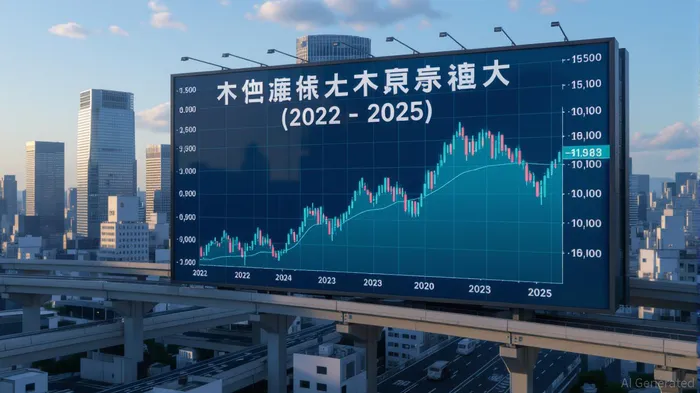
Japan's political landscape is at a crossroads. Prime Minister Shigeru Ishiba's expected resignation by late August 2025—triggered by a historic loss of a majority in the upper house and a subsequent erosion of public trust—has created a vacuum of leadership that could ripple through financial markets. For investors, the question is not whether Japan's political uncertainty will impact markets, but how it will shape short-term volatility and long-term value in equities and yen-denominated assets.
Short-Term Risks: Political Instability and Trade Uncertainty
Ishiba's resignation, while not yet official, signals a shift in governance dynamics. The LDP's minority status in both chambers of the Diet increases the risk of no-confidence motions, delayed policy reforms, and a fragmented legislative agenda. This instability could weigh on investor sentiment, particularly in the near term.
The yen, which has already depreciated 15-20% below its long-term average, faces added pressure. A weaker yen typically benefits Japanese exporters by boosting the yen value of overseas earnings, but it also exacerbates inflationary pressures. With the Bank of Japan (BoJ) cautiously normalizing monetary policy—raising its policy rate to 0.5% in January 2025—there's a delicate balancing act between supporting growth and managing inflation.
Trade tensions with the U.S. further complicate the outlook. While a last-minute trade agreement averted immediate tariffs on Japanese autos and other goods, the unresolved U.S.-Japan trade relationship remains a wildcard. A new LDP leader post-September 2025 may prioritize renegotiating terms, but political fragmentation could slow progress.
Sectoral Implications: Winners and Losers
The Nikkei 225's current P/E ratio of 16x reflects a market split between optimism and caution. Export-oriented sectors like automotive and machinery face margin compression from a strong yen, while domestic-focused sectors—healthcare, utilities, and consumer staples—appear more insulated.
Regional banks, which have historically lagged due to low interest rates, are gaining traction as BoJ normalization expands net interest margins. However, political uncertainty could delay critical reforms to Japan's underperforming regional banking system, creating volatility in financial equities.
Long-Term Opportunities: Structural Resilience and Undervaluation
Beyond the immediate noise, Japan's economy offers compelling long-term opportunities. A structural current account surplus of ¥30.4 trillion in fiscal 2024—driven by a massive overseas investment portfolio—provides a durable floor for the yen. Japan's net international investment position (NIIP) of $3.6 trillion remains a tailwind for yen strength, particularly as foreign earnings are repatriated into yen.
Historically, political transitions in Japan have led to yen depreciation followed by eventual revaluation. The 2012 Abe-Kuroda era, for instance, saw the yen weaken for a decade, boosting equity valuations and pension fund returns. A similar playbook could unfold if the BoJ continues its normalization path while the new LDP leadership prioritizes structural reforms.
For equities, Japan's “new form of capitalism” agenda—aimed at addressing inequality and boosting corporate governance—could unlock value in underappreciated sectors. While Kishida's tenure was marred by scandals, Ishiba's successor may revive these reforms, creating opportunities in healthcare innovation, green technology, and AI-driven automation.
Strategic Recommendations for Investors
- Sector Diversification: Overweight defensive sectors (utilities, healthcare) and underweight export-sensitive industries (automotive, machinery) to hedge against yen volatility.
- Yen Exposure: Consider strategic long positions in the yen, which remains undervalued by 15-20% relative to purchasing power parity. A BoJ pivot toward inflation targeting could accelerate appreciation.
- Event-Driven Plays: Monitor LDP leadership elections in September 2025 for policy shifts. A reform-minded leader could catalyze a “Japan Inc.” resurgence in equities.
Conclusion: Stability in the Storm
Japan's political uncertainty is no surprise, but it is a manageable risk for investors with a long-term horizon. While short-term volatility is inevitable, the BoJ's normalization, structural current account strengths, and undervalued yen create a compelling backdrop for equities and yen-denominated assets. The key lies in balancing defensive positioning with strategic exposure to Japan's latent growth potential.
As Ishiba steps down and a new leader emerges, the markets will test whether Japan can navigate its political crossroads without sacrificing its economic momentum. For those who weather the near-term turbulence, the rewards could be substantial.







Comentarios
Aún no hay comentarios