
Japan's Monetary Policy Trajectory and Yen Volatility: Assessing BoJ's Credibility and Carry-Trade Implications
The Bank of Japan (BoJ) has long been a linchpin of global monetary policy dynamics, its actions shaping not only Japan's economic trajectory but also the behavior of international capital flows. As of mid-2025, the BoJ's evolving stance-marked by a gradual exit from ultra-loose policies and a cautious approach to normalization-has sparked renewed scrutiny of its credibility and the implications for the yen and carry-trade strategies. This analysis examines the BoJ's recent decisions, the shifting landscape of yen volatility, and the recalibration of carry-trade dynamics in a world of narrowing interest rate differentials.
BoJ's Policy Credibility: A Delicate Balancing Act
The BoJ's credibility hinges on its ability to navigate a complex interplay of domestic and global forces. After years of unconventional monetary easing, including the Yield Curve Control (YCC) program and negative interest rates, the central bank has taken steps toward normalization. In March 2024, it terminated the YCC policy and ended negative rates, raising the short-term policy rate to 0.5% by January 2025, according to an Archyde analysis. These moves reflect a recognition that Japan's inflation, sustained above the 2% target for over three years, is no longer transitory, as noted in an Investing.com analysis.
However, the BoJ's cautious approach persists. Despite inflationary pressures from wage growth and energy costs, the central bank has emphasized the need to monitor global economic conditions, including U.S. tariff threats and the Federal Reserve's policy path in a BoJ statement. This duality-acknowledging inflation while resisting aggressive tightening-has raised questions about the BoJ's commitment to a consistent normalization strategy. A Hidden Alpha report argues the wait-and-see stance has created uncertainty, with investors speculating on the timing of future rate hikes.
Yen Volatility: A Reflection of Policy Uncertainty
The yen's volatility in 2025 underscores the BoJ's pivotal role in shaping currency markets. Historically, the yen's status as a safe-haven currency and its ultra-low rates made it a favored funding currency for carry trades. However, the narrowing interest rate differential between Japan and higher-yielding economies like the U.S. has eroded this appeal. By July 2025, the U.S.-Japan rate spread had compressed to 425 basis points, down from 450 basis points in January 2024, a trend highlighted by Investing.com.
This compression is driven by divergent policy trajectories. While the BoJ has raised rates to 0.5%, the Federal Reserve has maintained a hawkish stance, keeping rates near 5.0% to combat inflation, according to the Investing.com analysis. Yet, as global economic indicators weaken-evidenced by slowing PMI readings and rising unemployment-the Fed is expected to initiate rate cuts by late 2025 or early 2026, a scenario discussed in the Hidden Alpha piece. Such a scenario would further narrow the spread, exacerbating yen depreciation and complicating carry-trade profitability.
Political developments in Japan have added to the yen's volatility. The Liberal Democratic Party's (LDP) leadership race, with candidates like Sanae Takaichi advocating for expansive fiscal policies, has introduced uncertainty. A dovish BoJ combined with aggressive fiscal spending could widen the U.S.-Japan yield gap, further weakening the yen, according to an EBC analysis. Conversely, a hawkish pivot from the BoJ-triggered by sustained inflation or wage growth-could stabilize the yen.
Carry-Trade Strategies: Adapting to a New Normal
The carry trade, long reliant on the yen's low rates, faces a paradigm shift in 2025. As the BoJ normalizes rates, the traditional arbitrage between the yen and higher-yielding currencies like the U.S. dollar is diminishing. Traders are diversifying into alternative funding currencies such as the Swiss franc (CHF) and euro (EUR) to hedge against yen volatility, as noted by Hidden Alpha.
Moreover, the BoJ's reduced reliance on YCC has allowed market forces to influence the yen's value more directly. A stronger yen, while beneficial for importers, increases the cost of repaying yen-denominated loans in USD terms, eroding carry-trade profits, a dynamic explored by Investing.com. To mitigate these risks, investors are adopting sophisticated tools like stop-loss orders, interest rate swaps, and currency forwards, strategies highlighted in the Hidden Alpha report.
The BoJ's January 2025 rate hike to 0.5% has also altered the cost-benefit calculus for carry traders. While higher rates could enhance the yen's appeal as a funding currency, the central bank's cautious communication-emphasizing the need to observe global trends-has dampened enthusiasm, as detailed by Investing.com. Analysts project that the BoJ may raise rates incrementally, by 25 basis points every six months, but such a path remains contingent on inflation and wage growth, per the Investing.com analysis.
Looking Ahead: Key Risks and Opportunities
The BoJ's credibility and the yen's trajectory will depend on three critical factors:
1. Domestic Inflation and Wage Dynamics: Sustained inflation above 2% and robust wage growth could compel the BoJ to accelerate normalization, bolstering the yen.
2. Global Policy Divergence: A Fed rate-cutting cycle, if initiated, would narrow the U.S.-Japan yield gap, further pressuring the yen.
3. Political Uncertainty: The LDP's leadership race and fiscal policy debates could introduce volatility, with dovish outcomes favoring yen depreciation.
For investors, the evolving landscape demands agility. Carry-trade strategies must account for tighter rate differentials and heightened yen volatility. Diversification into alternative currencies and hedging tools will be essential. Meanwhile, the BoJ's credibility-rooted in its ability to balance inflation control with economic stability-will remain a key determinant of market sentiment.
Conclusion
Japan's monetary policy trajectory in 2025 reflects a central bank navigating a delicate balancing act. The BoJ's cautious normalization, while necessary to address inflation, has introduced uncertainty that reverberates through the yen and global carry-trade strategies. As the central bank grapples with domestic and global headwinds, its credibility will be tested by its ability to maintain policy consistency amid shifting economic conditions. For investors, the path forward requires vigilance, adaptability, and a nuanced understanding of the interplay between monetary policy, currency dynamics, and geopolitical risks.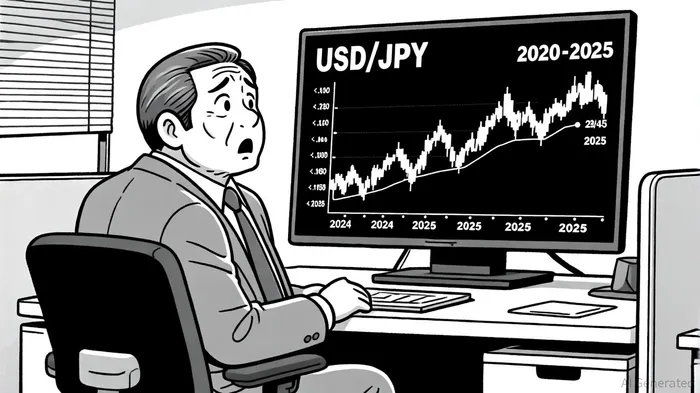







Comentarios
Aún no hay comentarios