
Japan's New LDP Leadership and Yen Volatility: Implications for Global Investors
Japan's recent leadership transition within the Liberal Democratic Party (LDP) has sent shockwaves through global financial markets, intertwining economic policy shifts with heightened geopolitical risks. Sanae Takaichi's historic victory as the first female LDP president has introduced a dual narrative: a pro-growth fiscal agenda and a more assertive foreign policy stance. For global investors, the implications are twofold-yen volatility and strategic realignments in Asia's power dynamics.
Economic Policies and Yen Volatility: A Fragile Equilibrium
Takaichi's "responsible proactive fiscal policy" emphasizes growth-oriented spending on disaster resilience, energy security, and technological innovation, while maintaining fiscal discipline, according to an FXStreet analysis. This approach has already spurred a rally in the Nikkei 225, reflecting optimism about Japan's economic potential. However, the yen has weakened to a six-month low, raising concerns about inflationary pressures and the currency's sensitivity to global risk appetite; the FXStreet analysis highlights these downside risks.
The Bank of Japan's (BoJ) recent rate hikes, the first in over a decade, have further complicated the picture. While these moves aim to normalize monetary policy, they have triggered a partial unwinding of yen carry trades-a strategy where investors borrow in low-yielding yen to invest in higher-yielding assets. This has led to sharp yen appreciation and volatility, creating uncertainty for exporters and import-dependent sectors, according to Edge Forex. Edge Forex also notes that the yen's traditional role as a safe-haven currency has become inconsistent in 2025, as domestic economic uncertainties clash with global geopolitical risks.
Geopolitical Risks: Takaichi's Assertive Foreign Policy
Takaichi's leadership signals a recalibration of Japan's geopolitical strategy. Her emphasis on reinforcing the U.S.-Japan alliance, enhancing defense capabilities, and adopting a more assertive stance in the Free and Open Indo-Pacific (FOIP) framework underscores a shift toward strategic deterrence, according to a Mochi‑Extend analysis. This includes increased support for Taiwan, described as a "partner sharing values," and a hardline approach to China's military activities and cyber operations.
While these policies align with U.S. interests, they risk straining Japan's economic ties with China, its largest trading partner. Takaichi's frequent visits to the Yasukuni Shrine and her skepticism of China's intentions have drawn international scrutiny, with some media labeling her a "nationalist hawk." However, her extensive experience in economic security and defense policy suggests a pragmatic, if cautious, balancing act between engagement and deterrence, as the Mochi‑Extend analysis observes.
Currency Hedging Strategies for Investors
For global investors, navigating yen volatility requires a nuanced approach. Here are three tailored strategies:
FX‑Hedged Japan Equity ETFs: These instruments allow investors to gain exposure to Japan's equity markets while mitigating currency risk. With Takaichi's pro-growth policies likely to boost corporate earnings, hedged ETFs targeting sectors like semiconductors and defense could offer both growth and stability, per the FXStreet analysis.
Diversified Currency Exposure: Avoiding overreliance on yen-based assets is critical. Investors should diversify into USD, EUR, or CAD hedged positions, leveraging the yen's weakness against these currencies. The Mark Institute observed that hedging JPY against USD in 2023 yielded strong returns-a dynamic that may persist under Takaichi's leadership (the Mark Institute).
Active Use of Derivatives: Forward contracts, currency swaps, and options can lock in exchange rates and reduce exposure to sudden yen swings. Japanese firms have historically used these tools to manage export risks, and global investors can adopt similar tactics to hedge against geopolitical shocks, as explained in a RIETI column.
Conclusion: Balancing Opportunity and Risk
Takaichi's leadership presents a paradox for investors: a pro-growth economic agenda coexists with geopolitical tensions that could amplify yen volatility. While Japan's structural investments in technology and defense offer long-term opportunities, short-term risks-such as inflationary pressures and U.S.-China trade frictions-demand careful hedging.
As the LDP navigates a minority government and a complex global landscape, investors must remain agile. Monitoring BoJ policy shifts, U.S. trade dynamics, and regional security developments will be key to capitalizing on Japan's evolving economic and geopolitical trajectory.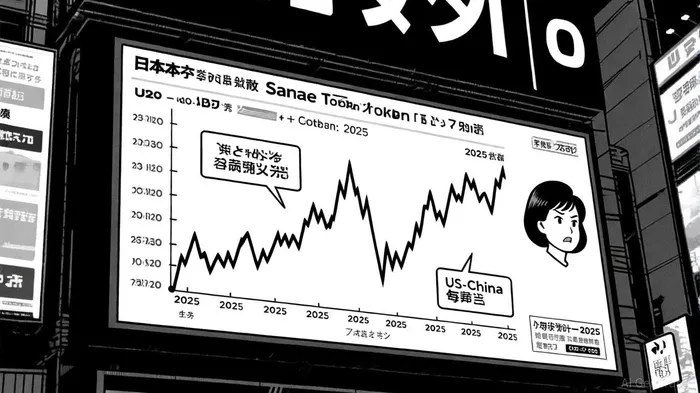







Comentarios
Aún no hay comentarios