
Japan's Second Largest IPO of 2025: Strategic Entry Points and Valuation Potential in a Reenergized Equity Market
Japan's equity market is witnessing a renaissance, driven by strategic investments in critical infrastructure and a renewed focus on semiconductor self-sufficiency. At the heart of this transformation is Tekscend Photomask Corp., whose $2 billion IPO in late 2025 has emerged as the second-largest offering of the year. This analysis examines the strategic entry points and valuation rationale for investors considering participation in this landmark event, contextualized within Japan's broader industrial and economic ambitions.
Tekscend's Strategic Position in a High-Barrier Industry
Tekscend Photomask, spun off from Toppan Holdings in 2022, operates in the photomask sector-a niche but indispensable component of semiconductor manufacturing. Photomasks are used to transfer circuit patterns onto silicon wafers, and their complexity increases exponentially with advancements in chip design, particularly for 3nm and 2nm nodes. According to a Bloomberg report, Tekscend's technology is critical for next-generation chips powering AI accelerators, 5G infrastructure, and electric vehicles.
The company's valuation of $2 billion, or 300 billion yen, is justified by its dominant position in a market projected to grow at a compound annual rate of 5.6% through 2032, reaching $9.15 billion, according to Intel Market Research. While Tekscend's financials are not publicly disclosed pre-IPO, its revenue growth and market share in Japan-a country that accounts for 30% of global photomask production-suggest strong fundamentals. A Reuters report notes that Tekscend's eight global manufacturing sites and expansion into nanoimprint molds further solidify its competitive edge.
Valuation Rationality: Market Dynamics and Peer Comparisons
The photomask industry is characterized by high capital intensity, long lead times, and limited suppliers, creating a favorable environment for pricing power. Despite the global market being valued at $6.5 billion in 2025, Tekscend's valuation appears reasonable when considering its technological leadership and the sector's growth trajectory. A Mordor Intelligence report highlights that EUV-ready masks, which Tekscend specializes in, are expected to drive 42% of market growth due to their role in sub-10nm patterning.
While direct peer comparisons are limited, Japan's broader semiconductor materials sector offers context. Companies like JSR and Shin-Etsu Chemical, which supply resists and silicon wafers, trade at P/E ratios of 25–30x, reflecting their essential roles in the supply chain. Tekscend's valuation, if applied to similar metrics, implies a discount to these peers, particularly given its focus on a higher-margin, technology-driven niche.
Strategic Entry Points: Timing and Market Conditions
The timing of Tekscend's IPO aligns with Japan's national strategy to bolster its semiconductor ecosystem. The government's $10 billion investment in domestic chip production, including partnerships with Rapidus and TSMCTSM--, has created a tailwind for suppliers like Tekscend. Additionally, the company's use of pre-approval investor engagement rules-a tactic previously employed by Kioxia-suggests a well-orchestrated effort to secure demand in a cautiously optimistic market, as reported by IPO Momentum.
For investors, the IPO presents two key entry points:
1. Primary Offering Participation: The IPO includes both new shares and a secondary sale of existing shares held by Integral, a private equity firm. This structure balances dilution concerns with liquidity, offering a balanced risk-reward profile.
2. Post-Listing Momentum: Tekscend's listing coincides with a broader trend of Japanese tech firms accessing capital markets. The Tokyo Stock Exchange's recent reforms, including relaxed pre-listing communication rules, have made it easier for companies to gauge investor appetite, potentially leading to a strong debut.
Risks and Mitigants
Tekscend's success hinges on its ability to navigate global supply chain bottlenecks, such as Japan's quartz-substrate shortages and competition from Taiwanese and South Korean firms. However, its close ties to Toppan Holdings and strategic R&D investments-funded in part by IPO proceeds-position it to mitigate these risks. Stofiniq reports that Nomura analysts note the company's focus on AI-driven photomask optimization could reduce production costs and accelerate time-to-market for advanced chips (https://stofiniq.com/exclusive-tekscend-photomask-eyes-2-billion-valuation-in-japans-biggest-tech-ipo-shock/).
Conclusion: A Catalyst for Japan's Semiconductor Ambitions
Tekscend's IPO is more than a corporate milestone; it is a strategic lever in Japan's quest to reclaim its position as a semiconductor powerhouse. For investors, the offering represents an opportunity to capitalize on a sector poised for sustained growth, underpinned by technological innovation and geopolitical tailwinds. While valuation metrics remain opaque pre-IPO, the company's market position, growth projections, and alignment with national priorities justify a cautious but optimistic outlook. 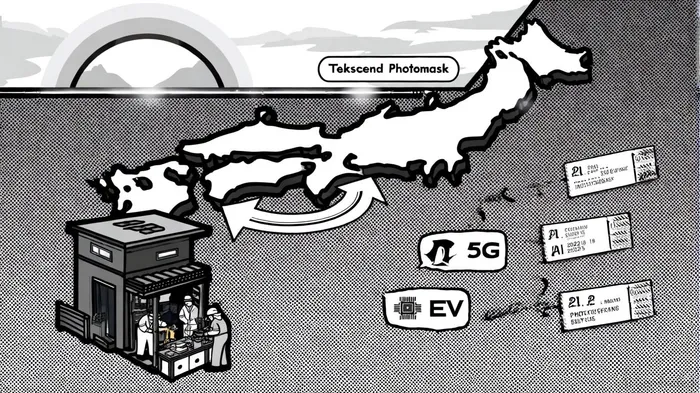







Comentarios
Aún no hay comentarios