
Japan's Inflation Slowdown: A Boon for Equities and a Tightrope for the BOJ
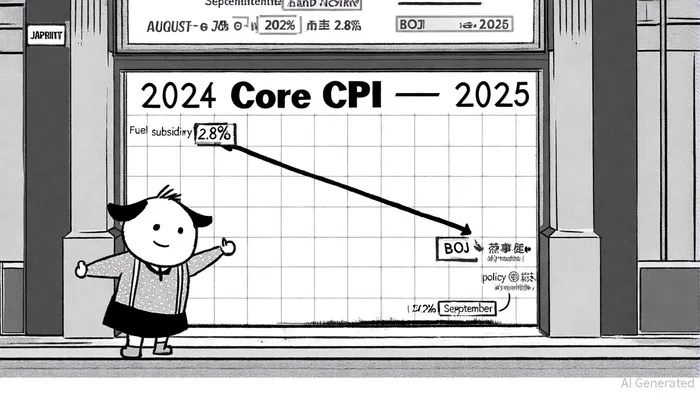
Japan's inflation story is shifting, and investors need to recalibrate their portfolios fast. After years of battling deflation, the (BOJ) is now navigating a sudden slowdown in price pressures, driven by government fuel subsidies and moderating demand. , , as temporary subsidies cushioned energy costs [1]. This deceleration has sparked a critical debate: Is this a sustainable path to the BOJ's 2% inflation target, or a fleeting reprieve that masks deeper structural challenges?
The Subsidy Paradox: Cooling Prices, Heating Risks
The Japanese government's fuel subsidies, , have been a double-edged sword. While they've slashed , they've also propped up a reliance on imported fossil fuels, worsening trade deficits and delaying the transition to renewables [2]. According to a report by Bloomberg, these subsidies have reduced energy price pressures but come at the cost of long-term economic stability, with critics arguing they divert funds from green investments [3].
For the BOJ, this creates a dilemma. Inflation expectations remain stubbornly high, . Yet, , assuming wage growth moderates and global energy prices stabilize [5]. , which could stifle a fragile recovery.
Equity Markets: Riding the Reflation Wave
Japanese equities are in the driver's seat here. , signaling investor confidence in a gradual policy normalization [6]. .
Focus sectors: Financials and corporate reform beneficiaries. With the BOJ tightening on the horizon, banks and insurers stand to gain from higher lending margins and asset revaluation. Meanwhile, firms leveraging structural reforms—think improved capital allocation and buybacks—are outperforming. The BOJ's own review of since the late 1990s underscores the importance of wage-driven inflation sustainability, a tailwind for consumer-facing stocks [8].
Bonds: A Balancing Act
The bond market is a different beast. , but volatility remains a risk. , yet investors are wary of aggressive rate hikes [9].
Here's the rub: While the BOJ's gradual normalization supports yields, a sudden shift toward tighter policy could spook growth-sensitive sectors. , but external shocks—like U.S. tariffs—could force a pivot [10]. For bond investors, .
The Road Ahead: BOJ's Tightrope Walk
The BOJ's next move hinges on two variables: inflation expectations and wage growth. . However, , suggesting price pressures aren't fully tamed [12].
, equities could see a re-rating, particularly in sectors with pricing power. Bonds, meanwhile, will test the patience of risk-averse investors. The key takeaway? Japan's markets are at an inflection point—subsidy-driven moderation is buying time, but structural reforms and wage discipline will determine the BOJ's success.







Comentarios
Aún no hay comentarios