
Japan's Equity Market Resilience: How Political Uncertainty and BoJ Policy Divergence Fuel the Nikkei's Record Highs
Japan's equity market has defied conventional wisdom in 2025. Despite a turbulent political landscape-marked by the resignation of Prime Minister Shigeru Ishiba and a leadership contest within the ruling Liberal Democratic Party (LDP)-the Nikkei 225 has surged to record highs, surpassing 40,000 for the first time in decades. This paradox-where political instability coexists with market exuberance-demands a closer look at the interplay between Japan's central bank policy, corporate reforms, and global capital flows.
Political Uncertainty as a Catalyst, Not a Constraint
Japan's political scene has been anything but stable. The LDP's loss of a majority in the Lower House during the July 2025 Upper House election and Ishiba's subsequent resignation have created a vacuum of leadership. Yet, as a CNBC report notes, these developments have not derailed the equity rally. Instead, the market has focused on structural reforms and foreign investor inflows, which have offset short-term governance risks.
The U.S.-Japan trade deal, finalized in September 2025, has been a game-changer. By reducing tariffs on Japanese exports to 15%, the agreement has alleviated concerns about trade barriers, particularly for automakers and technology firms. This clarity has bolstered investor confidence, with foreign ownership of Japanese equities reaching a five-year high. Meanwhile, corporate governance reforms-such as mandatory buybacks and dividend increases-have improved returns for shareholders, creating a virtuous cycle of capital recycling, according to AGF's 4Rs.
Political speculation, however, has introduced volatility into other markets. The yen has weakened against the dollar, benefiting exporters but raising concerns about fiscal sustainability. An Investing.com report highlights how potential tax cuts and expansionary policies have pushed Japanese government bond yields upward, with the 10-year yield hovering near 1.65%. Yet, analysts argue that Japan's fiscal challenges are overstated, given its current account surplus and robust domestic savings, which continue to fund public debt, a Lombard Odier note suggests.
BoJ Policy Divergence: A Tailwind for Equities
The Bank of Japan's cautious approach to monetary normalization has been a critical underpinning for the Nikkei's ascent. Unlike its global counterparts, the BoJ has maintained a dovish stance, keeping interest rates steady for most of 2025 despite inflation exceeding its 2% target. This divergence has created a reflationary environment, where asset prices rise in tandem with nominal GDP growth.
According to Lombard Odier, the BoJ's exit from negative interest rates in 2024 and its commitment to a "gradual" tightening cycle have supported equity valuations. The central bank has signaled a likely pause in rate hikes until early 2026, prioritizing economic stability over aggressive tightening. This contrasts with the Federal Reserve's dovish pivot, which has further amplified the appeal of Japanese equities for global investors seeking yield.
However, the BoJ faces a delicate balancing act. While inflation remains stubbornly above target, retail sales and industrial production have weakened in recent months, prompting policymakers to tread carefully. The central bank's focus on "price stability and sustainable growth" has allowed the Nikkei to thrive, but risks linger if global monetary policy shifts or the yen appreciates sharply, as noted by Investing.com.
The Path Forward: Risks and Opportunities
The next chapter for Japan's equity market will hinge on two key factors: the outcome of the LDP leadership contest and the BoJ's response to inflationary pressures. Sanae Takaichi and Shinjiro Koizumi, the leading contenders for the LDP's helm, represent divergent economic visions. Takaichi's conservative platform-emphasizing tighter immigration controls and constitutional revisions-could introduce regulatory uncertainty, while Koizumi's reformist agenda may accelerate structural changes in energy and technology, according to a CNN explainer.
Meanwhile, the BoJ's policy path remains pivotal. A report by Invezz notes that at least one rate hike is expected by year-end, but the central bank's emphasis on "economic resilience" suggests a measured approach. The Nikkei's ability to sustain its momentum will also depend on global dynamics, including the U.S. Supreme Court's ruling on Trump-era tariffs and the trajectory of U.S. interest rates.
Conclusion: A Market Built for Resilience
Japan's equity market in 2025 is a testament to the power of structural reforms and global capital flows. While political instability and fiscal debates persist, the BoJ's policy divergence and corporate governance improvements have created a foundation for long-term growth. As the Nikkei approaches 40,000, investors must balance near-term risks-such as yen appreciation or U.S. policy shifts-with the enduring appeal of a market that continues to defy expectations.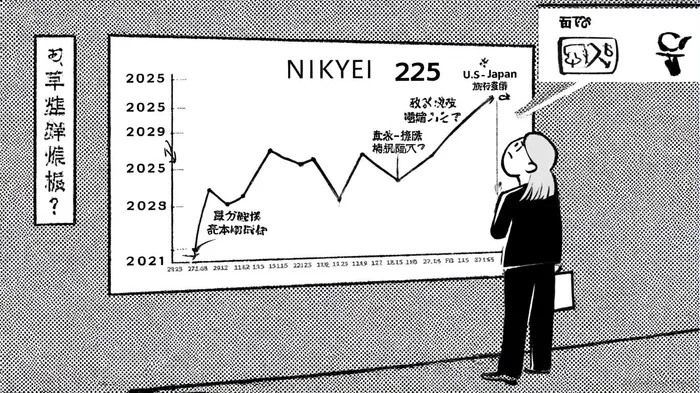







Comentarios
Aún no hay comentarios