
Japan's Defense Pivot: A Strategic Opportunity in Geopolitical Arbitrage
In the shadow of escalating U.S.-China tensions and Japan's historic shift toward military modernization, the Japanese defense sector is emerging as a goldmine for investors. With Tokyo leveraging defense procurements to offset punitive tariffs and deepen its security allianceAENT-- with Washington, the stage is set for a sector rotation that rewards those positioned in aerospace, precision instruments, and industrial machinery. Let's dissect why now is the time to overweight Japanese defense equities.
The Geopolitical Catalyst: Defense as Trade Arbitrage
Japan's $23.1 billion F-35 procurement (63 F-35A and 42 F-35B variants) is not merely a military upgrade—it's a strategic maneuver to counterbalance trade friction. By expanding U.S. defense equipment purchases, Tokyo secures exemptions from tariffs on Japanese exports while bolstering its air defense capabilities against China's J-35A. This geopolitical arbitrage creates a dual benefit: avoiding economic penalties while modernizing forces.
The inclusion of F-35Bs—critical for converting Izumo-class destroyers into aircraft carriers—signals a shift toward maritime dominance. Investors should note that Japan's defense budget has surged to 1.4% of GDP in 2025, with plans to reach 2% by 2027. This spending trajectory is underpinned by U.S.-Japan security ties, which are more durable than trade squabbles.
Domestic Contractors: The Undervalued Engines of Growth
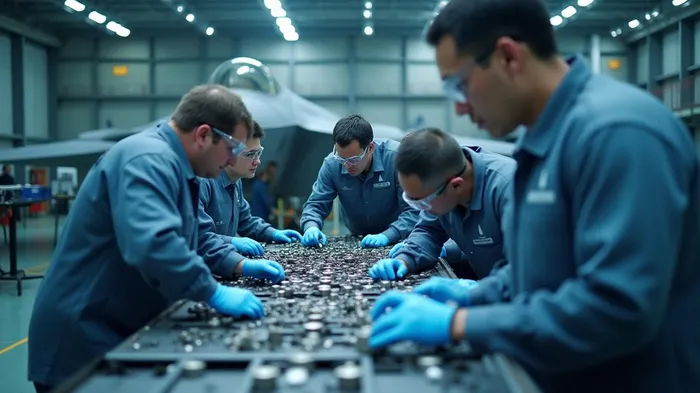
While Lockheed Martin's record F-35 deliveries (190 in 2025) grab headlines, the real opportunity lies in Japan's domestic suppliers. Companies like Mitsubishi Heavy Industries (MHI) and Kawasaki Heavy Industries are integral to the F-35 supply chain, manufacturing critical subsystems. These firms also stand to benefit from potential upgrades to the F-35 into a “5th-gen plus” variant—a $10 billion market opportunity if Tokyo adopts Lockheed's cost-effective alternative to the F-47.
Even more compelling is the precision instruments sector, where firms like Canon Electronics and NEC are supplying avionics and AI systems for next-gen fighters. Their valuations remain depressed compared to U.S. peers, despite Japan's $35 billion annual defense R&D spend.
Why Now? Three Reasons to Act
Undervalued Valuations: Japanese defense equities trade at a P/E ratio of 12x versus the S&P 500's 18x.
Tariff Mitigation: Every $1 billion in U.S. defense orders reduces Japan's exposure to $5 billion in potential tariffs on automotive and tech exports.
- F-47 Uncertainty: While Boeing's F-47 offers cutting-edge tech, its high cost ($200M/unit vs. F-35's $80M) and dependency on U.S. software control make it a long-shot for mass adoption. Japan will prioritize scalable, cost-effective platforms like the F-35.
Investment Playbook: Overweight Machinery & Precision Tech
- Top Picks:
- Mitsubishi Heavy Industries (OTCMKTS:MHVYF): Core supplier to F-35 and a leader in drone integration.
- Canon Electronics (OTCMKTS:CJEFY): Advanced sensor tech for fighter avionics.
Japan Defense ETF (OTCMKTS:HWDJF): Tracks the broader sector, including machinery and aerospace.
Avoid:
- Firms tied to legacy platforms (e.g., Kawasaki's F-2 fighters) or non-defense industrial segments.
Risks & Mitigants
- Trade Deal Delays: If U.S.-Japan negotiations stall, Japan may pivot to European alternatives like GCAP. Mitigation: U.S.-Japan security pacts are stronger than trade squabbles—defense ties will endure.
- F-35 Upgrades Fall Short: Risks exist if Lockheed's “5th-gen plus” fails. Mitigation: F-35's proven interoperability and global supply chain ensure it remains Japan's baseline.
Conclusion: A Rare Confluence of Catalysts
Japan's defense sector is a rare convergence of geopolitical tailwinds, undervalued stocks, and macroeconomic stability. With tariffs hanging over other sectors and the F-35 program at full throttle, investors ignoring aerospace and precision instruments risk missing a multi-year growth cycle. Act now: Allocate 10-15% of portfolios to Japanese defense equities. The next phase of Indo-Pacific security—and profit—is being written in Tokyo.
This analysis assumes no material changes to U.S.-Japan relations or defense procurement timelines. Always conduct due diligence.







Comentarios
Aún no hay comentarios