
Japan's New Crypto Insider Trading Ban and Its Impact on Market Integrity and Investor Confidence
Japan's regulatory landscape for cryptocurrencies is undergoing a transformative shift, with the Financial Services Agency (FSA) spearheading a comprehensive overhaul to combat insider trading and enhance market integrity. By reclassifying major cryptocurrencies like BitcoinBTC-- and EthereumETH-- as financial products under the Financial Instruments and Exchange Act (FIEA), Japan is aligning its digital asset framework with traditional securities markets, a move expected to catalyze institutional adoption and stabilize long-term market dynamics [1].
Regulatory Framework: Closing Loopholes and Strengthening Oversight
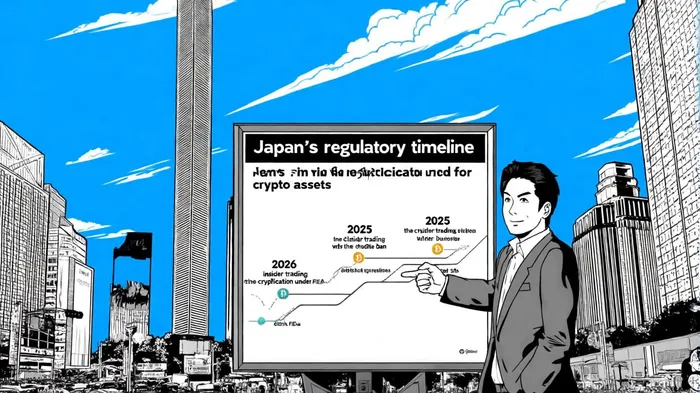
The FSA's proposed amendments to the FIEA, set for submission to Japan's parliament in 2026, will grant the Securities and Exchange Surveillance Commission (SESC) authority to investigate and penalize insider trading in crypto assets [2]. This marks a critical departure from the current self-regulated Japan Virtual and Crypto Assets Exchange Association (JVCEA), which lacks robust monitoring systems [3]. By imposing fines based on illicit gains and enabling criminal referrals for severe cases, Japan aims to deter misconduct and restore trust in its crypto markets [4].
The reclassification of cryptocurrencies from a "means of settlement" to financial products is a cornerstone of this reform. This shift notNOT-- only legitimizes crypto as an asset class but also empowers regulators to enforce anti-money laundering (AML) protocols and investor protection measures [5]. The establishment of a dedicated Crypto Bureau in 2026 further underscores Japan's commitment to proactive oversight, ensuring that emerging risks in decentralized finance (DeFi) and non-fungible tokens (NFTs) are addressed [6].
Institutional Adoption: Tax Reforms and Market Access
Japan's regulatory clarity is already attracting institutional investors, who view the country as a strategic hub for crypto capital. A pivotal factor is the 2025 tax overhaul, which reduces capital gains tax on crypto profits from a maximum of 55% to a flat 20%, aligning it with traditional asset classes [7]. This reform, coupled with loss carry-forward provisions, enhances predictability for investors and lowers compliance burdens, making Japan one of the most tax-friendly jurisdictions for digital assets [8].
The approval of Japan's first yen-pegged stablecoin and the anticipated launch of Bitcoin exchange-traded funds (ETFs) are further accelerating institutional participation. With over 12 million active crypto accounts and ¥5 trillion in digital assets already in the market, Japan's infrastructure is primed to absorb large-scale institutional flows [9]. As noted by Coin Telegraph, these developments position Japan to rival markets like the U.S. and Hong Kong in crypto innovation while maintaining its reputation for technological and security excellence [10].
Market Stability: Reducing Volatility and Enhancing Trust
The regulatory crackdown on insider trading is expected to mitigate speculative price swings driven by unfair advantages. By curbing manipulative practices, Japan's reforms aim to reduce short-term volatility and foster a more transparent trading environment. Data from BeInCrypto highlights a 120% year-over-year growth in on-chain value received in Japan post-2025, signaling increased retail and institutional confidence [11].
Moreover, the FSA's emphasis on "substance over form" analysis ensures that regulatory scrutiny extends to complex financial instruments like DeFi protocols and tokenized assets. This proactive approach not only safeguards investors but also reinforces Japan's role as a global model for balancing innovation with stability [12].
Future Outlook: A Global Hub for Crypto Investment
Japan's strategic reforms are part of a broader vision to become an "investment nation," leveraging its technological infrastructure and regulatory expertise to attract global capital. The FSA's alignment with OECD Pillar Two requirements and its focus on local revitalization through crypto-driven economic policies further underscore its long-term ambitions [13].
Conclusion
Japan's 2025–2026 regulatory overhaul represents a watershed moment for crypto markets, addressing long-standing gaps in oversight while fostering an environment conducive to institutional adoption. By reclassifying crypto assets, modernizing tax policies, and establishing robust enforcement mechanisms, Japan is not only enhancing market integrity but also positioning itself as a global leader in digital finance. For investors, these reforms signal a maturing ecosystem where innovation and stability coexist-a rare combination in the volatile world of cryptocurrencies.






Comentarios
Aún no hay comentarios