
Japan's Corporate Culture and Governance Hurdles: Lessons from Couche-Tard's 7-Eleven Exit
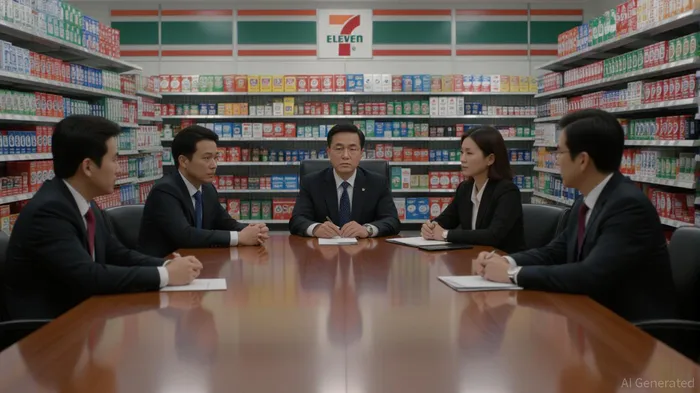
Japan's convenience retail sector has long been a battleground for cross-border ambitions, but the recent collapse of Alimentation Couche-Tard's $47 billion bid for Seven & i Holdings—parent of the 7-Eleven chain—has laid bare the persistent challenges foreign acquirers face. The withdrawal, attributed to a “lack of constructive engagement” and what Couche-Tard described as a “calculated campaign of obfuscation,” underscores how Japan's corporate governance structures and cultural norms continue to shape—and often constrain—M&A opportunities in the sector. For investors, the case offers a cautionary tale and a framework for navigating the nuances of global retail consolidation.
The 7-Eleven Saga: Governance Friction and Cultural Resistance
Seven & i's resistance to Couche-Tard's overture was not merely about price. The Canadian convenience giant accused Seven & i of stonewalling during due diligence, sharing minimal information, and refusing to engage in meaningful dialogue with key stakeholders, including the Ito family, which controls 25% of the company. Meetings were described as “scripted” and unproductive, with Seven & i's CEO reportedly rebuking subordinates for raising questions about international licensees. This behavior, coupled with the Ito family's historical aversion to external control, highlighted a broader tension between Japan's insular corporate culture and the shareholder-value-driven logic of Western acquirers.
The stock's 18% rally post-withdrawal—though still 20% below Couche-Tard's offer—reflects market skepticism about the company's standalone potential. Seven & i's subsequent $5.5 billion sale of its supermarket division to Bain Capital and a $13.5 billion share buyback were seen as half-measures to placate shareholders, but they underscore the pressure on Japan's corporate elite to adapt.
Cultural Barriers: The Invisible Wall in Japanese M&A
Japan's M&A landscape remains shaped by a blend of traditional governance practices and cultural preferences for continuity. The keiretsu system, though eroding, still influences decision-making through cross-shareholding and family control. Seven & i's Ito family, for instance, prioritized maintaining strategic autonomy over maximizing shareholder returns—a stance common among large Japanese conglomerates. This resistance is not unique to 7-Eleven. From SoftBank's reluctance to cede control of Alibaba shares to Panasonic's cautious approach to foreign partnerships, Japan's corporate leaders often view external ownership as a threat to their long-term vision.
Cultural integration further complicates cross-border deals. Foreign firms must navigate Japan's emphasis on consensus-building (nemawashi), hierarchical respect, and risk aversion. For Couche-Tard, this meant months of procedural delays and a lack of transparency about U.S. regulatory hurdles, including antitrust concerns over 7-Eleven's U.S. store divestitures.
Broader Implications for Global Retail Consolidation
The 7-Eleven case is emblematic of a larger trend: while Japan's convenience retail market is one of the most mature and profitable in the world, its corporate governance dynamics make it a high-risk, high-reward target. For investors, the key takeaway is that cultural and governance alignment are as critical as financial metrics in cross-border M&A.
- Family-Controlled Firms as High-Risk Targets: Seven & i's Ito family control highlights a recurring theme. Family-owned Japanese companies often resist external bids to preserve legacy and strategic control. This dynamic is evident in recent bids for Fuji Soft and York Holdings, where private equity firms faced protracted negotiations.
- The Rise of “Light-Touch” Acquisitions: As full-scale takeovers face resistance, Japanese firms are increasingly open to minority stakes and joint ventures. For example, StarbucksSBUX-- Japan's partnership with Seven & i leveraged local expertise while avoiding cultural clashes. Such models may offer a more viable path for global retailers.
- Regulatory and Cultural Reforms: Japan's 2023 “Guidelines for Corporate Takeovers” and shareholder activism pressures are gradually reshaping the landscape. However, progress is uneven. While smaller firms are more receptive to restructuring, large conglomerates remain entrenched in their ways.
The data shows a 44% surge in Japan-linked deals in 2024, driven by private equity and activist investors. Yet, the average transaction size remains lower than in the U.S. or Europe, reflecting the challenges of scaling in Japan's fragmented market.
Investment Advice: Navigating the New Normal
For investors eyeing Japan's convenience retail sector, the 7-Eleven case offers three strategic insights:
1. Prioritize Governance Over Valuation: Look for targets with less family influence or those undergoing governance reforms. Companies like Lawson and FamilyMart, with more independent boards, may be more attractive than entrenched conglomerates.
2. Leverage Cultural Adaptation: Acquirers should invest in local integration strategies, such as co-branding initiatives or localized supply chains, to mitigate cultural resistance. Starbucks' success in Japan hinged on adapting its menu to local tastes, a lesson applicable to M&A.
3. Monitor Regulatory Shifts: Japan's evolving corporate governance framework, including shareholder rights laws and antitrust reforms, will shape future opportunities. Track METI's guidelines and activist shareholder movements for early signals.
In conclusion, Japan's convenience retail sector remains a compelling but complex arena for global M&A. While cultural and governance barriers persist, the 7-Eleven case demonstrates that incremental reforms and creative deal structures can unlock value. For investors willing to navigate these challenges, the rewards—access to a $120 billion retail market with 85,800 7-Eleven stores—could be substantial. The key lies in balancing patience with pragmatism, and respect for tradition with the demands of global consolidation.







Comentarios
Aún no hay comentarios