
Japan's Bond Auction Blues: Political Uncertainty and the Yield Curve's Breaking Point
The recent Japanese government bond (JGB) auctions have sent shockwaves through global markets, revealing a stark reality: investor patience with Japan's fiscal recklessness is wearing thin. The May 2025 20-year JGB auction, which saw a bid-to-cover ratio plummet to 2.5x—the lowest since 2012—exposed a market in turmoil. With yields soaring and tail spreads hitting 1987-era extremes, this is more than a technical glitch. It's a wake-up call to the risks posed by Japan's political calculus and the fragile underpinnings of its debt machine.
The Political Tinderbox: Elections and Fiscal Overreach
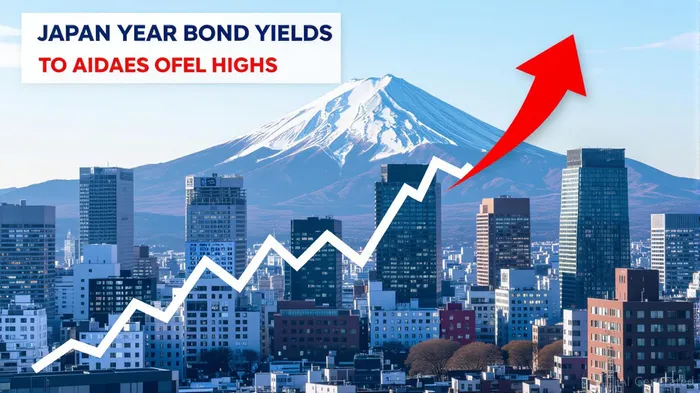
The upcoming July 2025 Upper House election has become a focal point for market anxiety. If the ruling coalition loses its supermajority, fiscal expansion could surge, with promises of stimulus programs and debt-financed spending to counter weak growth. This fear is already pricing into markets: . While the U.S. yield has trended downward since late 2022, Japan's 10-year yield has climbed over 1% this year, a divergence reflecting investors' skepticism about Tokyo's ability to manage its ¥1,000 trillion ($68 trillion) debt mountain.
The Fiscal Tightrope: Trimming Issuance Isn't Enough
In a bid to calm nerves, Japan's Ministry of Finance (MOF) slashed issuance of 20-, 30-, and 40-year bonds by ¥3.2 trillion through March 2026. Yet yields keep rising—30-year JGBs hit 3.15%, and 40-year bonds breached 3.6%, levels unseen since the 1990s. The MOF's cuts are a Band-Aid on a hemorrhage. Without credible reforms to address aging demographics, stagnant growth, and a consumption tax too timid to dent deficits, investors are right to flee long-dated JGBs.
The BOJ's Dilemma: Yield-Curve Control Is Dead
The Bank of Japan's (BOJ) gradual exit from yield-curve control (YCC)—which capped the 10-year yield at 0.5%—has left it with a Hobson's choice. If it intervenes to suppress yields, it risks flooding markets with liquidity, worsening inflation. If it stands pat, yields could spiral further, triggering a debt crisis. The BOJ's balance sheet, already swollen to ¥900 trillion, can't absorb another shock. Look no further than the May auction's tail spread, which hit a 35-year high, signaling dealers are pricing in systemic risk.
Global Spillover: The JGB Contagion
Japan's bond market isn't isolated. A JGB sell-off ripples through global portfolios:
- Duration Risk: As investors flee long-dated JGBs, they're dumping other long-duration assets (e.g., Treasuries, European bonds) to rebalance.
- Risk Premia: The JGB rout has widened credit spreads, as investors demand higher compensation for holding corporate debt.
- Yen Collapse: A weaker yen (already down 8% YTD vs. the dollar) could fuel imported inflation, forcing central banks elsewhere to tighten further.
Investment Playbook: Short JGBs, Shorten Duration, and Avoid the Long End
The writing is on the wall: Japan's bond market is a powder keg. Here's how to position:
1. Short JGBs: Use inverse ETFs like DXJ or short positions in JGB futures to profit from rising yields.
2. Shorten Duration Globally: Shift into 2- to 5-year Treasury notes (e.g., SHY) or German Bunds with maturities under 5 years. Shorter-dated bonds are less sensitive to rate hikes and yield volatility.
3. Credit Over Government Debt: Focus on investment-grade corporate bonds (e.g., LQD) with strong balance sheets. Avoid high-yield or emerging-market debt, which could suffer if risk appetite shrinks.
Final Warning: The Yield Curve's Breaking Point
Japan's yield curve is on a collision course with reality. If the July auction's bid-to-cover ratio sinks further below the 12-month average, it could trigger a self-fulfilling crisis. Investors must treat JGBs as the toxic assets they've become—avoid the long end, hedge with short-dated alternatives, and brace for a global bond market reckoning. The BOJ's exit from YCC isn't just a Japanese problem. It's the canary in the coal mine for global fixed income.
The data tells the story: confidence in Japan's fiscal stewardship is evaporating. The question isn't whether markets will price in this reality—it's how fast and how violently. Stay vigilant, stay short.







Comentarios
Aún no hay comentarios