
Jack Ma's Return to Alibaba: Strategic Leadership and the Path to Long-Term Value Creation
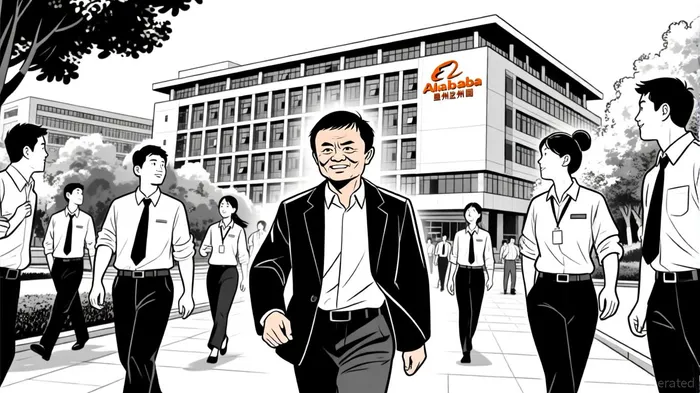
The return of Jack Ma to Alibaba's strategic operations in 2025 marks a pivotal moment for the Chinese tech giant, signaling a recalibration of leadership and a renewed emphasis on innovation. After years of regulatory scrutiny and competitive pressures, Ma's reemergence—though without an official executive title—has injected a sense of direction and confidence into the company. His direct involvement in decisions such as authorizing 50 billion yuan ($7 billion) in subsidies to counter rivals like JDJD--.com and Meituan, as well as his daily oversight of artificial intelligence (AI) initiatives, underscores a strategic pivot toward technological self-reliance and market dominance[1]. This shift aligns with Alibaba's broader commitment to invest over 380 billion yuan in AI and cloud infrastructure over the next three years, positioning the company to compete globally in high-growth sectors[1].
Strategic Leadership and Organizational Resilience
Alibaba's leadership structure has evolved significantly since Ma stepped down as executive chairman in 2019. The 2023 restructuring, which divided the company into six independent business units, aimed to combat “big-company disease” and foster agility[2]. This move, endorsed by Ma in a rare internal memo, reflects a recognition of the need for decentralized decision-making in a rapidly changing market. Concurrently, Eddie Wu's appointment as CEO of both e-commerce and cloud operations consolidated control under a single leader, streamlining Alibaba's AI-driven cloud strategy[1]. These changes highlight a deliberate effort to balance innovation with operational efficiency, a hallmark of Ma's original vision for AlibabaBABA--.
Ma's return has further reinforced this strategic coherence. His public appearances, including a symbolic handshake with Chinese President Xi Jinping, have been interpreted as signals of improved relations with regulators, easing concerns about past antitrust penalties[3]. This alignment with government priorities—particularly in AI and cloud computing—has bolstered investor confidence, as these sectors are central to China's economic modernization agenda[3].
Investor Sentiment and Stock Performance
The market has responded enthusiastically to these developments. Alibaba's U.S.-listed shares surged nearly 60% in 2025, with its market capitalization surpassing 3 trillion yuan ($415 billion) as of September 2025[3]. This rally follows a period of stagnation, driven by regulatory uncertainty and fierce competition. The company's cloud business, now a critical growth engine, reported a 26% revenue increase in a single quarter, demonstrating the effectiveness of its AI-focused investments[1]. Analysts attribute much of this momentum to Ma's symbolic and practical influence, which has restored morale among employees and signaled to investors that Alibaba is regaining its strategic edge[1].
Historical precedents also support the link between strong leadership and long-term value creation. During Ma's tenure as CEO, Alibaba cultivated a culture of innovation and customer-centricity, which fueled its rise as a global e-commerce leader[4]. While subsequent leadership transitions under Daniel Zhang and Eddie Wu maintained operational stability, the company's stock underperformed relative to peers until Ma's recent reengagement. This suggests that visionary leadership, even in a non-executive role, can catalyze transformative growth.
Long-Term Implications and Risks
Alibaba's strategic bets on AI and cloud computing are not without challenges. U.S. export restrictions and domestic competition from companies like Tencent and ByteDance remain significant hurdles[1]. However, the company's internal innovations—such as the Zhenyue 510 chip—demonstrate a commitment to overcoming these barriers through self-reliance[1]. If successful, these initiatives could solidify Alibaba's position as a leader in China's AI ecosystem, generating sustainable value for shareholders.
Conclusion
Jack Ma's return to Alibaba represents more than a symbolic gesture; it is a strategic recalibration that aligns the company's leadership with its long-term ambitions. By reengaging in critical decision-making and championing AI and cloud infrastructure, Ma has rekindled investor optimism and reinforced Alibaba's adaptability in a volatile market. While risks persist, the company's renewed focus on innovation and regulatory alignment positions it to capitalize on China's technological transformation. For investors, this evolution underscores the enduring importance of visionary leadership in driving value creation—a lesson as relevant today as it was during Alibaba's early years.





Comentarios
Aún no hay comentarios