
Jack in the Box's Strategic Retreat: A Case Study in Brand Portfolio Rationalization
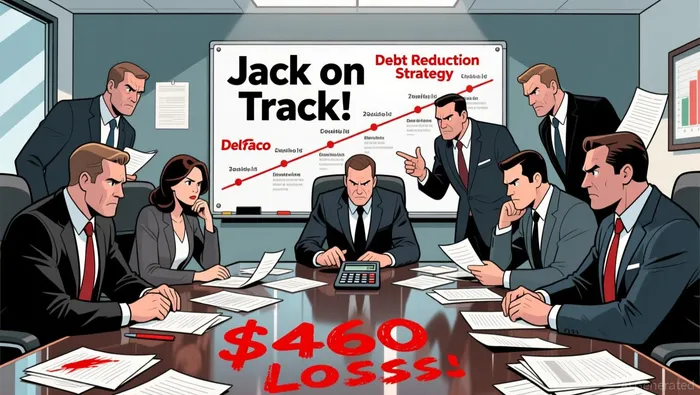
The numbers tell a story of a painful but necessary reset. Jack in the BoxJACK-- is writing down the value of its Del Taco acquisition by , selling the brand for $115 million after paying $575 million for it just four years prior. This is not a profit-taking exercise; it is a strategic purge. The transaction, which closed for approximately in total consideration, is a core component of the company's "Jack on Track" plan to simplify its business model and reduce its debt load. The immediate financial impact is clear: the company is shedding a significant asset that failed to meet expectations and using the proceeds to strengthen its balance sheet.
The debt reduction is the critical structural outcome. With total debt standing at $3.12 billion, the sale provides a direct, albeit partial, relief valve. The cash received, after adjustments, is a tangible step toward a leaner, more focused capital structure. This move aligns with a broader industry trend where conglomerate restaurant operators are realizing the operational and financial complexity of managing multiple brands. As one analyst noted, there is not necessarily an economic benefit for Jack in the Box to own a second brand. The company is now truly refocused on its core Jack in the Box brand, a move its CEO, , frames as a return to simplicity. He stated the sale represents meaningful progress in simplifying our business model and reducing our debt.
The transaction does carry a small, high-cost liability. The final $10 million of the purchase price is structured as a 21-day promissory note, accruing interest at an 8% annual rate, fully guaranteed by Anil Yadav, founder and CEO of Yadav Enterprises. This is a short-term, expensive financing cost that underscores the buyer's commitment but also represents a minor, temporary drag on the seller's cash flow. In practice, this is a rounding error compared to the scale of the debt reduction and the strategic clarity gained.
The bottom line is that Jack in the Box is paying a steep price for this pivot. The $460 million write-down is a direct hit to equity, but it is a necessary cost of exiting a non-core asset that was a drag on performance. The strategic intent is to use the proceeds to strengthen the balance sheet and concentrate resources on revitalizing its flagship brand. The move is a classic example of a company choosing operational simplicity and financial health over the illusion of scale.
The Underlying Strain: Why Del Taco Failed and the Labor Cost Trap
The $460 million write-down on the Del Taco acquisition is a stark verdict on a flawed premise. The core issue was never just the price tag. It was a fundamental mismatch between the brand's operational reality and the strategic logic of a multi-brand operator. Jack in the Box paid for a brand that, from the start, was beating up against Taco Bell and failing to gain meaningful market share. This lack of momentum was structural, not tactical. The brand had little menu work in terms of new products and relied on deep discounting to attract customers. Over time, this strategy eroded brand equity, leaving it stuck in a low-value, price-sensitive war with no clear path to differentiation.
This operational failure was compounded by a brutal macroeconomic environment. The restaurant industry, particularly in key markets like California, is under severe strain from rising costs. The state's has been a direct catalyst for industry-wide pressure. , a crisis that Del Taco was ill-equipped to weather. The brand was caught between a weak competitive position and a cost structure that was becoming unsustainable, a combination that quickly drained its profitability and dragged down its parent.
The broader risk for multi-brand operators is clear. Owning a second brand without a synergistic strategy can dilute focus and capital. Jack in the Box's own history with Qdoba, which it owned for 15 years before selling, illustrates this point. As analyst noted, "Why do you have to have another brand? What's wrong with the brand that you've got?" The Del Taco acquisition was an attempt to diversify, but it ended up being a distraction. The capital and management attention required to turn around a struggling second brand were resources that could have been deployed to address the core Jack in the Box's own challenges.
The bottom line is that the acquisition's failure was a classic case of ignoring both the competitive landscape and the macroeconomic tide. The $575 million price was a bet on operational turnaround and brand revival. When the brand's inherent weaknesses collided with an industry-wide cost shock, the bet lost. The sale for $115 million is not just a financial loss; it is a strategic retreat that forces a return to simplicity. For Jack in the Box, the lesson is that in a high-cost, low-momentum environment, the most powerful move can be the one that focuses all energy on a single, albeit difficult, core brand.
The Jack in the Box Reality Check: A Challenged Core Amid Industry Headwinds
The sale of Del Taco is not a strategic expansion; it is a necessary step to address a deeply challenged core business. The numbers tell a stark story. Jack in the Box stock has fallen over 53% year-to-date, trading near its 52-week low of $13.99. This isn't just a sector downturn-it's a company-specific crisis. The recent for the fourth quarter, which missed expectations, is the direct trigger for analysts to lower price targets. This performance is the foundation of the extreme pessimism gripping the industry.
The sentiment is as poor as it has been in two decades. As one analyst noted, restaurant industry sentiment was this poor heading into a New Year only during the COVID-19 pandemic and the 2008 financial crisis. This isn't hyperbole. It reflects a sector-wide "humbling year" where comparable sales remained positive, but the pullback among lower- and middle-income consumers has created a testy traffic landscape. The core problem is a margin-compression environment. The industry faces above-average commodity inflation and persistently high labor costs, with little room to pass prices on without further alienating a pressured consumer.
In this context, the sale of Del Taco is a pragmatic, if painful, move to simplify and shore up the balance sheet. The company received . This is critical because short-term obligations currently exceed liquid assets. The goal is to focus resources on the struggling Jack in the Box brand, which operates approximately 2,135 restaurants. The "Jack on Track" plan is a direct response to this reality: it's about survival and operational improvement in a sector where even positive sales trends are being punished by valuation.
The bottom line is that the sale is a symptom of a deeper illness. The company is selling a subsidiary to fund a turnaround in its primary business, which is itself under severe pressure from a combination of weak consumer spending and relentless cost inflation. The market's verdict is clear and harsh, valuing the stock at levels not seen in years. The transaction provides a temporary cash infusion, but the real test for Jack in the Box is whether it can reverse its own 7.4% sales decline and navigate a "humbling year" for the entire restaurant industry.
Risks & Guardrails: The Limits of Simplification and the Path Forward
The sale of Del Taco is a necessary step, but it is not a cure. The core risk to the "Jack on Track" plan is that simplification alone is insufficient. Jack in the Box must now demonstrate a credible turnaround in its own core brand's sales and margins to justify any valuation re-rating. The company's recent financials show the challenge: same-store sales declined by in the fourth quarter, a figure that fell short of expectations and triggered analyst downgrades. This deep-seated operational weakness is the real overhang, not the burden of a second brand. Selling Del Taco removes a drag, but it does not create a new engine.
The execution of the planned store closures is the critical operational guardrail. The company aims to close to improve franchisee profitability. Success here is non-negotiable. If these closures are poorly managed, they could trigger negative brand perception or operational disruption, undermining the very focus the plan seeks to achieve. The analyst's observation that sentiment could turn on a dime with one or two months of improving sales trends underscores the fragility of the situation. The market is not waiting for a perfect plan; it is waiting for proof of execution.
The path forward hinges on a few key catalysts. The primary one is a sustained improvement in same-store sales trends for the core Jack in the Box brand. This would signal that the company's operational focus is paying off. A secondary, but equally important, catalyst is the stabilization of commodity and labor cost pressures. The industry faces a challenging forecast, with . Any relief in these areas would provide much-needed margin support.
The bottom line is that the Del Taco sale is a clean-up operation, not a strategic pivot. It frees up capital and focus, but it does not erase the underlying challenges. The valuation re-rating will not come from the sale itself, but from the market seeing a clear, credible plan to fix the core business. Until then, the stock remains vulnerable to the same headwinds that plagued the broader restaurant sector in 2025, where sentiment turned on a dime with even modest improvements in traffic. For Jack in the Box, the next few quarters will test whether its plan is more than just a promise of simplicity.
The company's management team is now tasked with navigating this delicate balance between strategic simplification and operational revitalization. The sale of Del Taco has bought time, but not a solution. Jack in the Box must now prove that it can turn around its core business while managing a high-debt profile in a low-growth environment. The path is fraught with challenges, but the opportunity for a re-rating exists if the company can deliver on its promises of improved store-level performance and disciplined capital allocation.
One area of focus is the company's digital transformation and customer engagement strategy. While the brand is undergoing a physical store rationalization, it is also investing in digital tools to enhance the customer experience. This includes mobile ordering, loyalty programs, and personalized promotions. These initiatives are designed to drive traffic and average check size, two critical metrics for improving same-store sales. The success of these programs will depend on the company's ability to execute them effectively and scale them across its 2,135 locations.
Another key area is menu innovation. The company is working to develop new products that can differentiate its offerings in a crowded quick-service restaurant market. This includes both new signature items and limited-time offers that can drive short-term sales and customer engagement. The challenge is to create products that resonate with consumers and can be profitably offered at scale. The company is also exploring new concepts that could be tested in select markets before a broader rollout.
The path to recovery is not without its risks. The restaurant industry is highly competitive, with new entrants and disruptive technologies constantly challenging the status quo. Jack in the Box must stay ahead of these trends while maintaining its core values and brand identity. The company's leadership has acknowledged the difficulty of this task but remains optimistic about its potential. As CEO Lance Tucker stated, the sale of Del Taco is a necessary but painful step that allows the company to focus on what it does best. The question now is whether this focus will translate into sustainable growth and improved shareholder value.





Comentarios
Aún no hay comentarios