
IYW And The Art Of Tech Investing
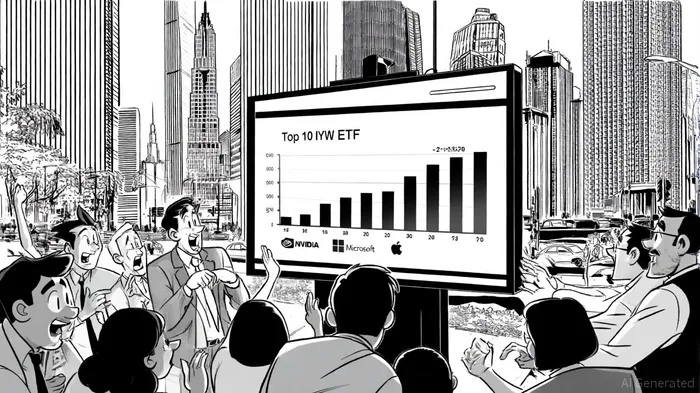
The iShares U.S. Technology ETF (IYW) has long been a barometer for the sector's innovation pulse. As of September 2025, its portfolio is heavily weighted toward companies at the forefront of artificial intelligence (AI) and semiconductor advancements, with NVIDIANVDA--, MicrosoftMSFT--, and AppleAAPL-- accounting for 63.65% of its assets[2]. This concentration reflects not just the dominance of these firms but also the broader sector's shift toward agentic AI and application-specific hardware—trends that are reshaping global innovation.
Sector Momentum: The IYWIYW-- Portfolio in Context
The IYW's 88.83% allocation to technology companies[2] positions it as a pure-play vehicle for capitalizing on sector momentum. Its top holdings are emblematic of this focus:
- NVIDIA (15.98%): The semiconductor giant's GPUs power both generative AI and agentic AI systems, a trend McKinsey identifies as a “transformative force” in 2025[1].
- Microsoft (14.89%) and Apple (13.93%): These firms are leveraging AI to redefine enterprise software and consumer ecosystems, aligning with McKinsey's emphasis on AI-driven productivity gains[1].
- Broadcom (3.41%) and Meta Platforms (3.73%): These holdings underscore the ETF's exposure to both hardware infrastructure and AI-driven social computing.
The ETF's diversification across 145 holdings mitigates overconcentration risk while maintaining a tight focus on innovation. However, the top 10 names alone constitute over 60% of the fund, a structure that rewards sector leaders but amplifies vulnerability to regulatory or technical headwinds in AI.
Innovation Trends: From Agentic AI to Quantum Leaps
The 2025 technology landscape is defined by two megatrends: the maturation of agentic AI and the race for quantum computing dominance. According to McKinsey, agentic AI—systems capable of autonomous decision-making—is transitioning from experimental prototypes to enterprise deployment[1]. This shift directly benefits IYW holdings like Microsoft (Azure AI) and Apple (on-device AI frameworks), which are embedding agentic capabilities into their platforms.
Meanwhile, the Global Innovation Index 2025 notes a “record 2 million scientific publications” in 2024, driven by China and India[2]. While venture capital investment remains subdued outside AI, the U.S. continues to outperform, with firms like NVIDIA and BroadcomAVGO-- benefiting from sustained demand for AI-specific semiconductors[1]. Quantum computing, another frontier highlighted by McKinsey, is seeing breakthroughs from IYW-adjacent players like IBM and Microsoft, though these remain in the R&D phase[1].
High-Conviction Holdings and Strategic Implications
For investors seeking to harness IYW's exposure to innovation, three holdings stand out:
1. NVIDIA: Its dominance in AI chips ensures it will benefit from both enterprise and consumer AI adoption. Data from Stock Analysis shows NVIDIA constitutes the ETF's largest single position[2], reflecting its critical role in the AI infrastructure stack.
2. Microsoft: The cloud giant's integration of agentic AI into Azure and Office 365 positions it to capture productivity gains across industries[1].
3. Apple: Despite its consumer focus, Apple's investment in on-device AI and M-series chips aligns with the sector's shift toward distributed AI processing[2].
However, the ETF's heavy weighting in these firms also exposes it to risks such as AI regulation and supply chain bottlenecks. Investors must balance the allure of high-growth tech with macroeconomic headwinds, including potential interest rate hikes that could dampen speculative valuations.
Conclusion: Navigating the Tech Investment Tightrope
The IYW ETF encapsulates the duality of tech investing: it offers unparalleled access to innovation but demands vigilance in managing concentration risks. As agentic AI and quantum computing redefine industries, the ETF's top holdings are well-positioned to lead. Yet, as the Global Innovation Index cautions, innovation investment growth remains historically low[2], suggesting that even the most dynamic sectors require disciplined capital allocation. For investors with a high risk tolerance and a long-term horizon, IYW remains a compelling vehicle to ride the next wave of technological disruption.





Comentarios
Aún no hay comentarios